
- Core shift: Stop leading with “Student at X,” lead with what you do and where you are headed.
- Hybrid positioning: Anchor (Identity), Value prop (Problems you solve), Trajectory (Target roles) in one line.
- MBA strategy: Experienced profiles lead with Ex role, pivoters lead with concentration and transferable skills, seekers state timeline clearly.
- PhD and research: Translate academic topics into industry keywords, list methods or tools recruiters actually search.
- Common mistakes: Avoid “Aspiring,” acronym soup, and burying your strongest professional signal behind “Student.”
The Strategic Guide to LinkedIn Headlines for MBA Students & Researchers
When you are in the thick of graduate studies, you exist in a professional limbo. You are simultaneously a student absorbing new knowledge and a professional preparing for a career leap. This duality creates a specific challenge when crafting your digital identity: How do you signal your future value without discarding your past experience?
For most graduate students – whether you are pursuing an MBA, a PhD, or a specialized Master’s – the default tendency is to adopt a passive identity: “Student at [University Name].” This is a strategic error. Recruiters are not searching for “students”; they are searching for “future leaders,” “data scientists,” “investment bankers,” or “AI researchers.” If your headline only screams “Student,” you are effectively making yourself invisible to the very opportunities you are paying tuition to access.
Creating a high-impact LinkedIn headline for MBA student candidates and academic researchers requires a mindset shift. You must move from “Identity-based positioning” (Who I am right now) to “Value-based positioning” (What I bring to the table). This guide acts as your chief strategy officer, helping you navigate the nuance of balancing academic pedigree with professional lethality.
In this comprehensive guide, we will dissect how to leverage your institution’s brand without leaning on it as a crutch, how to translate obscure research into industry-ready skills, and how to command respect as an experienced professional who happens to be studying, rather than a junior student who happens to have worked.
The “Hybrid Positioning” Framework for Academics

The most effective headlines for graduate students use what I call “Hybrid Positioning.” This approach acknowledges your current academic status but anchors it deeply in professional competency. It prevents the “Resume Gap” perception where a recruiter sees a student and assumes a lack of tangible skills.
Your headline must answer three questions in under three seconds:
- 1. The Anchor: What is your primary professional identity? (e.g., MBA Candidate, PhD Researcher, Ex-Consultant).
- 2. The Value Prop: What specific problems can you solve? (e.g., Financial Modeling, NLP, Supply Chain Optimization).
- 3. The Trajectory: Where are you going? (e.g., Investment Banking, User Experience Research).
Below is an analysis of the strategic trade-offs when deciding how heavily to lean on your “Student” identity versus your “Professional” identity.
| Strategy: Heavily Emphasizing “Student” Status | Strategy: Minimizing “Student” Status |
|---|---|
| ✅ Pros: Clearly signals you are available for internships. Leverages the “halo effect” of prestigious universities immediately. | ✅ Pros: Positions you as a peer to senior professionals. Crucial for Executive MBA candidates or experienced hires. |
| ✅ Pros: Lowers the barrier to entry for networking (alumni love helping “students”). | ✅ Pros: Avoids the “junior” bias. Recruiters focus on your 5+ years of prior work, not just your current coursework. |
| ❌ Cons: Can lead to being offered junior roles or unpaid internships below your pay grade. | ❌ Cons: Confusing for recruiters looking for specific “University Recruiting” pipelines. |
| ❌ Cons: Risks obscuring your prior professional achievements (e.g., “Student” sounds less impressive than “Former Manager”). | ❌ Cons: May unintentionally signal you are not open to summer internships or rotation programs. |
MBA Student Headline Strategy: The Art of the Pivot
The MBA headline is perhaps the most complex because the MBA cohort is so diverse. You have career pivoters (Engineers turning into Bankers), career accelerators (Marketers becoming CMOs), and entrepreneurs. A generic “MBA Candidate” headline fails all three groups.
1. Leveraging Pre-MBA Authority (The “Accelerator” Profile)
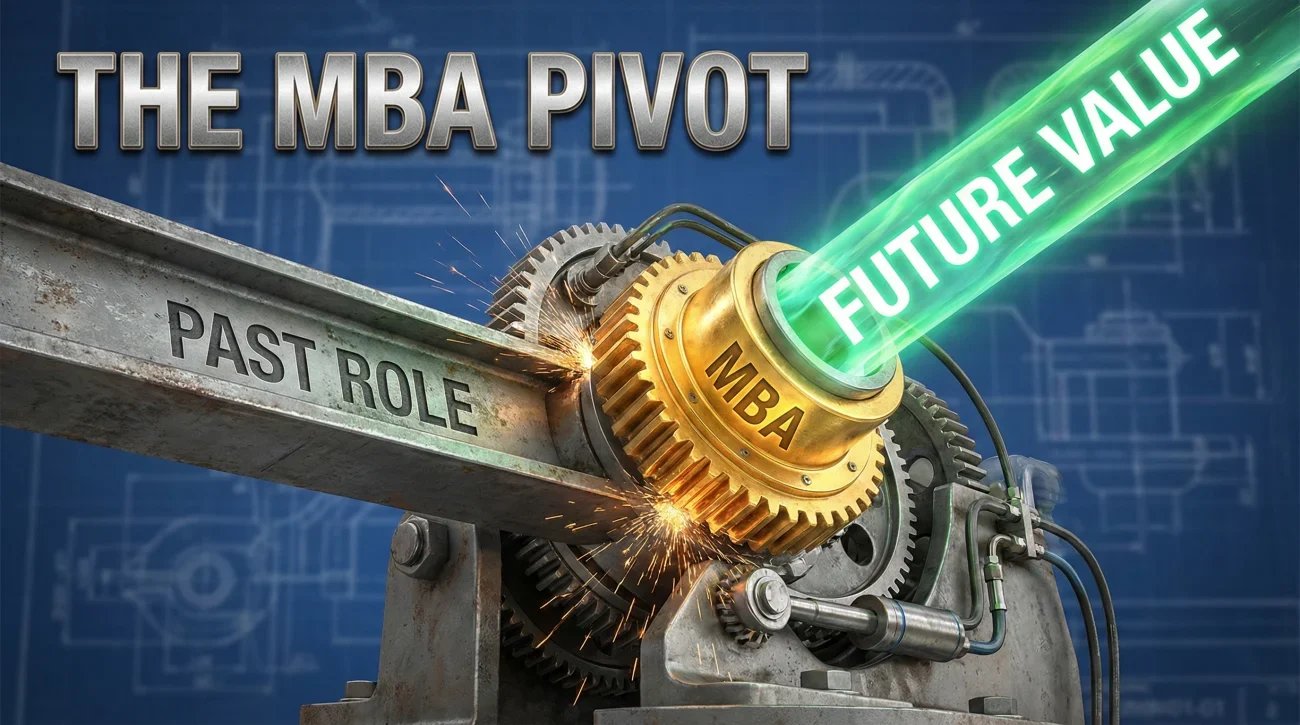
If you have substantial experience (3-5+ years), your headline should not bury that lead. You are an experienced professional adding a credential, not a novice starting over. Use the “Ex-[Company]” or “Former [Role]” tag to establish immediate authority.
💡 Why this works: It creates a “safety net” for the recruiter. They know you have survived a rigorous corporate environment before. The MBA is just the cherry on top.
Examples for High-Experience MBAs:
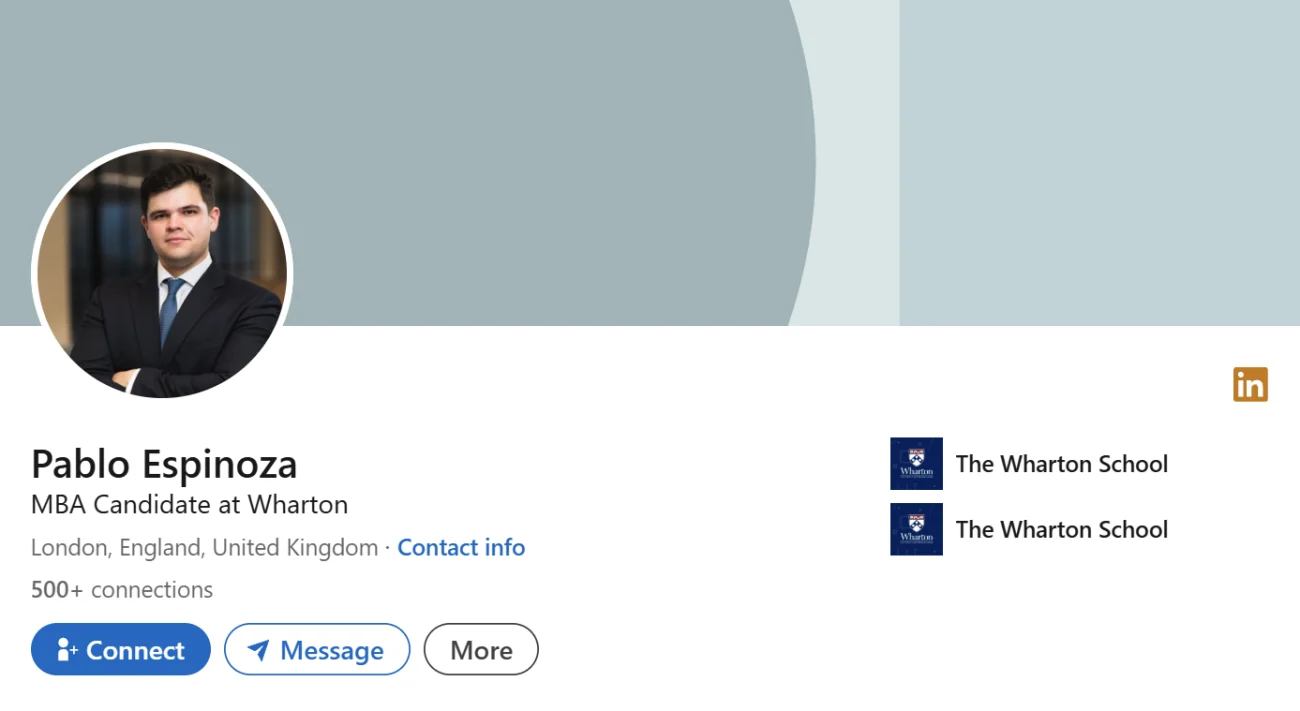
- ℹ️ MBA Candidate @ Wharton | Ex-McKinsey Associate | Strategy & Digital Transformation
- ℹ️ MBA Student | Former Product Manager at Google | Tech Strategy & Entrepreneurship
- ℹ️ FinTech & Blockchain Enthusiast | MBA Candidate, Chicago Booth | Ex-Vice President at Citi
- ℹ️ MBA Candidate | 5 Years Marketing Experience | Brand Management | Wharton
- ℹ️ Executive MBA Candidate | Current Director of Sales | Leadership & Global Operations
2. The “Specialist” Approach (The “Pivoter” Profile)
If you are using your MBA to switch industries (e.g., from Teaching to Finance), your pre-MBA title might not be relevant to your target role. In this case, focus heavily on your Concentration and Transferable Skills.
🎯 Strategy: Replace your old job title with your new functional focus.
Finance & Consulting Pivoters:
- ℹ️ MBA Candidate | Finance & Private Equity Focus | CFA Level II | Financial Modeling
- ℹ️ MBA Student | Strategy Consulting Interest | Case Competition Winner | Harvard Business School
- ℹ️ MBA Candidate | Investment Banking Summer Associate Search | Valuation & M&A
Marketing & Brand Management Pivoters:
- ℹ️ MBA Student | Marketing Strategy & Brand Management | Consumer Behavior Analytics
- ℹ️ MBA Candidate | Digital Marketing Focus | E-commerce Growth Strategy | NYU Stern
- ℹ️ MBA Student | CPG Brand Management | Customer Insights | Kellogg
Technology & Product Pivoters:
- ℹ️ MBA Candidate | Technology & Product Management | SWE Background | Stanford GSB
- ℹ️ MBA Student | Tech Entrepreneurship | Engineering + Business | MIT Sloan
- ℹ️ MBA Candidate | Product Management Focus | Ex-Amazon Operations | Berkeley Haas
3. Signaling Availability (The “Active Seeker” Profile)
Recruiters have very specific buckets: “Summer Interns” and “Full-Time Hires.” Ambiguity here kills your conversion rate. Be explicit about your timeline, especially if you are in the aggressive recruiting season (Sept-Nov or Jan-Feb).
First-Year (Internship Seekers):
- ℹ️ MBA Candidate (Class of 2026) | Seeking Summer Internship in Venture Capital
- ℹ️ First-Year MBA | Investment Banking Summer Associate Search | Wharton
- ℹ️ MBA Candidate | Seeking Summer 2025 Internship | Consulting | Harvard Business School
Second-Year (Full-Time Seekers):
- ℹ️ MBA Candidate | Product Management | Available for Full-Time Roles starting May 2025
- ℹ️ MBA Graduate 2025 | Strategy Consulting | Ex-McKinsey | Kellogg
- ℹ️ MBA Candidate (May 2025) | Product Management | Ex-Engineer | Stanford GSB
PhD & Researcher Headlines: Bridging the “Ivory Tower” Gap
For PhD candidates, the challenge is translation. Academic titles and hyper-niche research topics often sound alien to industry recruiters. Your phd candidate LinkedIn headline must translate “Academic Rigor” into “Commercial Value.”

The Translation Matrix: Academy to Industry
When moving from academia to industry, you must rename your assets. Use this comparison to guide your keyword choice:
| Academic Concept (What you say in the lab) | Industry Headline Translation (What recruiters search for) |
|---|---|
| Dissertation on transformer models in NLP | Large Language Models (LLM) & Generative AI Specialist |
| Conducting qualitative interviews & ethnography | User Experience (UX) Researcher / Qualitative Analysis |
| Statistical analysis of longitudinal datasets | Data Scientist / Predictive Analytics / Quantitative Research |
| Lab Manager / Teaching Assistant | Project Management / Team Leadership / Mentorship |
High-Impact STEM PhD Headlines
For STEM fields, list your tools. The specific languages, frameworks, and methodologies are often searched more frequently than the degree title itself.
- ℹ️ PhD Candidate, Computer Science | Deep Learning & Computer Vision | PyTorch, TensorFlow
- ℹ️ Biomedical Engineering PhD Researcher | CRISPR & Gene Editing | R&D Scientist Track
- ℹ️ Data Scientist | PhD Candidate in Statistics | Bayesian Modeling & MLOps
- ℹ️ PhD Researcher | Computational Biology | Cancer Research | MIT
- ℹ️ PhD Student | Materials Science | Nanotechnology | UC Berkeley
Social Science & Humanities Pivot
If you are in History, Sociology, or English, focus on your analytical capability and communication skills. You are not just a “History PhD”; you are a researcher capable of synthesizing massive amounts of information.
- ℹ️ PhD Candidate | Quantitative User Researcher (UXR) | Mixed Methods | Behavioral Science
- ℹ️ PhD Researcher in Sociology | People Analytics & Organizational Culture | Survey Design
- ℹ️ Policy Analyst | PhD Candidate, Political Science | International Relations Specialist
- ℹ️ PhD Student | Economics | Labor Economics & Policy | Harvard University
- ℹ️ PhD Researcher | Psychology | Cognitive Neuroscience | Yale
Positioning by Career Track
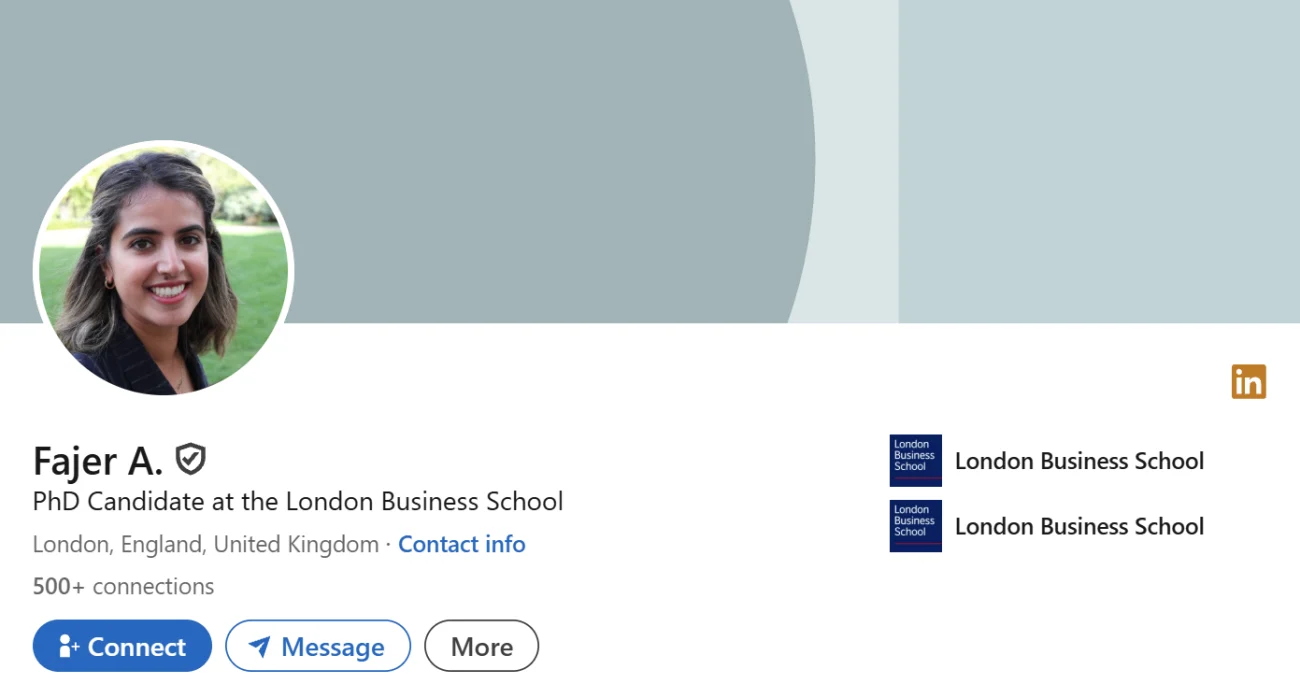
Industry-Focused (Leaving Academia):
- ℹ️ PhD Candidate | Machine Learning | Seeking Research Scientist Roles | Stanford CS
- ℹ️ PhD Researcher | Computational Chemistry | Pharma R&D Interest | MIT
- ℹ️ PhD Student | Economics | Data Science & Tech Industry Target | Berkeley
Academic-Focused (Seeking Faculty/Postdoc):
- ℹ️ PhD Candidate | History | 19th Century America | Seeking Faculty Positions
- ℹ️ PhD Researcher | Physics | Quantum Computing | Academic Track | Caltech
- ℹ️ PhD Student | English Literature | Postdoctoral Research Interest | Harvard
The “ABD” (All But Dissertation) Status
If you are near the finish line, signal that you are done with coursework and ready to work.
- ℹ️ PhD Candidate (ABD) | Computer Science | Deep Learning | Defending Spring 2025
- ℹ️ PhD Researcher (ABD) | Neuroscience | Alzheimer’s Research | Publications in Nature
- ℹ️ PhD Candidate (ABD) | Economics | Econometrics & Policy | Job Market Candidate
Master’s Student Headlines: The Technical Specialist
Unlike MBA students (generalists) or PhDs (researchers), Master’s students are often hiring for deep, specific technical execution. Your masters student LinkedIn headline should act as a menu of your hard skills.
Computer Science & Data Science
Stop simply saying “MS Student.” Tell them the stack.
- ℹ️ MS CS Student @ Georgia Tech | Full Stack Developer | React, Node.js, AWS | Seeking 2025 Grad Roles
- ℹ️ Master’s in Data Science | NLP & Sentiment Analysis | Python, SQL, Spark
- ℹ️ MS Data Science | Python, SQL, Machine Learning | Columbia University
- ℹ️ Master’s Student | Business Analytics | Data Visualization | MIT Sloan
Engineering & Technical Fields
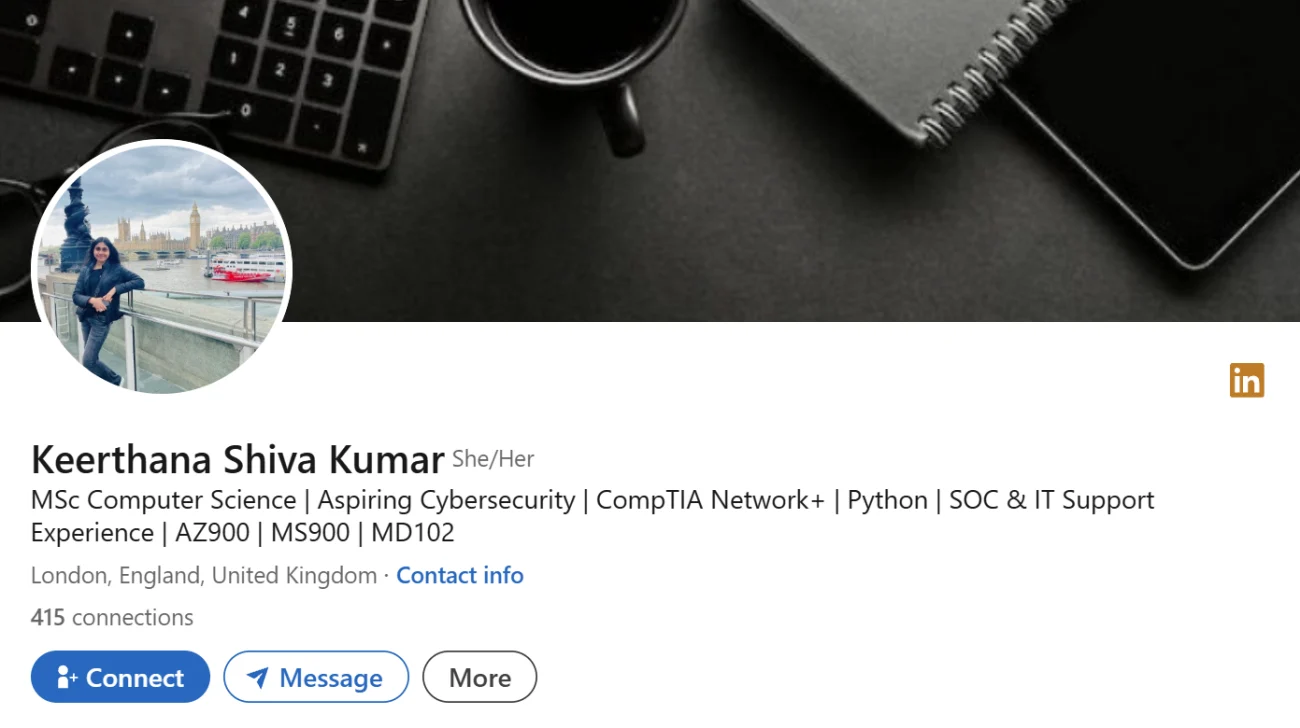
- ℹ️ MS Computer Science | Machine Learning Track | Stanford | Graduating 2025
- ℹ️ Master’s Student | Electrical Engineering | Signal Processing | Georgia Tech
- ℹ️ MS Candidate | Software Engineering | Full-Stack Development | Carnegie Mellon
- ℹ️ Master’s Student | Mechanical Engineering | Robotics | MIT
Professional Master’s Programs (Policy, Management, Health)
These degrees are often for early-career professionals. You must compensate for a lack of work experience by highlighting certifications and intense academic focus.
- ℹ️ Master of Finance Candidate | CFA Level I Candidate | Financial Analysis & Valuation
- ℹ️ Master’s in Management | Strategy & Operations | London Business School
- ℹ️ MS Management | Marketing Focus | Duke Fuqua
- ℹ️ Master’s Student | Public Policy | Education Policy | Harvard Kennedy School
- ℹ️ MPA Candidate | International Development | Georgetown
Positioning for Academic Roles (RAs, TAs, & Fellows)
Often, your “work experience” during grad school is academic in nature. Here is how to make Research Assistantships and Teaching Assistantships sound impressive.
Graduate Research Assistants (GRA)
Focus on the lab, the PI (Principal Investigator), and the outcome of the research.
- ℹ️ Graduate Research Assistant | Computer Vision Lab | Stanford AI
- ℹ️ Research Assistant | Neuroscience | fMRI Studies | Harvard Medical School
- ℹ️ GRA | Materials Science | Nanomaterials Research | MIT
- ℹ️ Research Scientist (PhD Track) | AI & Robotics | Stanford
Teaching Assistants (TA)
Focus on leadership, communication, and mastery of the subject matter.
- ℹ️ Teaching Assistant | Computer Science | Algorithms & Data Structures | Stanford
- ℹ️ Graduate Teaching Fellow | Physics | Undergraduate Education | MIT
- ℹ️ TA | Statistics | Introductory Statistics | Berkeley
- ℹ️ Teaching Associate | Mathematics | Calculus & Linear Algebra | Harvard
Fellowship Recipients & Scholars
If you have won prestigious awards, these act as massive trust signals.
- ℹ️ NSF Graduate Research Fellow | Computer Science | Machine Learning | Stanford
- ℹ️ Fulbright Scholar | International Relations | Middle East Studies | Columbia
- ℹ️ PhD Candidate | Hertz Fellow | Applied Physics | Caltech
- ℹ️ Rhodes Scholar | Economics | Development Economics | Oxford
Special Strategies for Unique Situations
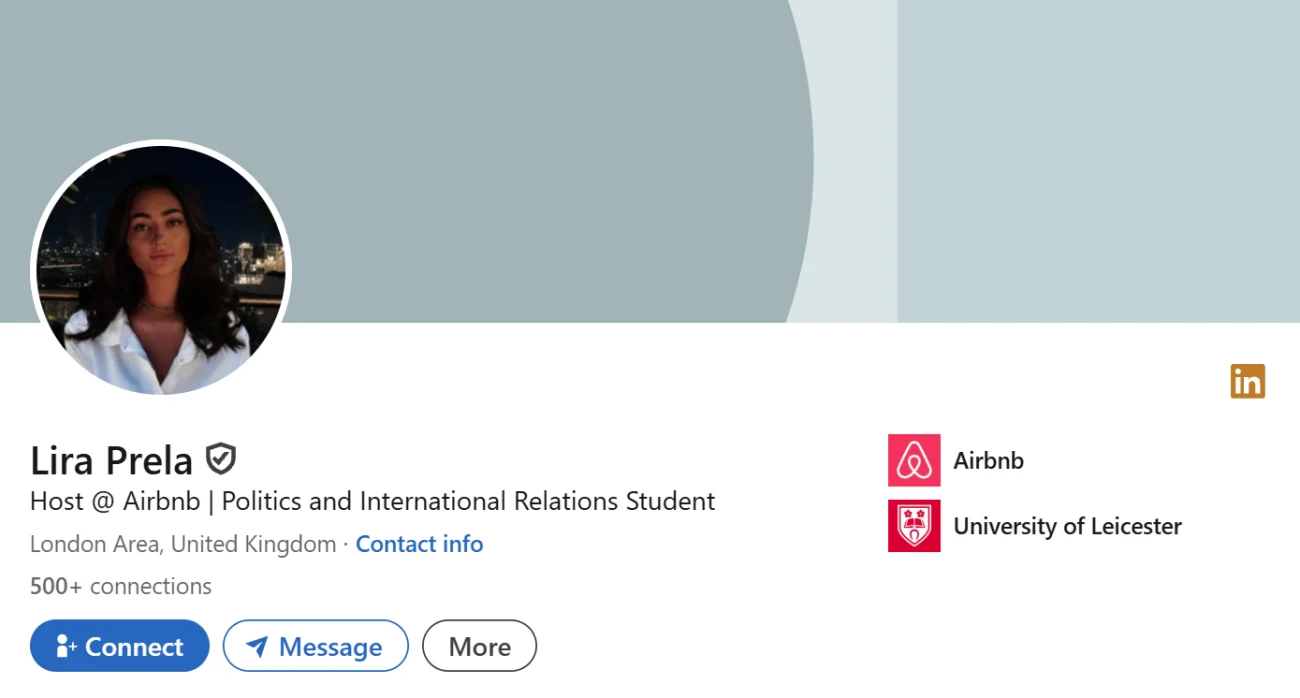
International Students (F1/OPT Strategy)
International students often face the hurdle of sponsorship. While you don’t necessarily need to put “Requires Sponsorship” in the headline (it takes up space), you can signal your global adaptability.
- ℹ️ International Student | MS Computer Science | India → Stanford | Seeking OPT Opportunities
- ℹ️ Graduate Student | MBA Candidate | China → Wharton | Bilingual Business Strategy
- ℹ️ PhD Candidate | Engineering | Germany → MIT | International Research Collaboration
Radical Career Switchers
If your past life is totally unrelated (e.g., Military to Corporate, Non-profit to Tech), use the “Translation” method.
- ℹ️ MBA Candidate | Engineer → Finance | Investment Banking Interest | Wharton
- ℹ️ MBA Student | Consultant → Tech | Product Management Track | Stanford GSB
- ℹ️ MBA Candidate | Military → Corporate | Leadership & Operations | Kellogg
- ℹ️ MBA Student | Nonprofit → For-Profit | Social Impact + Strategy | Harvard
Proven Headline Formulas for Graduate Students
Do not reinvent the wheel. Use these tested structures to build your draft, then customize the keywords for your specific niche.
1️⃣ Formula A: The “Experienced Pivot” (Best for MBAs)
Formula A: The “Experienced Pivot” (Best for MBAs)
[Degree/Status] at [School] | Ex-[Previous Role/Company] | [Target Function] | [Top Hard Skill]
Example:
MBA Candidate at MIT Sloan | Ex-Product Manager at Uber | Tech Strategy | Agile & Scrum
2️⃣ Formula B: The “Subject Matter Expert” (Best for PhDs/Research)
Formula B: The “Subject Matter Expert” (Best for PhDs/Research)
[Role Title] | [Specific Field of Study] | [Top 3 Technical Skills/Methods] | [Industry Goal]
Example:
Machine Learning Researcher | Natural Language Processing (NLP) | Python, BERT, GPT | Seeking AI Research Roles
3️⃣ Formula C: The “Aspiring Professional” (Best for Master’s/Early Career)
Formula C: The “Aspiring Professional” (Best for Master’s/Early Career)
[Degree] Candidate | [Specialization] | [Relevant Internship/Project] | [Top Skill]
Example:
MS in Supply Chain Management | Logistics Analytics | Amazon Operations Intern | SQL & Tableau
Critical Mistakes That Scream “Amateur”
Even smart students make basic branding errors. Avoid these common traps to ensure your profile looks senior and polished.
1. The “Aspiring” Trap:
Never use the word “Aspiring” (e.g., “Aspiring Consultant”). It psychologically suggests you are not one yet. Instead, use “Future,” “Candidate,” or simply state the role followed by “Focus.” Be the role you want to be.
2. The “GSE / GSB / HBS” Acronym Soup:
While you know what “HKS” (Harvard Kennedy School) or “SOM” (School of Management) means, a keyword scraper does not. Always spell out “Harvard Kennedy School” or “Yale School of Management” at least once, or use the widely recognized university name to ensure searchability.
3. Burying the Lead:
Do not put “Student” as the very first word if you have 5 years of experience. Lead with your value. “Marketing Manager | MBA Candidate” is stronger than “MBA Candidate | Marketing Manager” because the eye reads left-to-right, catching the professional title first.
For more detailed advice on what to avoid and what to include, refer to our pillar content on optimizing your LinkedIn headline.
❓ FAQ
🏫 Should I include my GPA or “Honors” in the headline?
🔄 How often should I update my headline during my degree?
1. Start of Program: Announce your candidacy and focus.
2. Recruiting Season (Jan/Feb or Sept): Explicitly state “Seeking Summer Internship” to trigger recruiter outreach.
3. Pre-Graduation (3 months out): Remove “Student” language and shift to “Incoming [Role] at [Company]” or “Seeking Full-Time Opportunities” to finalize your exit strategy.
🔬 I am a PhD wanting to stay in Academia. Is this advice different?
🚫 Is it okay to use “Student at University X” if the university is very famous?
👷 What if I am working full-time while doing a Part-Time MBA?
📝 Should I include publications in my headline?
Final Thoughts: Your Headline is Your Career Thesis
Your LinkedIn headline is not a permanent tattoo; it is a dynamic billboard that should evolve as you progress through your academic journey. The goal of an effective LinkedIn headline for mba student or graduate researcher is to control the narrative. You want to dictate exactly how a stranger perceives your professional worth before they even click on your profile.
Remember, the degree is the vehicle, not the destination. Don’t let the vehicle overshadow the driver. Whether you are an MBA targeting Wall Street, a PhD aiming for Silicon Valley, or a Master’s student building the next great tech product, your headline must scream “Competence” first and “Student” second.
School prestige matters significantly for top-tier programs where institutional brand carries weight – Harvard Business School, Stanford GSB, MIT, Caltech, and other elite institutions warrant prominent headline placement because recruiters specifically target these programs and alumni networks provide valuable connections. However, school name alone insufficient without concentration, research area, or prior experience context that explains what makes your profile relevant for specific opportunities.
By implementing the strategies above – leveraging your past experience, translating academic jargon into industry keywords, and clearly signaling your career trajectory – you transform your profile from a passive student resume into an active magnet for high-quality professional opportunities.