- Why it works: Minimalist headlines cut noise, respect recruiter attention, and signal confident focus.
- What it is: Maximize signal-to-noise by keeping only role, one specialty or one value, and removing buzzwords and filler.
- 4 formulas: Role | Company, Role | Specialty, Role | Value Statement, Descriptor + Role.
- Key warning: Minimalist is not vague, your headline must still clearly answer what you do.
- How to edit: Brain dump, cut implied items, pick one differentiator, test with a stranger, keep separators consistent.
Why Minimalist Headlines Work in a Noisy Digital World
Imagine a recruiter scrolling through hundreds of profiles a day. Their eyes glaze over as they encounter the same wall of text again and again: “Senior Visionary Leader | Transforming Ideas into Reality | Guru of Synergy | 10x Developer | Helping Companies Scale.” It is exhausting. It is noise. In this chaotic environment, a minimalist LinkedIn headline acts as a beacon of clarity. It cuts through the digital clutter not by shouting louder, but by whispering with precision.
There is a profound misconception in personal branding that volume equals value – that the more you list, the more qualified you appear. The reality is often the opposite. When you cram every skill, certification, acronym, and soft skill into your 220-character limit, you aren’t showing versatility; you are signaling a lack of focus. You are making the viewer work to figure out what you actually do.
Minimalism is not about laziness. It is a deliberate, strategic design choice that respects your audience’s cognitive load. A minimalist headline communicates a powerful message: “I am so confident in my core expertise that I do not need to hide behind buzzwords.” It is the distinct difference between a desperate attempt to be everything to everyone and a confident declaration of professional identity. It distinguishes the “Senior Software Engineer | Python, Java, React, Docker, Kubernetes, AWS, CI/CD, Agile, Scrum Master” from the clear, commanding “Software Engineer | Building Scalable Systems.”
In this comprehensive guide, we will move beyond basic advice. We will explore the psychology of why less is more, providing you with over 45 examples and the specific strategic formulas to craft a headline that commands respect. We will teach you how to strip away the non-essential to reveal the authority underneath.
The Anatomy of a Minimalist Headline
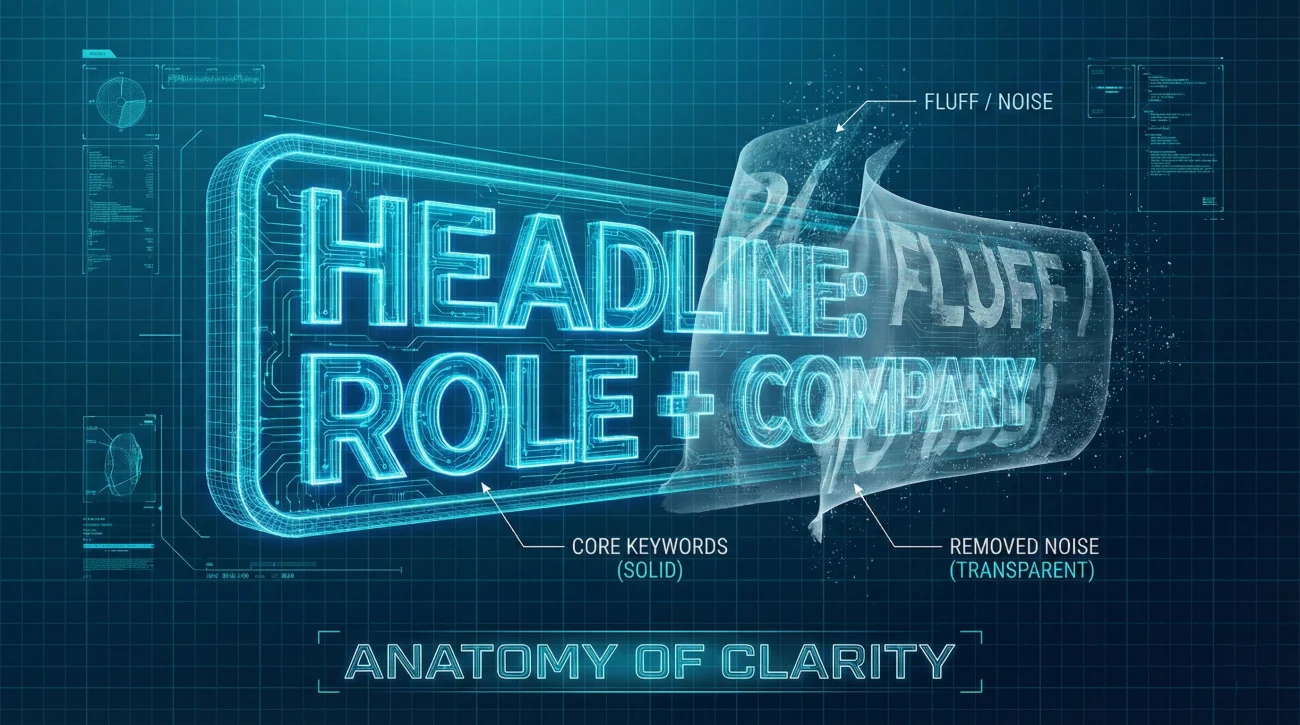
To master minimalism, one must understand that it is not simply about writing less text. It is about maximizing the “signal-to-noise” ratio of your profile. A true minimalist headline possesses specific DNA that separates it from the generic masses:
Radical Essentialism
In a minimalist approach, every word must fight for its survival. If a word does not directly communicate your specific role, your unique value, or your industry standing, it must be cut. There is no room for filler. “Motivated self-starter” goes. “Passionate about excellence” goes. These are fluff phrases that dilute your message. Minimalist headlines focus exclusively on the tangible: your title, your specialty, or your unique value proposition. They never try to do all three at once.
The Luxury of Whitespace
Visually, a packed headline looks cluttered and stressful. A minimalist headline uses whitespace as a luxury asset. By using separators like the vertical bar (|) or the en-dash (–) sparingly, you create visual breathing room. This “negative space” around your words draws the eye directly to the content. A headline that uses only 80 characters when 220 are available is a power move. It suggests that you don’t need to fill the silence to be relevant.
Quiet, Unshakeable Confidence
Insecurity shouts; authority states. Minimalist headlines are an exercise in quiet confidence. They rely on the weight of the facts rather than the embellishment of adjectives. Writing “Designer” carries more weight than “Award-Winning Creative Visionary.” The former assumes the work will prove the quality; the latter tries to convince the reader before they have even looked at the portfolio. This approach taps into a psychological principle: we tend to trust people who don’t seem like they are trying too hard to sell us something.
“True expertise does not need to be adorned. Minimalist headlines trust that clarity, delivered with precision, creates a far deeper impact than exhaustive detail.”
4 Strategic Minimalist Formulas
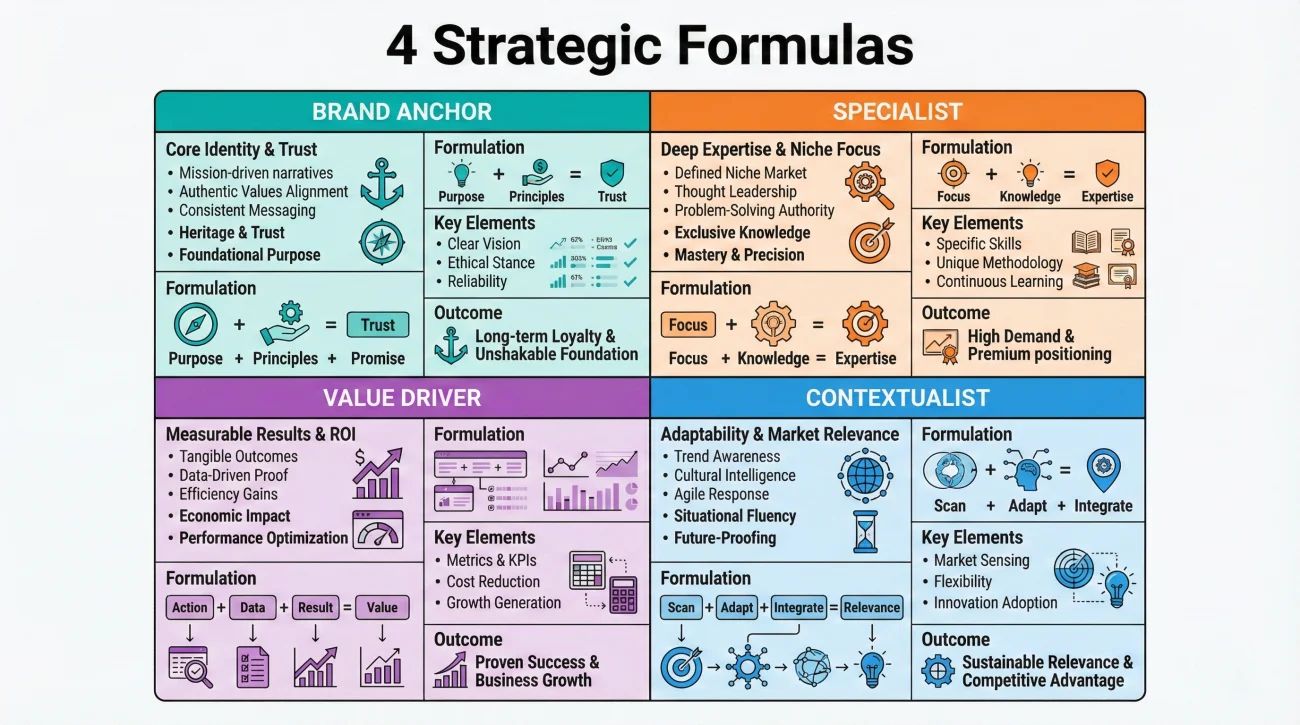
How do you distill a complex career into a few words without losing meaning? We have analyzed thousands of effective profiles and identified four formulas that deliver maximum clarity.
Formula 1: The Brand Anchor (Role | Company)
Example:
Product Designer | Stripe
The Strategy: This formula leverages “brand equity.” If you work for a company that is widely recognized and respected, the company name itself does the heavy lifting. It acts as a validator for your skills. You don’t need to list your tech stack because the market assumes that if you are a Product Designer at Stripe, you are already elite. This is the ultimate power move in minimalism.
Formula 2: The Specialist (Role | Specialty)
Example:
Software Engineer | Infrastructure
The Strategy: This is the most versatile formula for most professionals. The first part (Role) anchors you in a broad category so recruiters can find you. The second part (Specialty) disambiguates you from the crowd. It tells the reader where you play. It avoids the laundry list of tools (“Terraform, Ansible, Chef”) in favor of the high-level domain expertise (“Infrastructure”). It is clean, professional, and search-friendly.
Formula 3: The Value Driver (Role | Value Statement)
Example:
Marketing Leader | Building Brands
The Strategy: This formula focuses on outcome rather than output. Instead of listing tasks (managing teams, running ads), it focuses on the result (Building Brands). A single, clear value statement is memorable. The human brain struggles to hold three or four different value propositions in working memory, but it can easily latch onto one strong concept. “Building Brands” sticks; “Strategic Visionary Leader driving growth and ROI” slides right off.
Formula 4: The Contextualist (Descriptor + Role)
Example:
Independent Consultant | Strategy
The Strategy: Sometimes, the nature of your employment is as important as the job itself. This is crucial for freelancers, fractional executives, or specialists. The descriptor (Independent, Fractional, Contract) manages expectations immediately. It answers the question “How can I hire you?” before it is even asked. It combines the logistics of your engagement with the clarity of your function.
45+ Examples of Minimalist LinkedIn Headlines
Theory is useful, but seeing these concepts in practice brings them to life. Browse these categorized examples to see how different industries apply the principle of “less is more.” Notice the absence of fluff.
Ultra-Minimalist (Role + One Detail)
These are the gold standard for brevity. They rely entirely on the strength of the keywords.
- ℹ️ Product Designer | Figma
- ℹ️ Software Engineer | Google
- ℹ️ Writer | Technology
- ℹ️ Architect | Residential
- ℹ️ Analyst | Healthcare
- ℹ️ Consultant | Operations
- ℹ️ Designer | Brand Identity
- ℹ️ Engineer | Renewable Energy
Role + Specialty Combinations
Perfect for professionals who need to define their niche without listing every tool they use.
- ℹ️ Marketing Manager | B2B SaaS
- ℹ️ Data Scientist | Machine Learning
- ℹ️ Attorney | Corporate Law
- ℹ️ Teacher | Secondary Math
- ℹ️ Photographer | Editorial & Commercial
- ℹ️ Accountant | Tax & Compliance
- ℹ️ Nurse Practitioner | Primary Care
- ℹ️ Project Manager | Construction
Single Value Statements
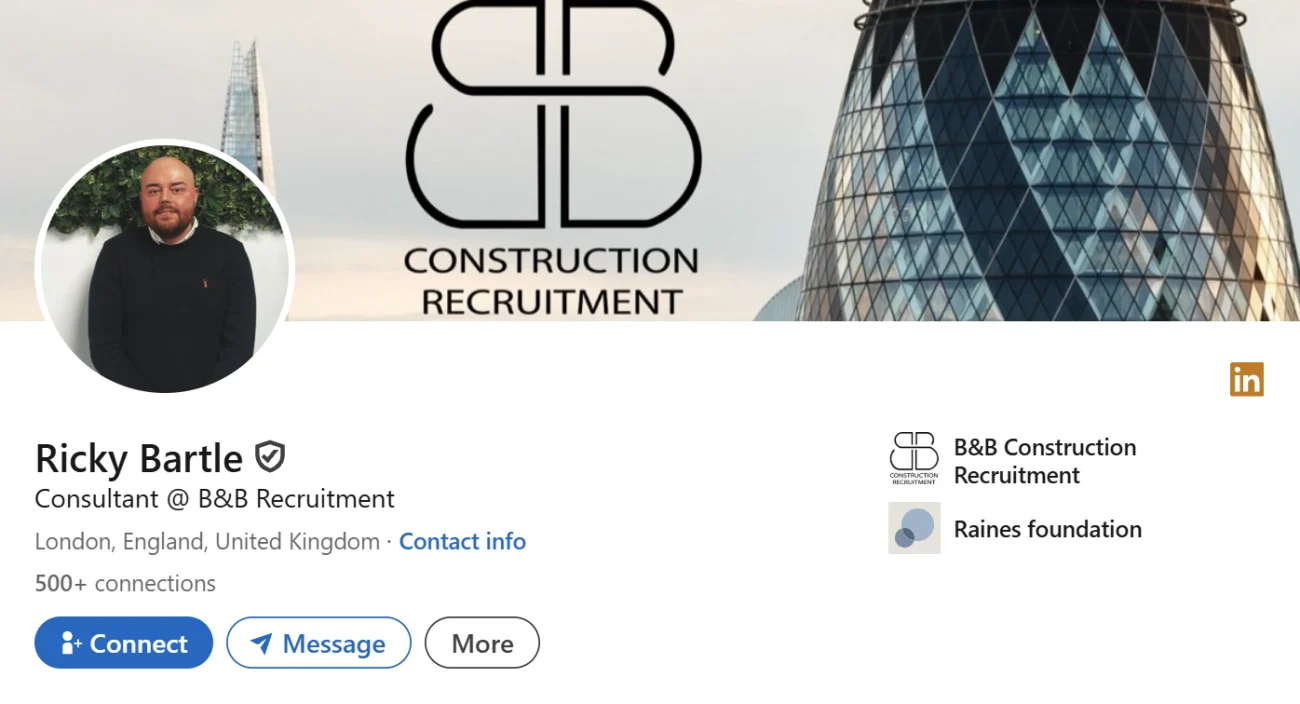
These headlines connect the role directly to the “why.” They are narrative and engaging.
- ℹ️ Designer | Creating Meaningful Experiences
- ℹ️ Engineer | Solving Complex Problems
- ℹ️ Sales Leader | Building High-Performing Teams
- ℹ️ Founder | Making Healthcare Accessible
- ℹ️ Writer | Telling Stories That Matter
- ℹ️ Consultant | Driving Operational Excellence
- ℹ️ Product Manager | Building Products People Love
- ℹ️ Developer | Writing Clean Code
Executive & Industry Leadership
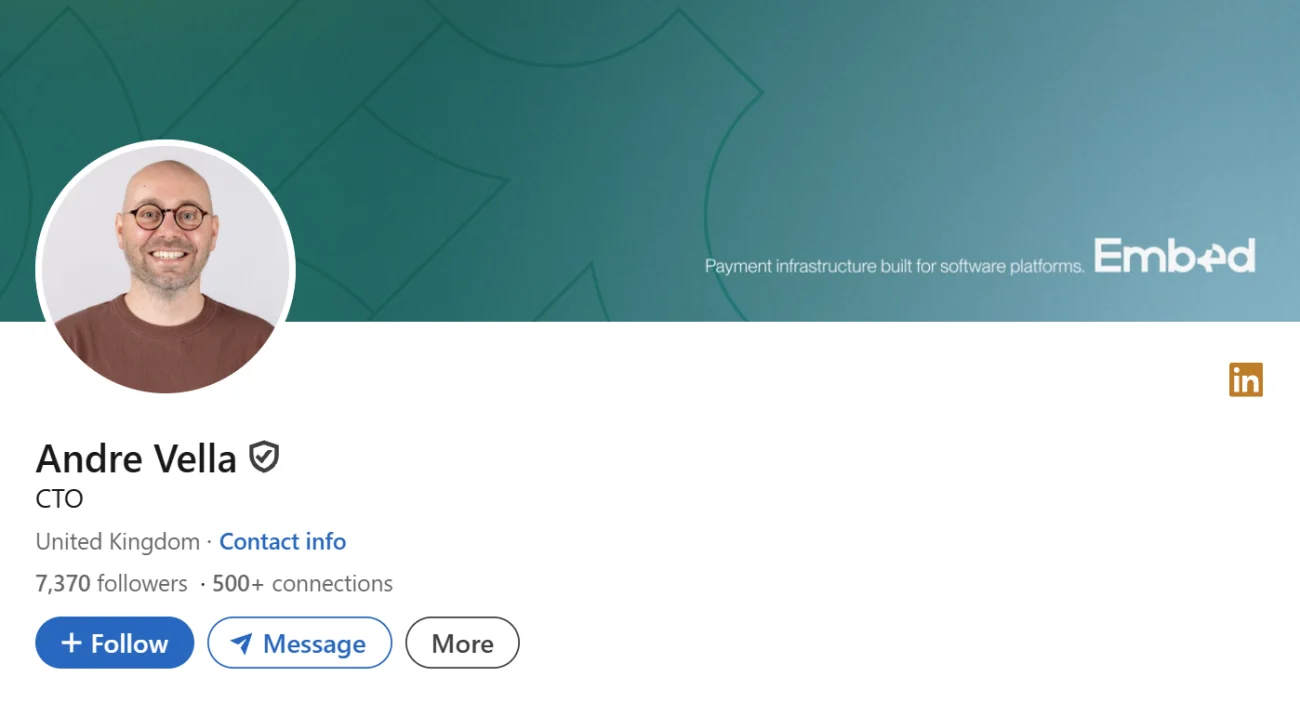
For the C-suite, brevity is a requirement. Complexity can signal a lack of strategic focus.
- ℹ️ CEO | FinTech
- ℹ️ CTO | Enterprise SaaS
- ℹ️ CMO | Consumer Brands
- ℹ️ CFO | Growth Stage Startups
- ℹ️ VP of Engineering | Platform Products
- ℹ️ Head of Design | Mobile Apps
- ℹ️ General Counsel | Tech Industry
- ℹ️ Chief Revenue Officer | B2B Sales
Independent & Fractional Professionals
Clear signaling of availability and expertise for the gig economy.
- ℹ️ Independent Consultant | Strategy
- ℹ️ Freelance Designer | Brand & Identity
- ℹ️ Solo Practitioner | Business Law
- ℹ️ Independent Researcher | Climate Science
- ℹ️ Freelance Writer | Technology & Business
- ℹ️ Contract Developer | iOS & Android
- ℹ️ Fractional CFO | SaaS Companies
- ℹ️ Independent Filmmaker | Documentary
Technical & Engineering
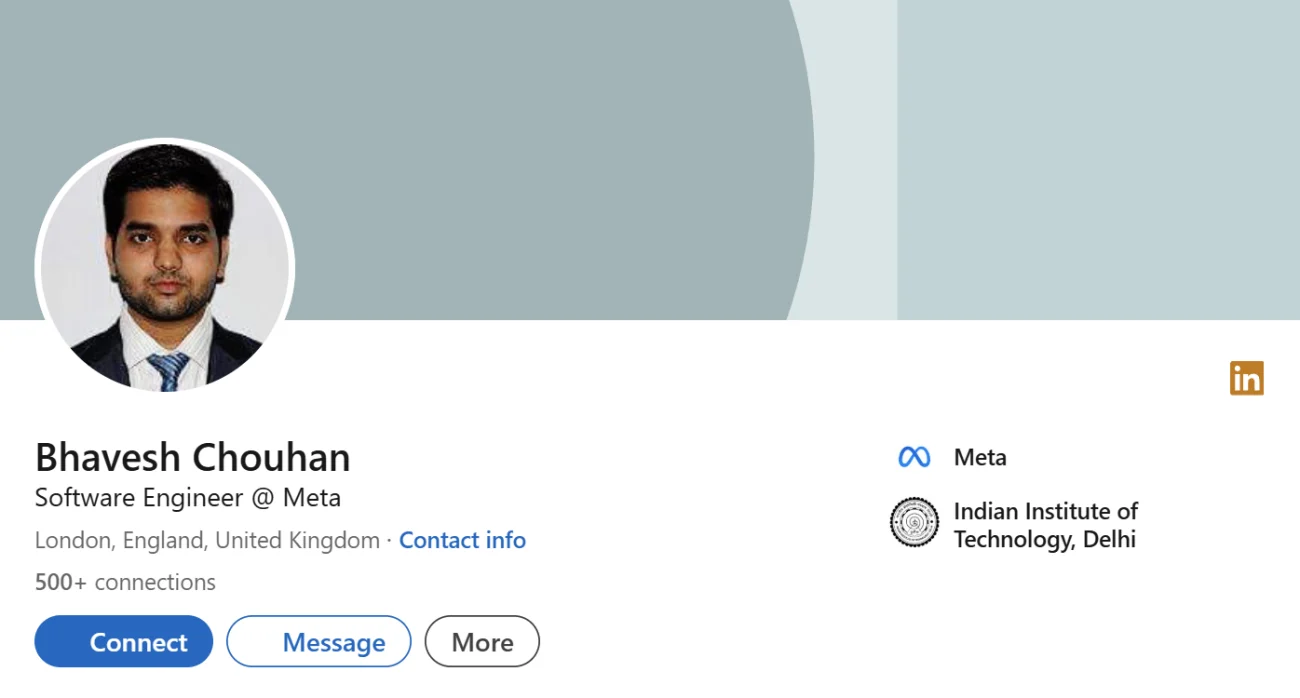
Technical roles often suffer the most from keyword stuffing. These examples show how to resist that urge.
- ℹ️ Software Engineer | Backend Systems
- ℹ️ Data Engineer | Data Pipelines
- ℹ️ Machine Learning Engineer | Computer Vision
- ℹ️ DevOps Engineer | Cloud Infrastructure
- ℹ️ Security Engineer | Application Security
- ℹ️ Platform Engineer | Developer Tools
- ℹ️ Research Scientist | Natural Language Processing
- ℹ️ Systems Architect | Distributed Systems
Creative & Design
Creatives know that good design is about subtraction. Their headlines should reflect that aesthetic.
- ℹ️ Art Director | Advertising
- ℹ️ Copywriter | Brand Voice
- ℹ️ Photographer | Portraits & Events
- ℹ️ Illustrator | Editorial Work
- ℹ️ Motion Designer | Animation
- ℹ️ Creative Director | Digital Campaigns
- ℹ️ UX Designer | Mobile Products
- ℹ️ Brand Strategist | Visual Identity
Business Strategy & Operations
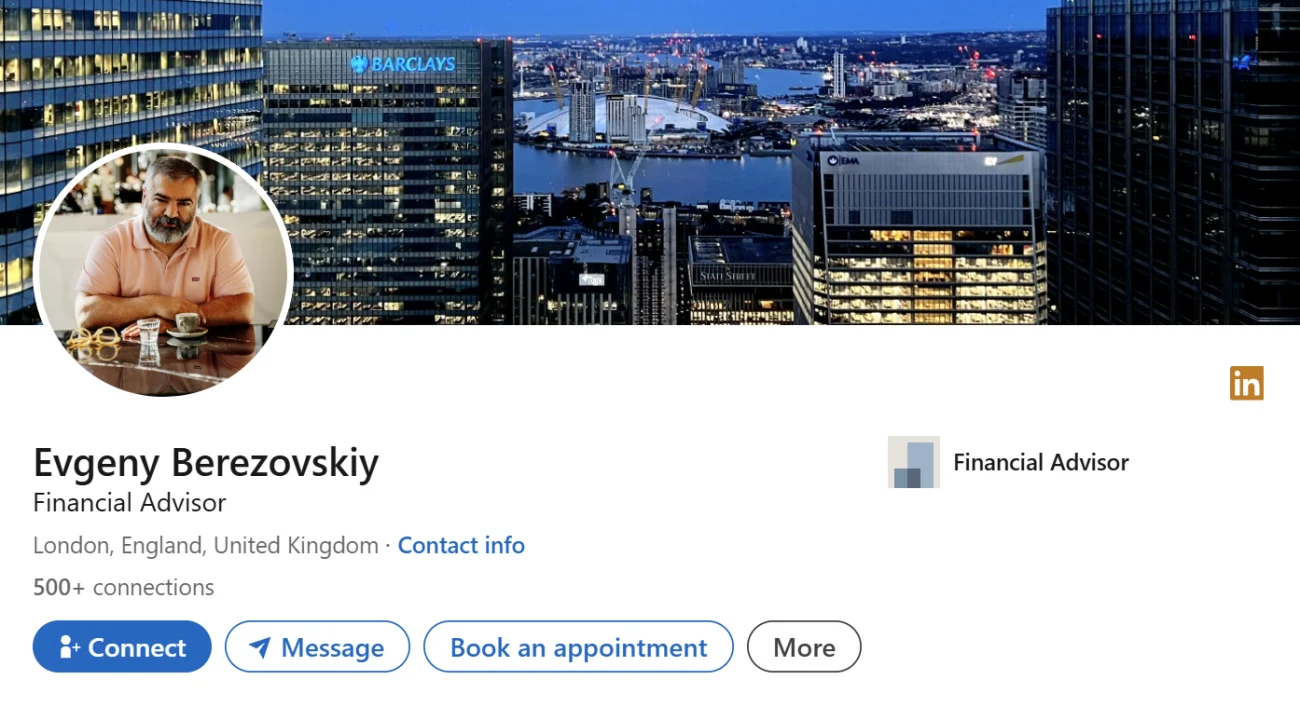
- ℹ️ Management Consultant | Operations
- ℹ️ Business Analyst | Financial Services
- ℹ️ Strategy Consultant | Market Entry
- ℹ️ Operations Manager | Supply Chain
- ℹ️ Business Development | SaaS Partnerships
- ℹ️ Investment Analyst | Private Equity
- ℹ️ Financial Advisor | Wealth Management
- ℹ️ Product Strategist | Platform Economics
Healthcare & Science
- ℹ️ Physician | Internal Medicine
- ℹ️ Nurse Practitioner | Family Medicine
- ℹ️ Pharmacist | Clinical Pharmacy
- ℹ️ Physical Therapist | Orthopedics
- ℹ️ Dentist | General Practice
- ℹ️ Surgeon | Cardiothoracic
- ℹ️ Therapist | Cognitive Behavioral Therapy
- ℹ️ Registered Nurse | Critical Care
The Critical Difference: Minimalist vs. Vague
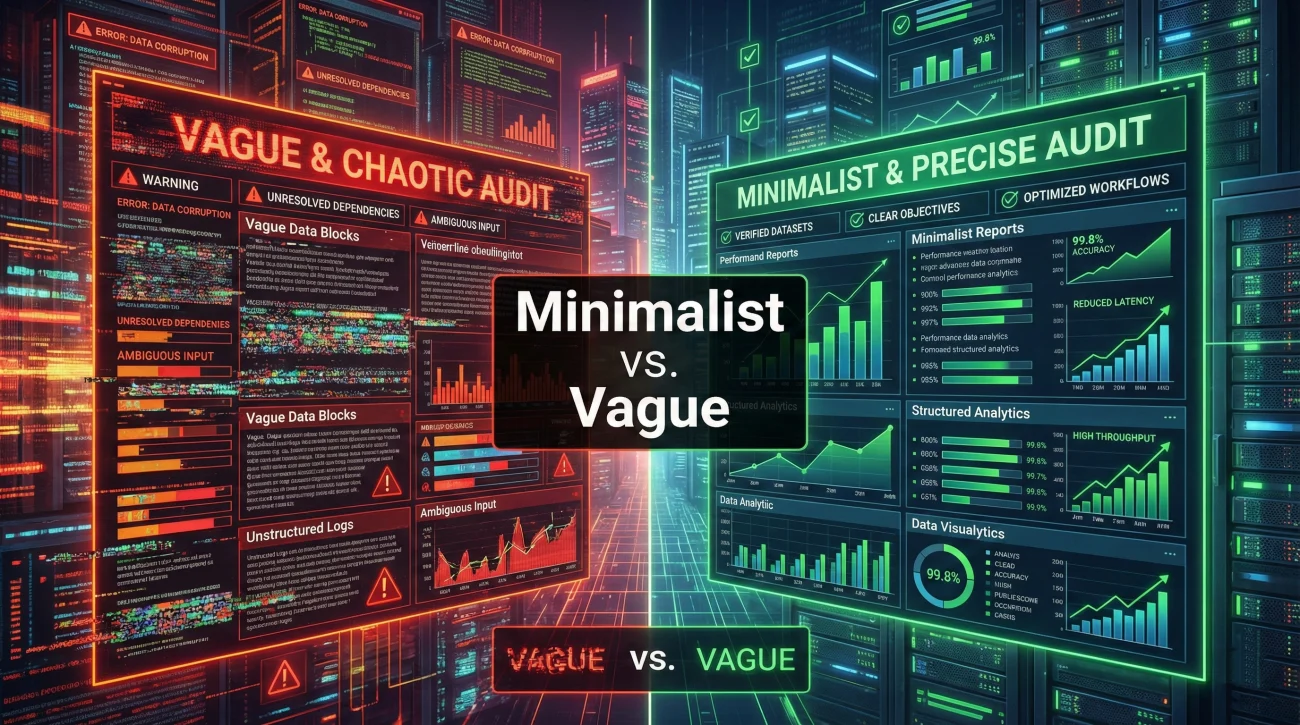
There is a dangerous trap in minimalism: becoming so brief that you become meaningless. This is the difference between being concise and being vague. Concise is efficient; vague is confusing. You must never sacrifice clarity for the sake of brevity.
A minimalist headline must still answer the fundamental questions: Who are you? What do you do? If a recruiter looks at your profile and says “I don’t know what this person actually does,” you have failed, no matter how clean the aesthetic is.
| ❌ Too Vague (Bad Minimalism) | ✅ Minimalist (Good Economy) | 💡 Why the Difference Matters |
|---|---|---|
| “Professional” | “Product Manager | SaaS” | “Professional” is a baseline requirement, not a job title. “Product Manager” is a specific role. |
| “Helping People” | “Career Coach | Tech Professionals” | “Helping” is generic altruism. “Coaching” is a service someone can buy. |
| “Doing Things” | “Developer | Mobile Apps” | Never be abstract about your output. Be specific about the domain. |
| “Creative” | “Designer | Brand Identity” | “Creative” is a personality trait. “Designer” is a profession. |
| “Business Person” | “Consultant | Operations Strategy” | Clients hire consultants for specific outcomes, not general business existence. |
The rule of thumb is simple: If your headline could apply to five different completely unrelated professions, it is too vague. It needs to be anchored in your specific industry reality.
Step-by-Step Guide to Crafting Your Headline

Writing short is harder than writing long. As Mark Twain famously implied, brevity takes time. Follow this audit process to distill your professional identity down to its diamond core.
Step 1: The Brain Dump
Start by writing out everything. Don’t edit yet. List your title, your industry, your hard skills, your soft skills, your years of experience, and your major achievements.
Draft: “Senior Product Manager | B2B SaaS Expert | Product Strategy, Roadmap & Stakeholder Management | 10+ Years Experience | Agile Certified | MBA”
Step 2: The Redundancy Audit
Now, look for things that are implied.
• If you are a “Senior Product Manager,” you obviously do “Roadmap & Stakeholder Management” – that is the definition of the job. Cut it.
• “10+ Years Experience” is clearly visible in your Experience section just two inches below. Cut it.
• “Agile Certified” and “MBA” belong in the Certifications and Education sections. Cut them.
Result: “Senior Product Manager | B2B SaaS Expert | Product Strategy”
Step 3: The Strategic Selection
Now you have to make a choice. What is your primary differentiator? Is it your deep industry knowledge (B2B SaaS)? Or is it your specific approach (Product Strategy)? You usually cannot have both in a minimalist headline without it starting to feel cluttered. Choose the one that aligns best with the jobs you are targeting.
Result: “Product Manager | B2B SaaS”
Step 4: The Stranger Test
Show your headline to someone outside your industry. Ask them, “Based on these four words, what do you think I do?” If they guess correctly, you have achieved clarity. If they are confused, you may have cut too much. Add one clarifying word back in. Minimalism is an iterative process of refinement.
“The art of minimalism is knowing what to keep, not just what to cut. Every remaining word must earn its rent.”
Is Minimalism Right for You?
While we advocate for clean aesthetics, we must be honest: minimalism is not the correct strategy for everyone, at every stage of their career. Context is king.
When to Embrace Minimalism
You should lean into this style if:
- ✅ You work at a recognizable brand. If you work at Amazon, Nike, or McKinsey, the brand equity is enough. You don’t need to explain what you do in detail.
- ✅ You are a senior leader. Executives need to project vision and authority, not technical implementation details. A CTO listing coding languages looks junior; a CTO simply stating “CTO” looks powerful.
- ✅ You are in a standardized role. If you are a Dentist, an Accountant, or a Real Estate Agent, people know exactly what you do. You don’t need to explain the mechanics of the job.
- ✅ You target high-end clients. In luxury markets and high-level consulting, sophistication is a selling point. A busy profile can look “cheap” or desperate.
When to Add More Detail
You might need a slightly more descriptive approach if:
- ❌ You are early in your career. You don’t have a track record yet, so you may need to list specific skills (like “Python” or “Copywriting”) to be found in searches.
- ❌ You are a career changer. If your past experience doesn’t match your future goals, you need to use your headline to bridge that gap and explain your transferable value.
- ❌ You work in a niche or new field. If you are a “Prompt Engineer” or work in “Bio-informatics,” the layperson might not know what that entails. A few extra words of context can be helpful.
- ❌ You are actively job hunting in a crowded market. Sometimes you need to hit specific keywords for Applicant Tracking Systems (ATS). However, you can still integrate these cleanly without resorting to keyword stuffing.
Leveraging Brand Equity
One of the most powerful moves in a minimalist headline is leveraging the reputation of your employer. This is a concept known as “halo effect” in psychology. The positive attributes of the company (innovation, success, stability) are subconsciously transferred to you.
The “Halo Effect” Headline
- ✅ “Product Designer | Apple”
- ✅ “Software Engineer | Google”
- ✅ “Analyst | Goldman Sachs”
- ✅ “Researcher | MIT”
In these examples, adding extra skills would actually detract from the headline. “Software Engineer | Google | Java | C++” is weaker than “Software Engineer | Google.” The former sounds like you are applying for a job; the latter sounds like you have arrived.
What If Your Company Isn’t Famous?
If you work for a small startup or a local firm, listing the company name might not provide that immediate context. In this case, replace the company name with a description of the company’s category. This maintains the minimalist structure while adding necessary context.
| ❌ Instead of | ✅ Use | 💡 Why it works better |
|---|---|---|
| Product Manager | DynoTech LLC (Unknown) | Product Manager | B2B SaaS Startup | Gives clear context about the type of company instead of a brand no one recognizes. |
| Engineer | GreenSol (Unknown) | Engineer | Climate Tech | Spells out the industry, making your niche obvious at a glance. |
The Typography of Silence: Choosing Separators
In minimalism, the details matter. When you have very few words, the characters you choose to separate them become significant design elements. They control the reading flow.
The Menu of Options
- The Vertical Bar ( | ) – This is the standard for tech and corporate roles. It is clean, sharp, and efficient. It creates a distinct wall between concepts.
- The Em Dash ( – ) – This is longer and more elegant than a hyphen. It suggests a connection or a flow between the two parts. It feels more “editorial” or “literary.”
- The Bullet ( • ) – This adds a touch of visual weight. It is often used to list multiple equal items, but can be effective in minimalism to center the eye.
- The Comma ( , ) – The most traditional and understated option. It reads like a sentence. “Designer, Brand Identity.”
Pro Tip: Whichever you choose, use it consistently. Do not mix pipes and dashes in the same headline. Inconsistency triggers a subconscious feeling of disorder in the viewer.
The Psychology of Perception
Why do we react so positively to minimalism? It is rooted in how the human brain processes information.
Respecting Cognitive Load
We live in an attention economy. Everyone is overwhelmed. When a recruiter sees a paragraph of text in a headline, their brain registers it as “work.” When they see a clean, three-word headline, their brain registers it as “relief.” By saying less, you are literally making it easier for people to engage with you.
The Confidence Signal
There is a concept in signaling theory called “costly signaling.” It is easy to write a lot of words – it costs nothing. It is “expensive” (psychologically) to leave things out because you risk being misunderstood. Therefore, being willing to leave things out is a signal of high status. It says, “I can afford to be brief.” It implies that your reputation precedes you.
The Sticky Factor
Memory is limited. You cannot force someone to remember a laundry list of 15 skills. But you can get them to remember “The Brand Identity Guy” or “The SaaS Growth Woman.” Minimalism forces you to pick a “hook” that sticks in the mind of your network.
The Final Audit Checklist
Before you hit “Save” on your new minimalist profile, run it through this rigor test. If you can’t check every box, keep editing.
- ✅ Clarity Check: Is my role immediately understandable to a stranger?
- ✅ Differentiation Check: Is my specialty or industry evident?
- ✅ Redundancy Check: Have I removed words that are implied by the role itself?
- ✅ Utility Check: Does every remaining word serve a strategic purpose?
- ✅ Specificity Check: Have I avoided vague words like “Professional” or “Enthusiast”?
- ✅ Confidence Check: Am I comfortable letting my Experience section prove my worth?
- ✅ Aesthetic Check: Does it look clean visually? Is the spacing consistent?
❓ Frequently Asked Questions
💼 Is a minimalist headline too simple for LinkedIn?
📊 Will a short headline hurt my searchability (SEO)?
🎯 Should executives use minimalist headlines?
🔄 Can I be minimalist if I’m job searching?
💡 What’s the shortest effective LinkedIn headline?
Final Thoughts: The Courage to Be Brief
Adopting a minimalist LinkedIn headline is more than a formatting choice; it is a mindset shift. It requires you to let go of the fear that you “aren’t enough” without a laundry list of qualifications. It asks you to trust in the quality of your actual work history.
In a digital landscape dominated by noise, signal is valuable. The difference between “Senior Full-Stack Software Engineer | JavaScript, Python, React, Node.js, AWS | 15+ Certifications | Problem Solver | Team Player” and simply “Software Engineer | Building Scalable Systems” is not just a word count. It is the difference between desperation and confidence. It is the difference between clutter and clarity.
Great minimalist headlines prove that professional authority doesn’t require exhaustive self-promotion. They demonstrate an understanding that true expertise whispers, while insecurity shouts. The empty space in your headline isn’t wasted territory – it is purposeful design that allows your true value to shine brighter.
Be bold enough to delete the fluff. Be confident enough to state your role simply. Your headline doesn’t need to tell your whole life story – it just needs to be intriguing enough to make the right people want to click and read the rest.
Ready to refine your approach further? Check out our complete LinkedIn headline guide or explore different styles in our headline library.