
- Why it matters: For lawyers, your headline is the first credibility check before a client or GC ever contacts you.
- Three pillars: Credentials and admissions, Practice area specificity, Client type clarity.
- Four headline formulas: Specialist, Authority, Advocate, Strategic partner for in-house.
- Common mistakes: Too generic, Missing bar info when it is a differentiator, Firm-first wording, Legalese, Overly aggressive claims.
- Final audit: Keep it clear and searchable, Add one authority signal, Stay concise, Follow your bar advertising ethics rules.
The Verdict Is In: Why Your LinkedIn Headline for Lawyers Matters
In the legal profession, credibility isn’t just a buzzword – it’s the currency of the realm. Before a potential client picks up the phone, before a general counsel sends an RFP, and certainly before a referral partner passes your name along, they will Google you. And when they do, your LinkedIn profile is almost always the first result they see. For a legal professional, your headline is not just a label; it is your opening statement to the world.
Most attorneys default to the safe, generic option: “Associate at Law Firm LLP” or simply “Attorney.” Frankly, this is a missed opportunity. It tells the viewer nothing about your practice area, the clients you serve, or the specific problems you solve. In a saturated market, ambiguity is the enemy. A generic headline suggests a generic lawyer. By contrast, a specific, authoritative headline suggests a specialist who knows how to win.
This guide is your counsel for digital reputation management. We will move beyond the basics and delve into the nuances of legal branding. We’ll walk through curated strategies, dissect the psychology behind trust signals, and equip you with the formulas to transform your profile from a static resume into an active asset that generates clients.
The Three Pillars of a Strong Legal Headline
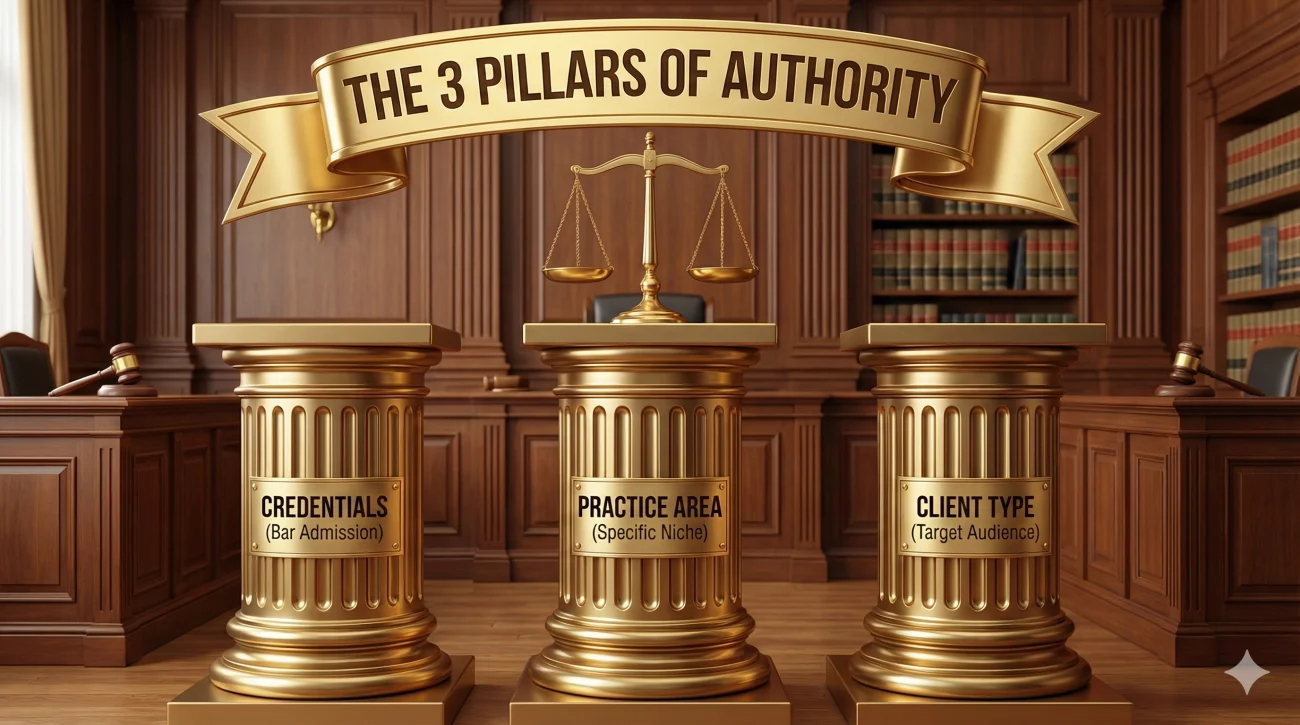
Unlike creative industries where abstract titles are often rewarded, the legal field values precision, authority, and trust above all else. To be truly effective, your headline needs to balance these three pillars.
The Trust Signal: Credentials & Admissions
Law is a regulated profession. You simply cannot practice without a license. Therefore, stating your bar admission or specific credentials (e.g., “Board Certified,” “Patent Bar,” “CIPP/US”) acts as an immediate trust signal. It answers the very first question in the viewer’s mind: “Is this person actually qualified?” For high-stakes litigation or specialized IP work, these credentials aren’t just nice-to-haves – they are non-negotiable keywords.
The Relevance Filter: Practice Area Specificity
“I do legal stuff” is not a value proposition. A General Counsel looking for M&A support will not hire a “General Practitioner.” They are looking for a “Corporate M&A Attorney.” Your headline must act as a filter, attracting the right clients while filtering out the wrong ones. By clearly stating “Employment Litigation” or “Estate Planning,” you respect the viewer’s time and instantly establish your niche.
The Mirror Effect: Identifying the Client
The best headlines hold up a mirror to the ideal client. When a startup founder sees “Representing Emerging Tech Companies,” they think, “That’s me.” When a Fortune 500 executive sees “Complex Commercial Litigation Defense,” they recognize their own specific needs. Your headline should not just say who you are; it should signal that you understand who they are.
4 Strategic Formulas for Lawyer Headlines

Building a headline that commands respect requires a blueprint. Use these four proven structures to craft your narrative.
1️⃣ Formula 1: The Specialist
Formula 1: The Specialist
Structure:
Role | Practice Area | Client Base
Example:
Corporate Attorney | M&A & Securities | Representing Tech Startups & Growth Companies
💡 Why it works:
It covers the three essentials: What you do, your specific niche, and exactly who you help. It is clean, professional, and optimized for search.
2️⃣ Formula 2: The Authority
Formula 2: The Authority
Structure:
Seniority | Specialty | Jurisdiction/Credential
Example:
Partner | Employment Law Attorney | Wage & Hour Litigation | California & Federal Courts
💡 Why it works:
Ideal for litigators where jurisdiction is critical. It establishes seniority (“Partner”) and scope (“Federal Courts”), signaling that you are equipped to handle high-level disputes.
3️⃣ Formula 3: The Advocate
Formula 3: The Advocate
Structure:
Role | The Outcome You Deliver | Proof Point
Example:
Criminal Defense Attorney | Protecting Rights & Fighting Charges | 15+ Years Trial Experience
💡 Why it works:
Emotional resonance. For consumer-facing law (Criminal, Family, PI), clients are often buying peace of mind. This formula focuses heavily on the result of your representation.
4️⃣ Formula 4: The Strategic Partner (In-House)
Formula 4: The Strategic Partner (In-House)
Structure:
Title | Industry Context | Key Function
Example:
General Counsel | FinTech | Corporate Governance, Regulatory Compliance & IP Strategy
💡 Why it works:
In-house roles are about business alignment. This shows you understand the regulatory landscape of your industry (FinTech) and the strategic priorities of the C-Suite.
The Legal Brief: 40+ Lawyer Headline Examples
Don’t reinvent the wheel. We’ve curated these examples by practice area to give you a head start. Find the one that aligns with your practice and tailor it to your specific narrative.
Corporate & Transactional

Highlight specific deal types and the stage of the business lifecycle you support.
- ✅ Attorney | Corporate Law | M&A, Private Equity & Venture Capital | BigLaw Partner
- ✅ Corporate Attorney | Securities Law | IPOs & Public Company Reporting | SEC Compliance Expert
- ✅ Transactional Attorney | Commercial Contracts | Drafting & Negotiation for SaaS Companies
- ✅ M&A Attorney | Cross-Border Transactions | Representing Private Equity Funds
- ✅ Corporate Counsel | Startups to Series C | Fundraising, Stock Options & Governance
Litigation & Dispute Resolution
Emphasize your venue (State/Federal) and the stakes involved.
- ✅ Trial Attorney | Complex Commercial Litigation | Federal & State Courts | 50+ Trials
- ✅ Litigation Partner | Intellectual Property Disputes | Patent & Trademark Litigation
- ✅ Civil Litigator | Business Disputes & Contract Breach | Alternative Dispute Resolution
- ✅ Appellate Attorney | Briefing & Oral Argument | 9th Circuit & Supreme Court Bar
- ✅ Class Action Attorney | Consumer Protection | Mass Tort Litigation Defense
Criminal Defense

Focus on protection, individual rights, and aggressive advocacy.
- ✅ Criminal Defense Attorney | Federal & State Courts | White Collar Defense Specialist
- ✅ Defense Lawyer | DUI & Traffic Offenses | Protecting Your Driving Privileges
- ✅ Public Defender | Indigent Defense | Ensuring Equal Justice Under Law
- ✅ Former Prosecutor | Now Defense Attorney | Violent Crimes & Gang Defense
- ✅ Criminal Defense | Felony & Misdemeanor Cases | Proven Jury Trial Experience
Intellectual Property
Technical expertise and registration status are paramount here.
- ✅ IP Attorney | Patent Prosecution | Electrical Engineering & Software Patents
- ✅ Intellectual Property Lawyer | Trademark & Copyright | Brand Protection Strategy
- ✅ Patent Attorney | Biotechnology & Pharmaceuticals | USPTO Registered
- ✅ IP Litigation Attorney | Patent Infringement | Defending Technology Innovators
- ✅ Trademark Attorney | Global Brand Clearance & Portfolio Management
Employment & Labor
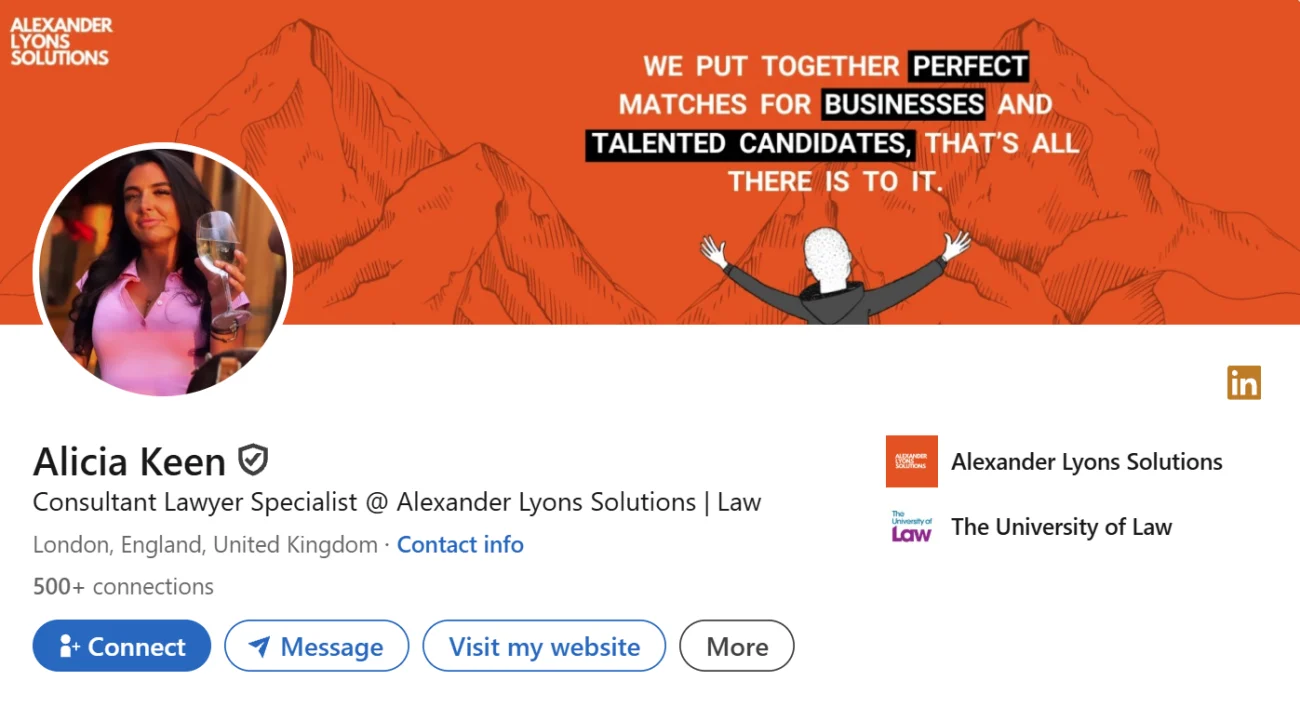
Clearly distinguish between Plaintiff (Employee) and Defense (Employer) representation.
- ✅ Employment Attorney | Representing Employees | Wrongful Termination & Discrimination
- ✅ Labor & Employment Lawyer | Management Side | Defending Employers in Wage & Hour Class Actions
- ✅ Employment Law Attorney | HR Compliance | Employee Handbooks & Executive Training
- ✅ Plaintiffs’ Employment Attorney | Sexual Harassment & Retaliation Advocate
- ✅ Labor Attorney | Union Relations | Collective Bargaining & Arbitration
Real Estate & Land Use
Differentiate clearly between transactional work and litigation.
- ✅ Real Estate Attorney | Commercial Transactions | Acquisitions, Leasing & Development
- ✅ Real Estate Lawyer | Residential Closings | Title Issues & Contract Review
- ✅ Land Use Attorney | Zoning & Entitlements | Development Approvals
- ✅ Real Estate Litigator | Landlord-Tenant Disputes | Commercial Eviction & Property Rights
- ✅ Real Estate Counsel | REITs & Commercial Property | Finance & Leasing Strategy
The General Counsel Suite
Focus on business acumen, risk management, and strategic oversight.
- ✅ Legal Counsel | General Counsel | SaaS | Corporate & Commercial Law
- ✅ In-House Attorney | Tech Company | Privacy, Data Protection (GDPR/CCPA) & Compliance
- ✅ Deputy General Counsel | Healthcare | Regulatory Affairs & Risk Management
- ✅ Corporate Counsel | Financial Services | Securities Compliance & Board Governance
- ✅ Assistant General Counsel | IP & Commercial Contracts | Supporting Global Business Teams
Law Students & Associates
Signal your ambition, academic pedigree, and specific areas of interest.
- ✅ Law Student | J.D. Candidate | Graduating May 2025 | Seeking Associate Position in Litigation
- ✅ Law Student | Harvard Law School | Summer Associate Experience | Corporate Law Interest
- ✅ Recent Law Graduate | Passed NY Bar Exam | Seeking Entry-Level Attorney Position
- ✅ Law Clerk | Federal District Court | Researching Civil Procedure & Constitutional Law
- ✅ 1L Law Student | Passionate About Public Interest Law | Legal Aid Volunteer
Objections Overruled: Common Headline Mistakes
Even highly intelligent attorneys can make basic branding errors. Avoid these pitfalls to maintain your professional stature.
| ❌ The Mistake | ✅ The Correction | 🧠 The Why |
|---|---|---|
| The Generic: “Attorney at Law” | The Specific: “Corporate Attorney | M&A” | “Attorney” is a job title, not a value proposition. Tell them what you practice. |
| The Omission: No Bar Admission | The Credential: “Licensed in CA & NY” | Bar admission is a strict requirement. Don’t make clients guess if you can help them. |
| The Firm-Centric: “Associate at Smith LLP” | The Client-Centric: “Employment Attorney | Smith LLP” | Unless your firm is globally famous, your practice area matters more to clients than your employer. |
| The Aggressor: “Aggressive Lawyer | We Win” | The Professional: “Trial Attorney | High-Stakes Litigation” | Aggression can imply “difficult to work with.” Authority implies “competent and calm.” |
| The Legalese: “Complex Tortious Interference” | The Translation: “Business Disputes & Liability” | Speak the client’s language, not the court’s. Accessibility breeds trust. |
Drafting Your Headline: A Step-by-Step Guide
Treat this process like drafting a contract: every word must have a defined purpose. Follow this protocol.
Step 1: Define the “Practice Bucket”
Are you Litigation or Transactional? Corporate or Family? Start with the broad category. This is your primary keyword for search visibility.
Draft: “Corporate Attorney”
Step 2: Add the “Jurisdictional Hook”
Where are you authorized to practice? If you are in a specific state or court system, state it clearly.
Draft: “Corporate Attorney | Licensed in NY & CA”
Step 3: Identify the “Target Client”
Who is this for? Startups? Banks? Individuals? Be specific.
Draft: “Corporate Attorney | Licensed in NY & CA | Representing FinTech Startups”
Step 4: Layer the “Authority Signal”
Add your seniority or a key differentiator, such as “Partner,” “Former Prosecutor,” or “15 Years Experience.”
Final: “Partner | Corporate Attorney | NY & CA | Advising FinTech Startups on M&A”
Context Matters: Practice Setting Strategy

Your headline strategy must align with your business model.
The Law Firm Strategy
Goal: Business Development.
Strategy: Focus on the specific problems you solve for clients. You are selling services.
Example: “Corporate Attorney | M&A & Venture Capital | Helping Founders Exit Successfully”
The In-House Strategy
Goal: Career Advancement / Peer Networking.
Strategy: Focus on the breadth of your responsibility and industry knowledge. You are selling leadership.
Example: “General Counsel | SaaS | Scaling Legal Operations & Compliance for Growth Stage”
The Solo Strategy
Goal: Trust & Approachability.
Strategy: You are the brand. Emphasize personal attention and niche expertise.
Example: “Solo Practitioner | Estate Planning | Helping Families Protect Their Legacy”
The Jurisdiction Question: When to List It?
Listing your bar admission takes up valuable space. Use this decision matrix to decide.
Include It If:
- ✅ Multi-Jurisdictional: You are licensed in key pairs (e.g., NY/CA, DC/VA). This is a competitive advantage.
- ✅ Specialized Courts: “Supreme Court Bar” or “Patent Bar” (USPTO) are elite signals.
- ✅ Relocating: You want to signal that you are already licensed in the target state.
Skip It If:
- ❌ Single State / Local: If you say “Chicago Family Lawyer,” the Illinois license is implied.
- ❌ In-House: General Counsels often manage global issues; specific state bars matter less than overall business acumen.
The Final Review: Your Headline Audit
Before you publish, cross-examine your headline against these criteria.
- ✅ Clarity: Is your role (Attorney, Paralegal, GC) unmistakable?
- ✅ Specificity: Did you name your practice area (Tax, IP, Litigation)?
- ✅ Relevance: Can your ideal client see themselves in your headline?
- ✅ Authority: Did you include a seniority marker or credential?
- ✅ Compliance: Does it adhere to your state bar’s advertising ethics rules?
- ✅ Length: Is it concise (under 220 characters) and punchy?
If you check all 6 boxes, your headline is ready to represent you in the court of public opinion.
❓ FAQ
💼 Should I include my law firm name in my headline?
It depends on the brand equity of the firm. If you work for a Vault 10 or Magic Circle firm (e.g., Skadden, Cravath, Clifford Chance), the name itself is a powerful credential – include it. For small or mid-sized firms, your practice area and expertise are more searchable and valuable to clients. The firm name is already visible in your Experience section.
📊 Should I include my law school in my headline?
Only if you are a current student or recent graduate from a T-14 school (e.g., “Harvard Law J.D. Candidate”). Once you have 3-5 years of practice, your case history and practice focus far outweigh your alma mater. Clients hire lawyers for what they can do today, not where they studied yesterday.
🎯 How do I write a headline as a law student?
Be transparent about your timeline. Use the format: “Law Student | J.D. Candidate [Year] | Interest in [Practice Area].” If you have secured a summer associate position or clerkship, mention it to show you are vetted. Example: “J.D. Candidate 2025 | Incoming Summer Associate at [Firm].”
🔄 Should lawyers use “Attorney” or “Lawyer” in their headline?
Both are excellent, but they carry different nuances. “Attorney” tends to sound slightly more formal and prestigious in the US market. “Lawyer” is more direct and conversational. “Counsel” implies an advisory role. Choose the term that best fits your personal brand voice, or use specific titles like “Litigator” or “Prosecutor” for precision.
💡 Can lawyers mention verdicts or settlements in headlines?
Proceed with extreme caution. Attorney advertising rules vary strictly by state. Some jurisdictions prohibit referencing past results as it may create “unjustified expectations.” Always check your state bar’s ethics rules. If allowed, stick to factual, verifiable statements like “Trial Attorney | Multi-Million Dollar Case Experience” rather than promises like “I Win Big.”
Final Thoughts
A strong LinkedIn headline for lawyers is more than just digital text; it is a professional asset. The difference between a headline that reads “Attorney” and one that reads “Corporate Attorney | M&A & Venture Capital | Representing Tech Startups | Partner at Leading Firm” is the difference between obscurity and opportunity. In a profession defined by specialization, specificity is your greatest ally.
A great legal headline does three things simultaneously: it establishes your authority, it defines your niche, and it speaks directly to the needs of your future clients. It creates a first impression of competence and trust before you ever shake a hand. Take the time to craft it carefully. Align it with your practice goals, adhere to ethical standards, and let it work as your 24/7 business development officer.
Ready to optimize your entire legal profile? Check out our complete LinkedIn headline guide or explore more professional examples in our headline library.