
- Core problem: The “experience paradox” makes grads sound like they are waiting for a chance, and employers hire solutions, not students.
- What recruiters fear: Training time, low commitment, and professionalism risk, so your headline must reduce risk fast.
- What to include: Standard job title, hard skills up front, and a clear focus signal, not soft-skill fluff or vague “open to opportunities.”
- How to structure it: Use one of 3 frameworks, Value Pivot, Specialist, or Proof Point, based on what you can honestly prove.
- How to improve results: Audit job posts for keywords, test variations using search appearances, and update when you gain new proof or credentials.
The “Experience Paradox” and How to Break It
As a recent graduate, you are walking into the job market facing the most frustrating catch-22 of your early career: You need experience to get a job, but you need a job to get experience. This is the “Experience Paradox.” Most graduates let this paradox defeat them before they even send their first application. They write headlines that scream “Junior,” “Inexperienced,” and “Waiting for a Chance.”
Here is the brutal truth: No one hires a “Recent Graduate” because they want to help a student out. Companies hire solutions to business problems. When a recruiter searches for a Junior Analyst or a Marketing Coordinator, they are looking for someone to take workload off their team immediately.
Your LinkedIn headline for recent graduates is the single most valuable real estate on your digital profile to prove you can do that. If your headline says “Recent Graduate at University X,” you are defining yourself by your past status (Student) rather than your future value (Professional). In this comprehensive master guide, we will dismantle the “beggar mentality” that plagues 90% of graduate profiles. We will teach you the psychology of early-career hiring, how to “de-risk” your profile for employers, and how to write a headline that commands respect – even if your resume is thin.
The Psychology of Hiring Grads: The “Fear Factor”
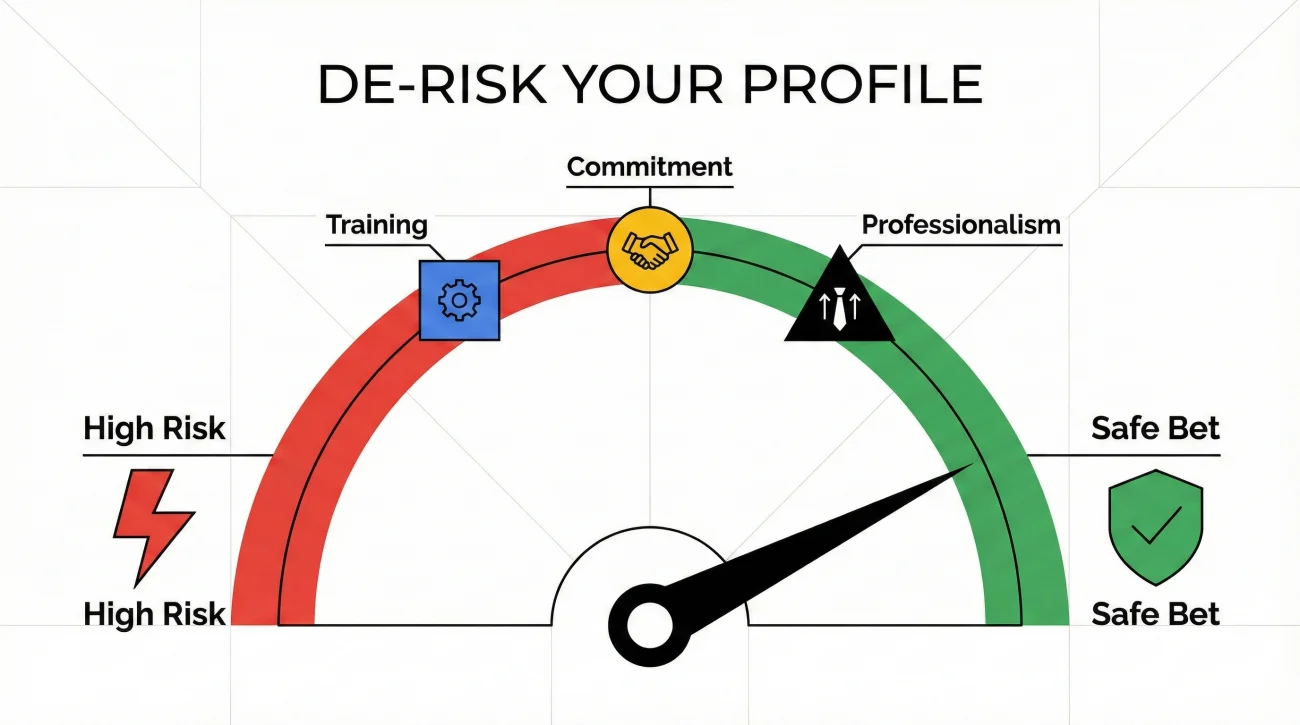
To write a winning headline, you must first empathize with the person on the other side of the screen. Why are hiring managers hesitant to hire fresh graduates? It isn’t just about skills; it is about Risk. Hiring a recent graduate is viewed as a High-Risk Investment.
When a manager looks at your profile, they have three subconscious fears:
- Fear #1: The Training Time Sink. “Will I have to spend 6 months teaching this person how to write an email or use Excel?”
- Fear #2: The Commitment Issue. “Does this person even know what they want? Will they quit in 3 months when they realize they hate Supply Chain?”
- Fear #3: The Professionalism Gap. “Can I trust this person in front of a client?”
Strategic Insight: Your headline is not just a label; it is a Risk Reduction Mechanism. A strong headline signals: “I know the tools, I know the goal, and I am ready to work.”
The 3 Signals That “De-Risk” Your Profile
Recruiters are scanning for three specific signals that prove you are a safe bet. If your headline broadcasts these, you immediately separate yourself from the thousands of generic applicants:
- 1. The “Tool-Ready” Signal: Do you know the software the team uses every day? If you list “Excel (VLOOKUP/Macros)” or “Salesforce CRM” or “Adobe Creative Suite,” you signal that you can execute tasks on Day 1 without needing a tutorial on the basics.
- 2. The “Focus” Signal: Vague headlines like “Open to Opportunities” terrify recruiters because they suggest you have no direction. A headline like “Aspiring Supply Chain Analyst” suggests you have done your research and are committed to that specific career path.
- 3. The “Professional Identity” Signal: This is subtle but critical. You must stop referring to yourself as a “student” and start referring to yourself by your target profession. You aren’t a “Marketing Student”; you are a “Content Marketing Specialist” (even if you are entry-level).
The 6-Second Scan & The ATS Algorithm
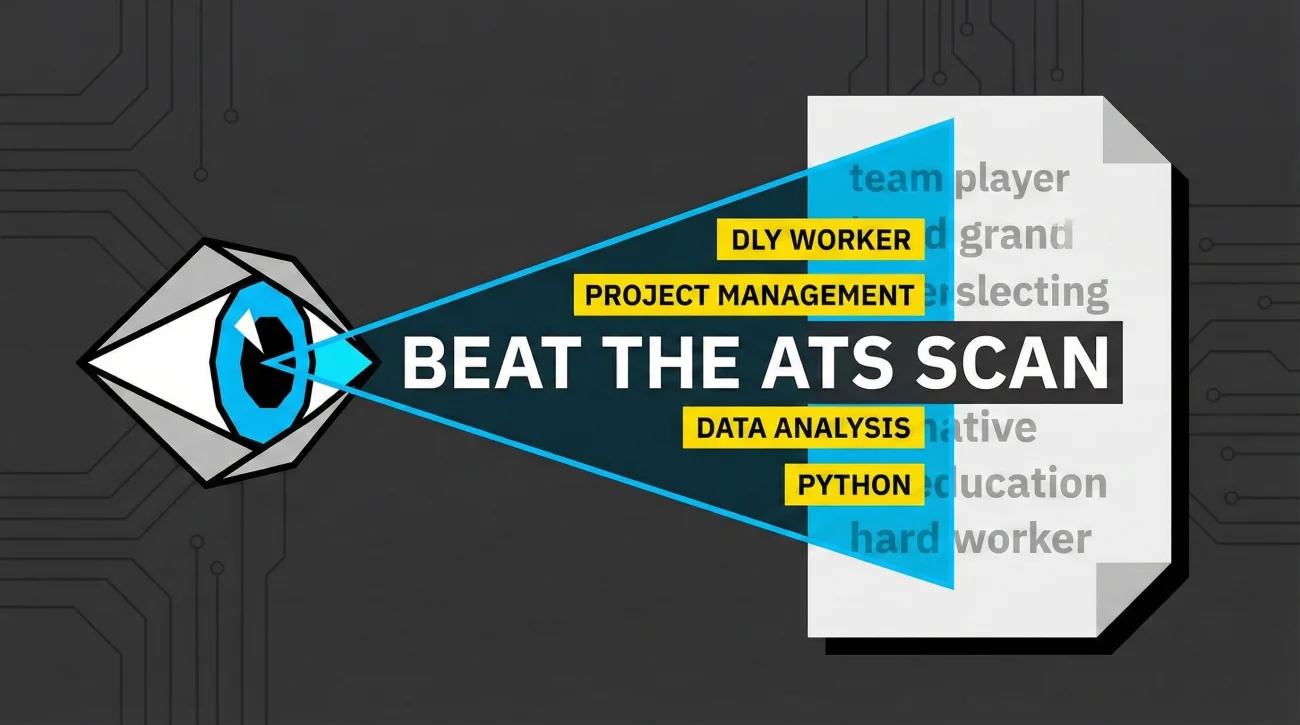
Before a human ever reads your profile, a robot reads it first. The Applicant Tracking System (ATS) and LinkedIn’s internal search algorithm function like Google. They rank candidates based on Keyword Relevance.
If a recruiter searches for “Junior Java Developer,” the algorithm looks for exactly those words. It does not look for “Passionate Coding Enthusiast.” If you use creative, fluffy language, you are optimizing for invisibility.
The Golden Rules of Keywords
Rule 1: Use Standard Job Titles. Use the exact job title you are targeting (e.g., “Sales Development Rep,” “Junior Accountant”).
Rule 2: Front-Load Hard Skills. Put your most valuable hard skills (Python, SQL, SEO, CAD) as close to the beginning of the headline as possible.
Rule 3: Avoid “Soft Skill” Fluff. Words like “Motivated,” “Hard-working,” “Fast Learner,” and “Guru” are Stop Words. Recruiters ignore them because they are subjective and unproven. Delete them to save space for hard skills.
Master Frameworks: How to Structure Your Headline
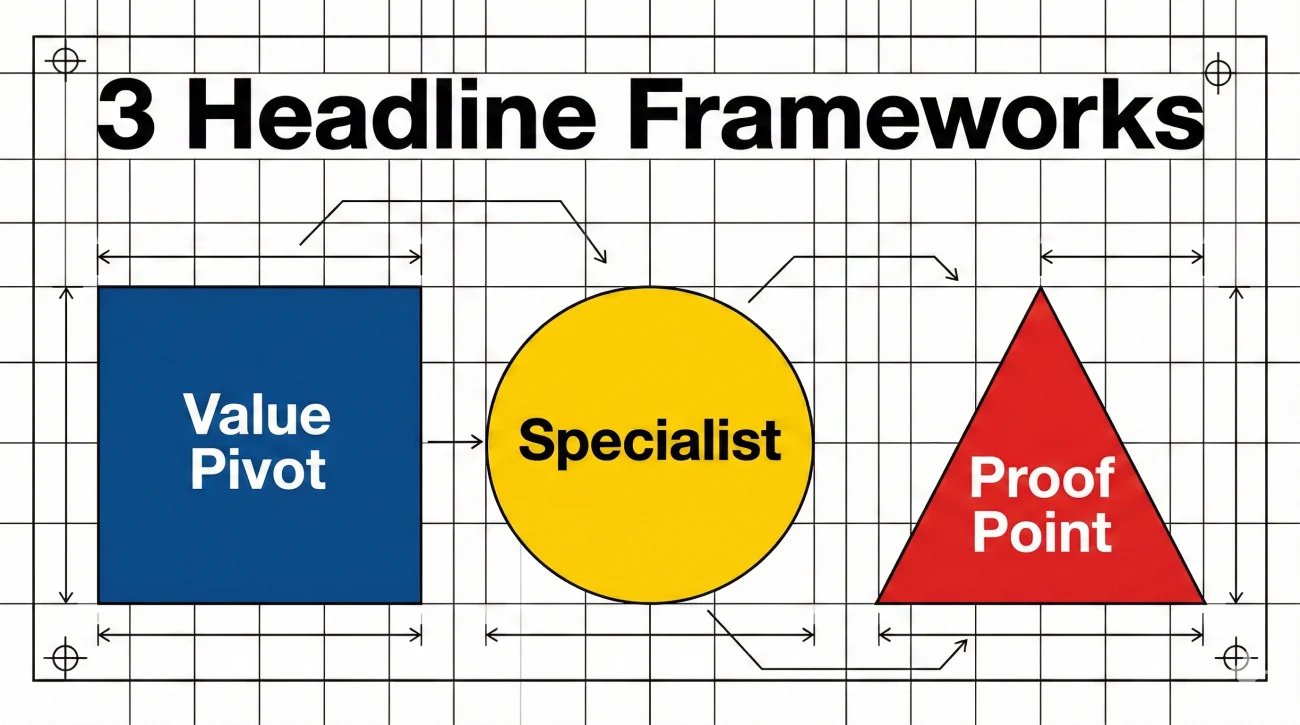
We have analyzed thousands of successful profiles to identify the structures that actually convert views into interviews. These formulas balance SEO with human psychology.
Formula 1: The “Value Pivot” (The Standard)
This is the most effective structure for 80% of graduates. It acknowledges your education (credential) but immediately pivots to the hard skills (value).
Structure:
[Degree/Major] Graduate | [Hard Skills/Tools] | [Target Role Keyword]
Example:
Marketing Graduate | SEO, Content Strategy, Analytics | Seeking Digital Marketing Coordinator
Formula 2: The “Specialist” Model (For Niche Skills)
If you have a specialized degree (Engineering, Data Science, Nursing) or a certification that is in high demand, lead with that. This works because recruiters for these roles search by skill, not by degree.
Structure:
[Key Technical Skill] Specialist | [Degree] | [Industry Interest]
Example:
Data Analyst | Python, SQL & Tableau Expert | Economics Graduate
Formula 3: The “Proof Point” (For High Achievers)
Did you complete a capstone project, a significant internship, or a freelance gig? Use it as a hook. This proves you have applied your knowledge in the real world.
Structure:
[Action/Achievement] | [Role/Skillset] | [Degree]
Example:
Built 3 Full-Stack Apps | Junior Software Engineer | CS Graduate
Strategic Examples by Industry (The Deep Dive)
Generic advice fails because every industry speaks a different language. Below is a comprehensive breakdown of how to tailor your headline for specific career paths, including the specific keywords that matter for each.
1. Business, Finance & Corporate
The Strategy: Project stability, analytical capability, and certifications. Finance recruiters love standardized credentials.
- Investment Banking: “Finance Graduate | Financial Modeling & Valuation | Seeking IB Analyst Roles”
- Accounting: “Accounting Graduate | CPA Candidate | Excel (VLOOKUP, Macros) & QuickBooks”
- Human Resources: “HR Management Graduate | Onboarding & Employee Relations | SHRM-CP Candidate”
- Supply Chain: “Supply Chain Management Grad | Logistics & SAP | Six Sigma Yellow Belt”
- General Business: “Business Admin Graduate | Project Management & Operations | CAPM Certified”
🗝️ Key Keywords: Financial Modeling, Valuation, CPA Eligibility, SAP, CRM, Project Coordination, Stakeholder Management.
2. Technology, Data & Engineering
The Strategy: Pure competency. Do not tell me you love coding; list the languages you speak. This is a “Show, Don’t Tell” industry.
- Software Engineering: “CS Grad | Python, Java, React | Building Scalable Web Applications”
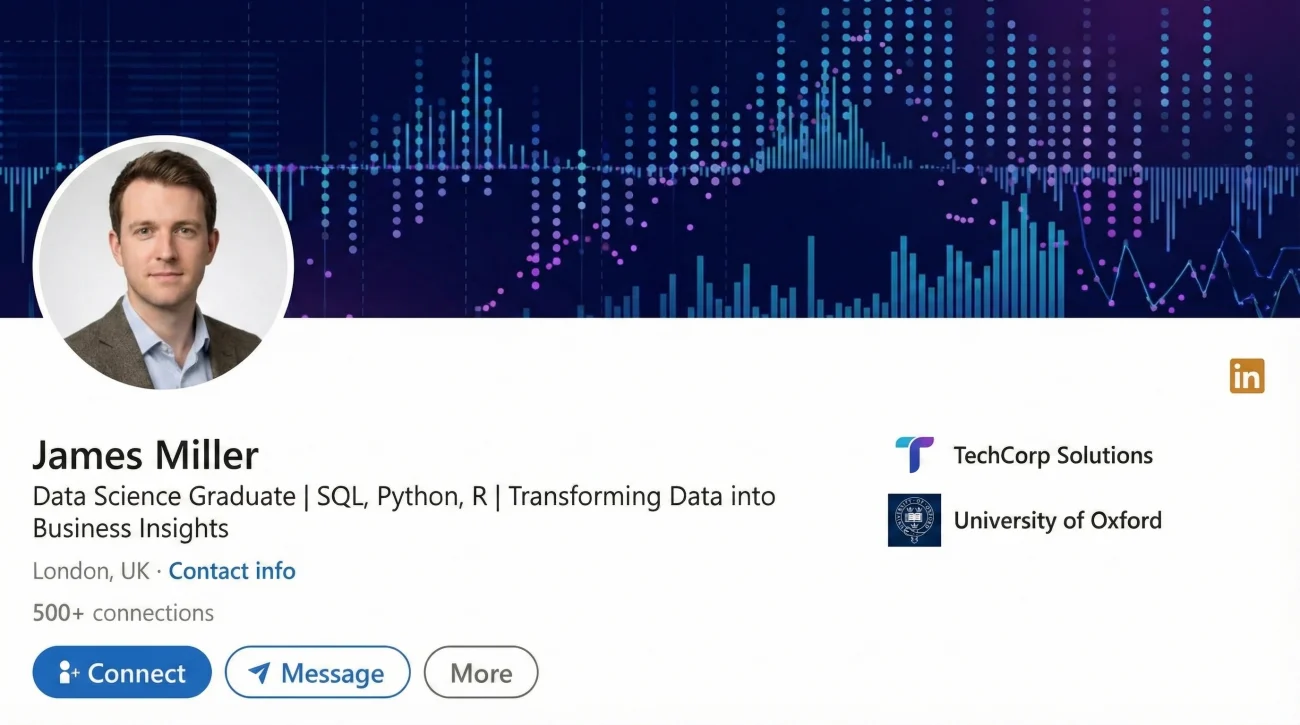
- Data Science: “Data Science Graduate | SQL, Python, R | Transforming Data into Business Insights”
- Mechanical Engineering: “Mechanical Engineering Grad | CAD, SolidWorks, MATLAB | Product Design”
- Cybersecurity: “Cybersecurity Analyst | Network Security & Ethical Hacking | CompTIA Security+”
- IT Support: “Information Systems Grad | Help Desk & Troubleshooting | Active Directory, Office 365”
🗝️ Key Keywords: Java, Python, SQL, AWS, React, SolidWorks, AutoCAD, MATLAB, CI/CD, Agile/Scrum.
3. Marketing, Design & Creative
The Strategy: Personality + Portfolio. You need to sound creative but disciplined. Certifications (Google, HubSpot) are excellent differentiators here.
- Digital Marketing: “Marketing Graduate | SEO, PPC & Google Analytics | Driving Growth & ROI”
- Graphic Design: “Graphic Design Grad | Branding & UI/UX | Portfolio: [Link] | Adobe Creative Suite”
- Content Writing: “English Major | Copywriting & Content Strategy | SEO & Blog Management”
- Social Media: “Communications Grad | Social Media Strategy (TikTok/IG) | Community Management”
- UX Research: “Psychology Graduate | UX Research & Usability Testing | Figma & Prototyping”
🗝️ Key Keywords: SEO, PPC, ROI, Adobe Creative Suite (Ps, Ai, Id), Figma, Copywriting, Content Strategy, Branding.
4. Liberal Arts & “Generalist” Degrees
The Strategy: Translation. You must translate your academic skills (research, writing) into business skills (market research, communications). Never just list “History Major.”
- History/PoliSci (to Corp): “Research Analyst | Data Collection & Report Writing | History BA”
- English (to Tech): “Technical Writer | Simplifying Complex Documentation | English Graduate”
- Psychology (to Sales): “Sales Development Rep | Consumer Psychology & Persuasion | Psychology BA”
- Sociology (to HR): “HR Assistant | Organizational Behavior & Culture | Sociology Graduate”
🗝️ Key Keywords: Research, Analysis, Professional Writing, Editing, Critical Thinking (only if backed by output), Case Studies.
The “Before & After” Clinic: Fixing Bad Headlines

Let’s look at real-world examples of bad headlines and step-by-step how to fix them.
| ❌ The “Before” (Weak) | ✅ The “After” (Strong) | 🧠 Why We Fixed It |
|---|---|---|
| “Recent Graduate at University of Florida” | “Finance Graduate | Excel & Financial Modeling | Seeking Junior Analyst Roles” | Removed the University (which is in the Education section) to make room for Hard Skills and Intent. |
| “Passionate about Marketing | Looking for opportunities” | “Digital Marketing Specialist | SEO, Content & Google Ads | Available Immediately” | Replaced subjective “Passionate” with objective “Specialist.” Replaced vague “Opportunities” with specific tools “Google Ads.” |
| “Unemployed / Job Seeker” | “Aspiring Sales Representative | CRM & Lead Generation | Business Graduate” | Never define yourself by your lack of a job. Define yourself by the job you are qualified to do. |
| “Hard working, motivated team player” | “Project Coordinator | Agile & Scrum Methodologies | Certified Associate in PM” | Replaced generic soft skills with industry-standard methodologies (Agile/Scrum) that recruiters actually search for. |
Your 30-Day Optimization Roadmap
Writing the headline is just Day 1. Here is how to use it to get a job in 30 days.
- 1️⃣ Week 1: The Keyword Audit. Search for 10 job descriptions of your dream role. Highlight the 5 most common hard skills. rewrite your headline to include at least 3 of them.
- 2️⃣ Week 2: The “Soft Launch”. Update your headline. LinkedIn will notify your network. Post a “Life Update” explaining you have graduated and are looking for X roles, referencing your new headline expertise.
- 3️⃣ Week 3: The Testing Phase. Check your “Search Appearances” stat on LinkedIn. If you aren’t appearing in searches, swap out one keyword for a broader one (e.g., change “Content Writing” to “Digital Marketing”).
- 4️⃣ Week 4: The Direct Outreach. Message recruiters saying: “I’m a recent [Major] grad with skills in [Skill 1] and [Skill 2], as mentioned in my headline. I saw you’re hiring for [Role]…”
❓ Expanded FAQ
💼 Should I put “Aspiring” in my headline?
🗓️ What if I have a gap on my resume since graduation?
🎓 I have a degree unrelated to the job I want. What do I do?
⚡ How often should I update my headline?
🚫 Is it okay to use emojis in a professional headline?
Final Thoughts: Own Your New Identity
Your LinkedIn headline for recent graduates is the bridge between your past (University) and your future (Career). It is time to burn the bridge behind you and step fully into your new identity.
The graduates who struggle the most are the ones who cling to their student identity because it feels safe. They wait for someone to give them permission to call themselves a “Marketer” or an “Engineer.” Do not wait for permission. If you have the degree and the skills, claim the title (at the Junior level).
By optimizing your headline with specific keywords, clear intent, and hard skills, you are making the recruiter’s job easy. You are saying: “I am the low-risk, high-potential candidate you have been looking for.” This mindset shift is worth more than any single keyword.
Need more guidance on optimizing your job search profile? Explore our complete LinkedIn headline guide, or browse professional headline examples to find the positioning approach that matches your situation and career goals.