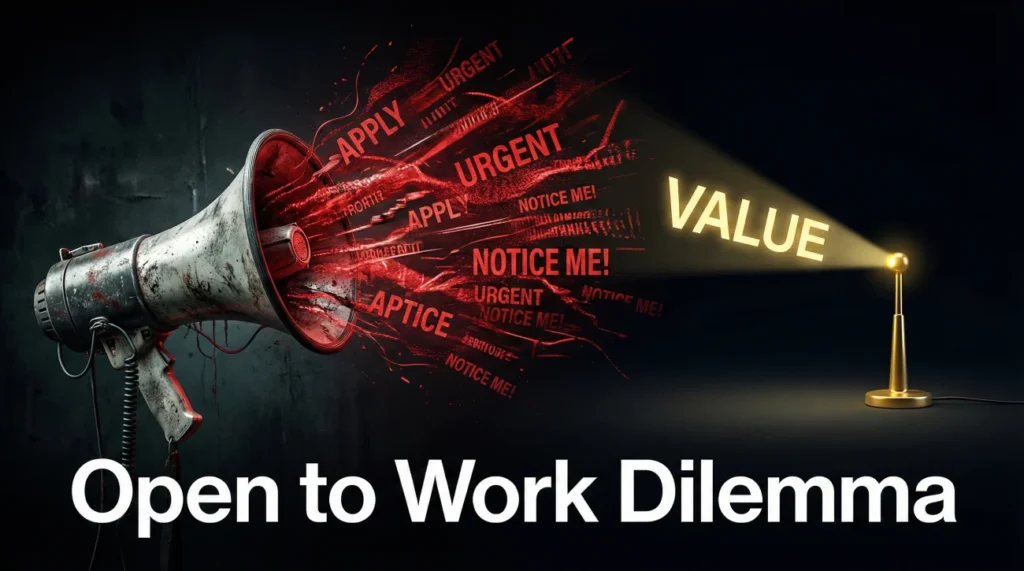
- Strategic Paradox: Scarcity drives perceived value, so making availability your headline identity can cheapen you.
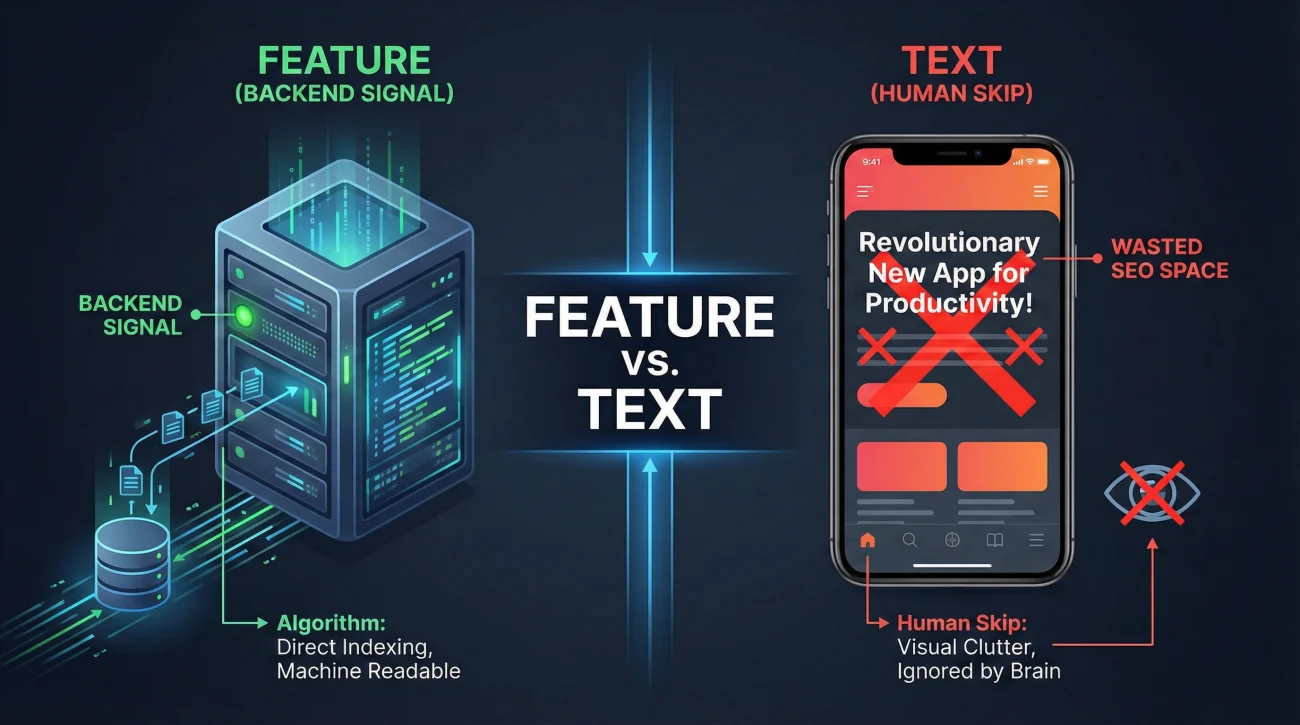
- Feature vs Text: Enable Open to Work for recruiter Spotlights, keep headline text for role, skills, and outcomes.
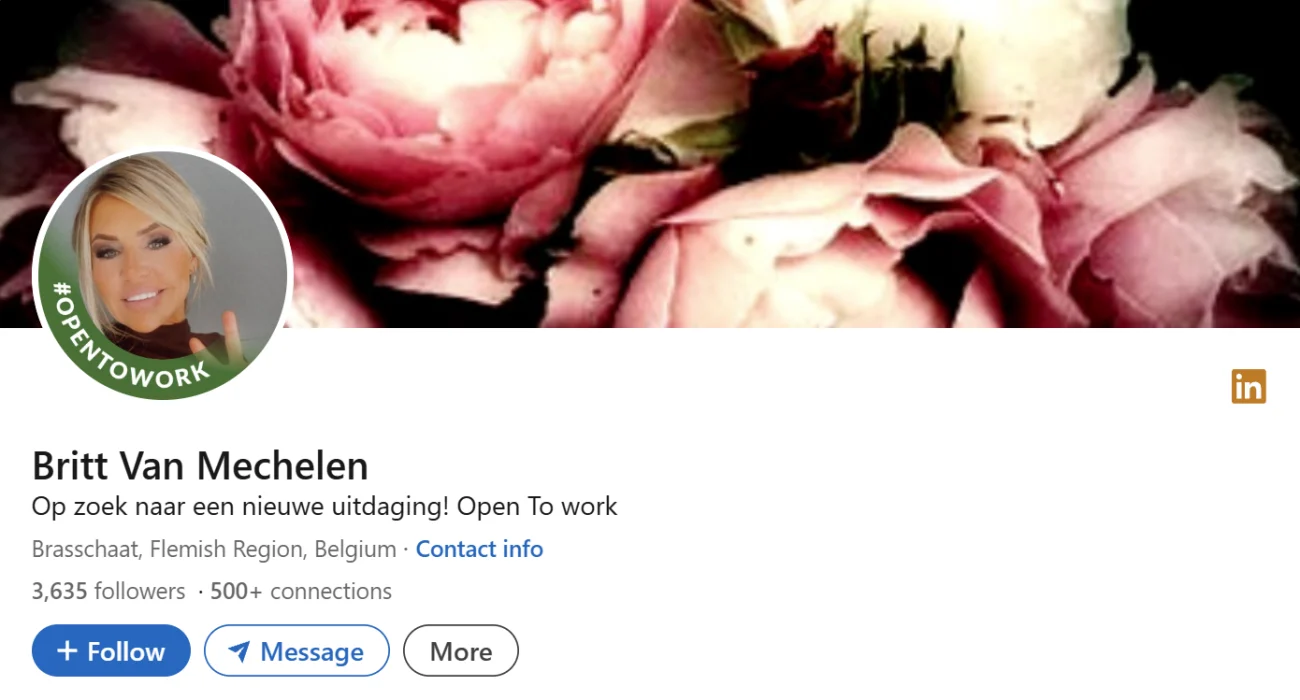
- Scenario Playbook: Public banner when unemployed, Recruiters Only when employed, limited Seeking language only for pivots.
- Context Rules: Tech accepts the banner, finance and law prefer discretion, executives should signal advisory strength not seeking.
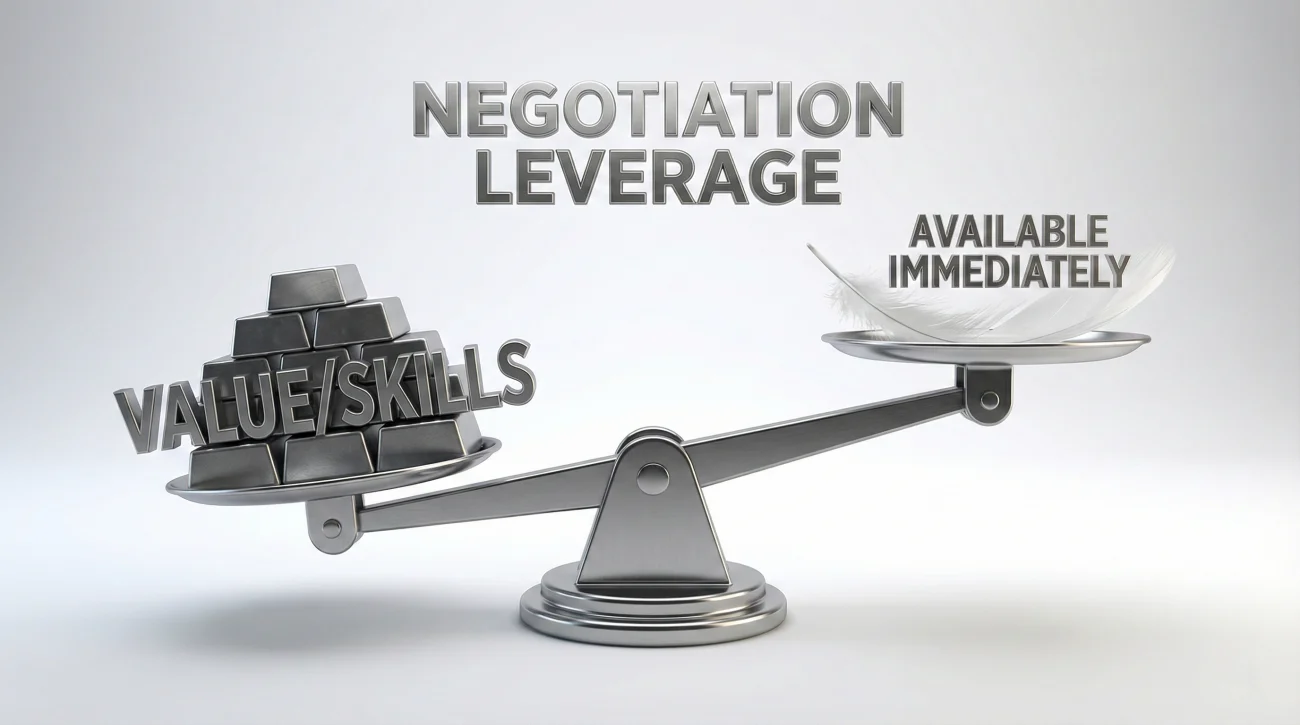
- Negotiation and Bridges: Avoid “Available immediately,” use consulting, project, or alumni bridges and remove desperation markers.
The Strategic Paradox: Availability vs. Desirability
There is a fundamental tension in the high-stakes job market that most candidates ignore at their peril: Availability is rarely correlated with value. In fact, in the luxury goods market – and top-tier talent is a luxury good – scarcity drives demand. Yet, when professionals find themselves between roles, the primal instinct is often to broadcast their availability as loudly as possible. They plaster “Open to Work,” “Seeking New Opportunities,” or “Immediately Available” across their prime digital real estate – their LinkedIn headline.
While the intention is logical – “I need to market my availability” – the psychological impact on sophisticated recruiters is often the opposite. In the ecosystem of talent acquisition, the most desirable candidates are perceived to be those who are not desperate. This is the Scarcity Principle in action. When you make your availability your primary identity, you inadvertently signal that you are a commodity with low demand.
This guide serves as a comprehensive strategic intervention. We will dismantle the “Open to Work” dilemma, not just from a surface-level technical standpoint, but from the perspective of Algorithm Mechanics, Negotiation Leverage, and Personal Branding Psychology. We will explore how to use the LinkedIn headline open to work features to your advantage without sacrificing your professional leverage or lowering your salary expectations.
If you are rebuilding your profile from scratch, start with our core framework on creating a professional LinkedIn headline. If you are specifically navigating a job search, a career gap, or a high-stakes pivot, this deep dive is your blueprint.
Inside the Black Box: How LinkedIn Recruiter Actually Works
To master your visibility, you must first understand the tool that controls your fate: LinkedIn Recruiter. This is the premium software that headhunters and corporate talent acquisition teams use to find you. It does not work the way the consumer version of LinkedIn works.
The “Spotlights” Filter
When a recruiter runs a search for “Product Manager” in “New York,” they might get 10,000 results. They do not browse 10,000 profiles. They use “Spotlights” – smart filters that narrow the pool. One of the most powerful Spotlights is “Open to Work.”
Here is the critical distinction:
- The Backend Signal: When you enable the “Open to Work” feature (even the “Recruiters Only” version), you are tagged in the backend. You appear in the “Open to Work” Spotlight tab. This is good visibility.
- The Frontend Noise: When you write “Open to Work” in your text headline, the algorithm does not necessarily prioritize you. In fact, if you waste your 220 characters on availability text instead of skills (e.g., “Agile,” “Roadmapping,” “B2B”), you might rank lower because you lack the keyword density of a competitor who used that space for hard skills.
Strategic Takeaway: Use the feature to talk to the algorithm. Use the headline text to talk to the human. Never confuse the two.
The Psychology of the Recruiter: Why “Desperation” Repels
Recruiters are risk-averse. Hiring the wrong person is expensive and damaging to their reputation. Therefore, they look for “Social Proof” – indicators that other people value you.
The “Active Candidate” vs. “Passive Candidate” Bias
In the recruiter’s mind, candidates fall into two buckets:
| Category | The “Passive” Candidate | The “Hyper-Active” Candidate |
|---|---|---|
| Employment Status | Employed or quietly looking. | Unemployed and shouting about it. |
| Perceived Value | High. “They must be good if they are currently retained.” | Questionable. “Why are they available? Why hasn’t someone snapped them up?” |
| Recruiter Reaction | “I need to win them over.” (Chase mode) | “I can get them cheaply.” (Bargain mode) |
When your headline screams “IMMEDIATELY AVAILABLE,” you are forcing yourself into the “Hyper-Active” bucket. You lose the psychological upper hand before the first interview is even scheduled.
The Technical Divide: The Green Banner vs. The Headline Text
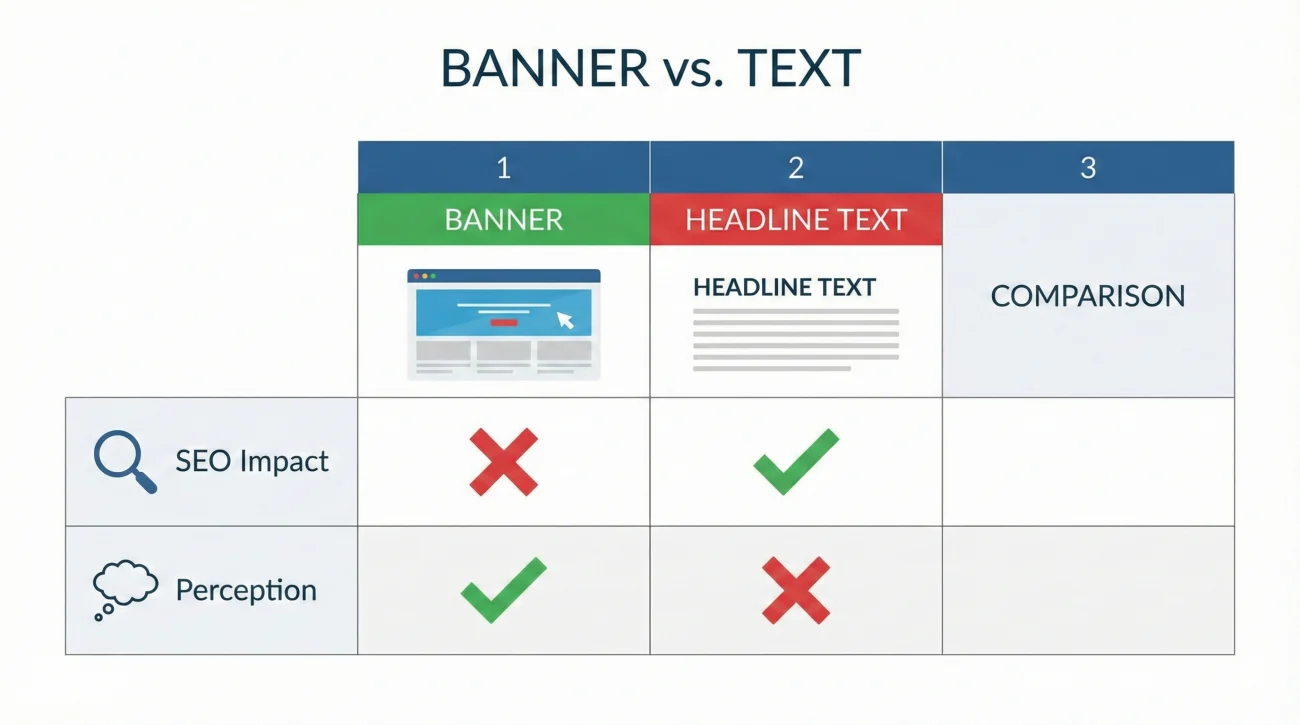
LinkedIn provides two distinct mechanisms for signaling availability. Confusing them is a rookie mistake that costs you 220 characters of valuable SEO space.
| Feature | The “Open to Work” Banner (Frame) | Writing “Open to Work” in Headline Text |
|---|---|---|
| Visibility | Controlled (Public OR Recruiters Only). | Permanent & Public (Visible to everyone). |
| SEO Impact | Boosts profile in “Candidate” searches via backend data. | Negative SEO. Wastes keyword space. Recruiters do not search for the keyword “Looking for job.” They search for “Python” or “Sales.” |
| Perception | Accepted standard. Signals “I am listening.” | Often viewed as “Clutter” or “Desperation.” |
| Recommendation | YES (Strategically). | NO (With rare exceptions). |
The Golden Rule: Let the LinkedIn feature handle the logistics of your availability. Let your headline handle the marketing of your value. Do not make them do each other’s jobs.
Strategic Positioning Scenarios: A Playbook
There is no “one size fits all” approach. Your strategy depends heavily on your current employment status, your industry’s culture, and your financial runway. Below are high-level strategies for the most common scenarios.
Scenario A: The Active Job Seeker (Unemployed/Laid Off)
The Context: You need maximum visibility. You might be part of a mass tech layoff where “Open to Work” is less stigmatized, but you still need to distinguish yourself from thousands of others.
The Strategy: Use the Green Banner (Public). Keep the headline strictly professional.
❌ Weak: “Laid off from Twitter | Open to work | Seeking Product Roles”
✅ Strong: “Senior Product Manager | SaaS Growth & Monetization | Ex-Twitter | Driving User Retention Strategies”
💡 Why this works: The “Ex-Company” tag signals why you are available (layoff implication) without using the word “unemployed.” The rest of the headline focuses on what you can do for the next company.
Scenario B: The Stealth Seeker (Currently Employed)
The Context: You hate your current job, or you fear a future layoff. You cannot risk your boss finding out. You need to attract headhunters without alerting your network.
The Strategy: Use “Recruiters Only” mode. Do NOT change your headline to “Seeking.” Instead, optimize it for the job you want.
❌ Weak: “Marketing Manager at Company X (Open to new opportunities)”
✅ Strong: “B2B Marketing Manager | Demand Generation & Account-Based Marketing (ABM) Specialist”
💡 Why this works: You are loading your headline with the keywords headhunters search for (ABM, Demand Gen). When they find you, the “Recruiters Only” signal confirms you are poachable.
Scenario C: The Career Pivoter
The Context: Your past titles don’t match your future goals. If you don’t mention your goal, recruiters will keep offering you your old job.
The Strategy: This is the only time “Seeking” language is acceptable in a headline, but it must be framed as a “Target” or “Transition.”
❌ Weak: “Teacher looking for Corporate Trainer jobs”
✅ Strong: “Corporate Learning & Development Specialist | Instructional Design | Former Educator Transitioning to EdTech”
Why this works: You claim the new identity first (“L&D Specialist”), then validate it with your transferrable background.
Industry-Specific Nuances: Know Your Tribe
What works in Silicon Valley might be professional suicide in Wall Street. You must calibrate your signal to your industry’s culture.
Technology & Startups
Culture: Fluid, fast-paced, accepts layoffs as part of the game.
Verdict: The Green Banner is perfectly acceptable here. However, avoid “desperate” text. Focus on your stack (React, Python, AWS).
Headline Example:
“Full Stack Engineer | React & Node.js | Ex-Meta | Building Scalable Cloud Architectures”
Finance, Law, & Corporate Strategy
Culture: Conservative, values discretion, views unemployment as a weakness.
Verdict: Avoid the Green Banner. Use “Recruiters Only” exclusively. Never put “Open to Work” in your headline text. It looks low-status.
Headline Example:
“Investment Banking Associate | M&A & Capital Markets | Financial Modeling & Valuation”
Sales & Business Development
Culture: Results-oriented. You are judged on your ability to sell. If you can’t sell yourself, you can’t sell the product.
Verdict: A “Seeking Opportunities” headline suggests you are a bad salesperson. Use a value-driven headline that shows your closing ability.
Headline Example:
“Enterprise Account Executive | SaaS & Cybersecurity | $2M+ Annual Quota Achiever”
Creative & Freelance
Culture: Project-based, visual, open.
Verdict: Use “Available for Projects” or “Booking Q3.” This implies you are a business owner managing capacity, not an unemployed person.
Headline Example:
“Senior UX/UI Designer | Available for Contract & Freelance | Figma & Prototyping Expert”
The C-Suite Rule: Executives Don’t “Seek”
If you are a VP, Director, or C-Level executive, the rules change entirely. At this level, you are hired for your leadership and network. Broadcasting “Open to Work” suggests a lack of network support.
The Executive Protocol:
- Never use the Green Banner. It cheapens your personal brand.
- Leverage “Advisory” Roles. If you are between full-time roles, position yourself as an Advisor or Consultant.
- Headline Strategy: Focus on your specific expertise (Turnaround, Scaling, IPO readiness).
❌ Executive Fail: “Former VP Sales | Open to Leadership Roles”
✅ Executive Win: “VP of Sales | Scaling SaaS from Series B to IPO | GTM Strategy & Revenue Operations”

Sophisticated Alternatives to “Open to Work”
If you want to signal availability without the “green banner” or the desperate text, use what we call “Bridge Phrases.” These are subtle signals that industry insiders understand.
1. The “Consulting” Bridge
Instead of “Unemployed,” position yourself as a Consultant or Freelancer. This fills the gap on your resume and suggests you are active.
Headline:
“Marketing Consultant | Fractional CMO for Startups | Growth Strategy”
2. The “Project” Bridge
Imply that you work on a project basis, which naturally has end dates. This makes your availability seem planned.
Headline:
“Senior Developer | Python & Django | Available for New Projects Q3 2024”
3. The “Alumni” Bridge
Leverage the prestige of your former employer without claiming to work there currently.
Headline:
“Software Engineer | Ex-Google, Ex-Meta | Full-Stack Systems Architecture”
The “Desperation” Audit: Common Mistakes & Fixes
Recruiters scan hundreds of profiles a day. They develop “banner blindness” for generic job-seeking headlines. Here is how to audit your headline for “desperation markers.”
| The Mistake | The Perception | The Strategic Fix |
|---|---|---|
| “Seeking any opportunity” | “They have no direction or specialty. I can’t place them.” | “Operations Manager | Supply Chain & Logistics Optimization” (Be specific to get specific results). |
| “Lion 🦁 | Open Networker | LION” | “Spammer. Likely to annoy hiring managers.” | Remove LION tags. Focus on industry keywords like “Sales Director | Enterprise SaaS.” |
| “Unemployed at Currently Unemployed” | “Depressing. Low energy. Red flag.” | List your target role title. Use the “Experience” section to show a “Career Break” for upskilling, not just “Unemployed.” |
| “Ready to work! Hire me!” | “Unprofessional. Lacks executive presence.” | “Project Manager | PMP | Delivered $10M in Construction Projects.” (Show, don’t beg). |
❓ FAQ: Managing Availability Signals
🟢 My friend used the green banner and got a job immediately. Why do you advise caution?
🕵️ Can my boss really not see the “Recruiters Only” signal?
📉 I’ve been unemployed for 6 months. Should I change my strategy?
📝 What about “Contract” or “Interim” roles?
🔄 Does toggling “Open to Work” on and off reset the algorithm?
Final Thoughts: Own Your Narrative
The decision to use LinkedIn headline open to work features is not just a toggle in your settings; it is a branding decision. It defines how the market values your labor.
Do not let your employment status dictate your professional worth. You are not “an unemployed person”; you are a “Marketing Strategist currently between projects.” The difference lies in the narrative you construct.
Be strategic. Use the algorithm to get found (Recruiters Only). Use your headline to get respected (Value Proposition). And always, always negotiate from a place of abundance, even if you are bluffing.
For more examples of how to structure high-impact headlines that focus on value rather than availability, browse our extensive library of industry-specific headline examples.
If you’re serious about your job search, make sure you read a few more articles from the blog before you log off.