
- Strategic paradox: Humor can boost memorability but can also tank credibility if the reader does not share your context.
- Recruiter psychology: Humor adds cognitive friction, triggers risk aversion, and can be misread without tone cues.
- Risk reward tradeoff: You often sacrifice searchability for recall, so humor fits strong networks more than active job seekers.
- Safe approach: Use the Trojan Horse method by leading with job title and keywords, then adding light, role-linked wit.
- Audience rules: Creative and startups tolerate more, sales and marketing need polished wit, finance law healthcare gov should avoid humor.
The Strategic Paradox of Humor in Professional Branding
In the sterile sea of corporate jargon where every third profile claims to be a “Results-Driven Visionary,” the temptation to use funny LinkedIn headline examples as a differentiator is immense. It feels like a breath of fresh air. It feels human. However, from a high-level content strategy perspective, humor on LinkedIn is a “high-beta” asset – it carries volatility that can either skyrocket your personal brand engagement or crash your credibility instantly.
The core dilemma is not whether you can be funny, but whether the ROI (Return on Investment) of a chuckle outweighs the risk of being dismissed as unprofessional. When a recruiter scans a profile, they are performing a risk assessment. A witty headline disrupts the standard pattern recognition. For a Creative Director, this disruption signals lateral thinking. For a Chief Financial Officer, it signals unpredictability – a trait rarely valued in those who manage money.
This comprehensive guide is not merely a collection of jokes. It is a strategic framework designed to help you navigate the “Humor Dilemma.” We will dissect the psychology behind professional wit, analyze the asymmetric risks involved, and provide a sector-specific roadmap for those bold enough to inject personality into their 220-character elevator pitch.
The Psychology of the Recruiter: Why Humor is Risky

To understand why humor often fails, we must empathize with the user: the Recruiter. Recruiters are often reviewing hundreds of profiles per day. They are operating under high cognitive load. Their brains are wired to look for specific patterns: Job Title + Hard Skill + Result. Anything that breaks this pattern creates “Cognitive Friction.”
The Cognitive Load Theory in Recruitment
When a hiring manager reads “Software Engineer | Python | AWS,” their brain processes this information effortlessly. It is a known pattern. However, when they read “Code Ninja Battling Bugs in the Matrix,” their brain has to stop, decode the metaphor, and map it back to the job requirement. This extra split-second of processing time can be fatal in a high-volume screening process.
- The “Translation” Cost: Humor requires shared context. If the recruiter does not share your cultural reference (e.g., a meme or a movie quote), the joke fails, and you are left with a confused reader. In marketing, confusion is the enemy of conversion.
- Risk Aversion Bias: Hiring is an expensive investment. Subconsciously, humor can signal a lack of seriousness or a potential for workplace disruption. In conservative corporate cultures, “fun” is often misconstrued as “unfocused” or “difficult to manage.”
- The Context Collapse: A joke that lands perfectly over a beer with a colleague often reads as tone-deaf in cold text on a screen. Without vocal inflection or facial expressions, sarcasm often reads as arrogance, and self-deprecation reads as incompetence.
Strategic Analysis: The Risk/Reward Matrix of Witty Headlines
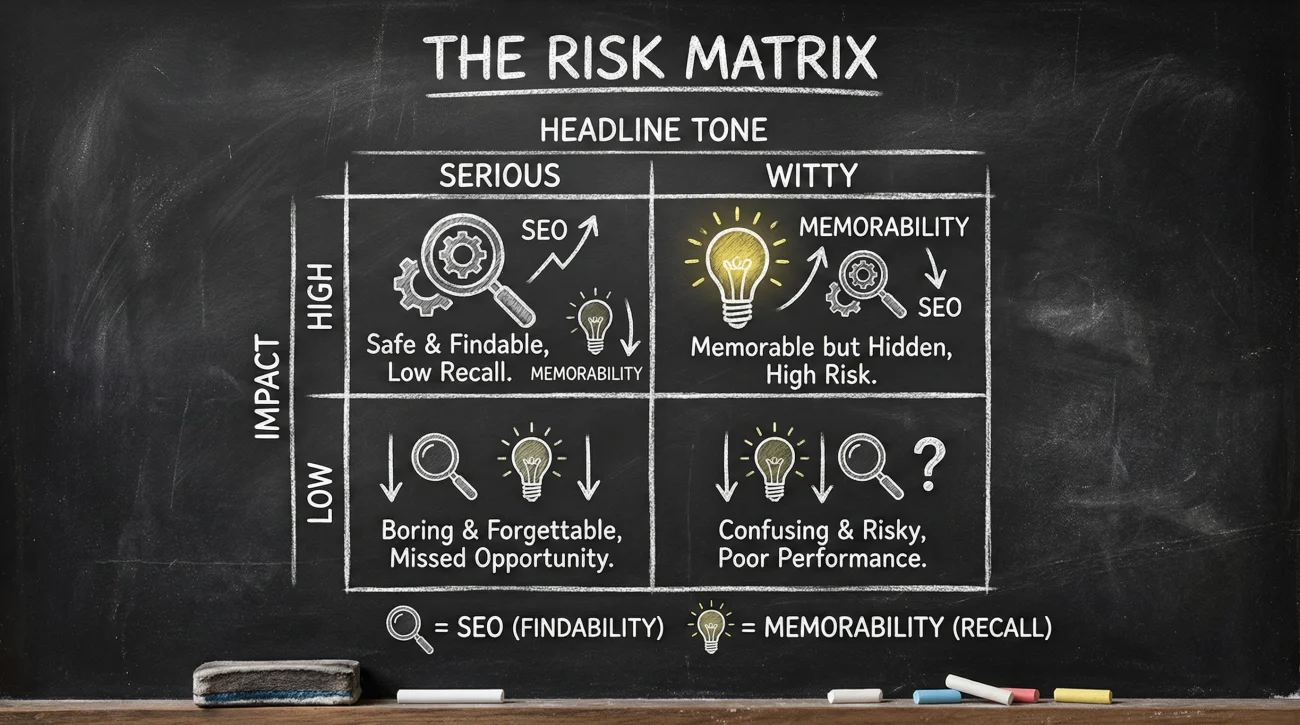
Before you commit to a witty LinkedIn headline, you must audit your personal risk profile. This decision should be data-driven, not emotion-driven. We can analyze this through four key metrics of personal branding.
| Metric | Standard/Serious Headline | Humorous/Witty Headline |
|---|---|---|
| Searchability (SEO) | ⭐⭐⭐⭐⭐ (High keyword density) | ⭐⭐ (Keywords often displaced by jokes) |
| Memorability | ⭐⭐ (Generic, blends in) | ⭐⭐⭐⭐⭐ (High recall if it lands) |
| Recruiter Safety | ⭐⭐⭐⭐⭐ (Safe bet for corporate) | ⭐ (High risk of immediate rejection) |
| Cultural Filtering | ⭐⭐ (Attracts everyone) | ⭐⭐⭐⭐⭐ (Filters for like-minded cultures) |
The table above illustrates the fundamental trade-off. By choosing humor, you are sacrificing SEO visibility (Searchability) for Brand Recall (Memorability). You are betting that fewer people will find you, but the ones who do will like you more. This is a valid strategy for established experts with strong networks who do not rely on inbound search traffic. However, for active job seekers in competitive markets, displacing keywords like “Project Management” with “Chief Chaos Coordinator” renders you invisible to the Applicant Tracking Systems (ATS) and search algorithms.
The “Trojan Horse” Method: Safe Approaches to Wit
If you are determined to show personality, the safest strategy is the “Trojan Horse” method: wrapping your humor inside a shell of hard competence. This ensures you pass the recruiter’s initial “is this person qualified?” scan before they enjoy the joke. This hybrid approach allows you to maintain SEO integrity while signaling culture fit.

1. Contextual Wordplay (Low Risk)
This approach uses industry-specific language to show you are an insider. It proves you know your field well enough to play with it. It suggests mastery rather than just silliness.
- ℹ️ Data Scientist: Turning Coffee Into Insights | Python, R, Machine Learning
- ℹ️ UX Designer: Making the Web Less Annoying Since 2015 | User Research & Prototyping
- ℹ️ Copywriter: Words Are My Business. Business Is Good. | B2B SaaS
💡 Why it works: The job title is first (SEO preserved). The humor relates directly to the value proposition. It tells the recruiter: “I am an expert, but I am also fun to work with.”
2. The “Reality Check” (Medium Risk)
This style acknowledges the pain points of a role, creating instant camaraderie with others in the trench. It acts as a “secret handshake” to other professionals who understand the struggle.
- ℹ️ Project Manager: Professional Cat Herder | PMP | Agile Transformation
- ℹ️ Developer: I Google Things So You Don’t Have To | Full Stack Engineer
- ℹ️ Marketer: Proving ROI So Finance Stops Yelling | Demand Gen & Analytics
💡 Why it works: It signals high emotional intelligence and awareness of business realities. It shows you don’t take yourself too seriously, which is a key leadership trait in modern flat organizations.
The “Red Zone”: What to Avoid Absolutely
There is a fine line between “witty” and “toxic.” Some forms of humor are red flags that scream “high-maintenance employee.”
⚠️ Strategic Warning: Never use “Anti-Corporate” humor or “Cynicism.” Headlines like “Corporate Survivor,” “Meeting Hater,” or “Chief Procrastinator” are career suicide. They do not signal wit; they signal a toxic attitude. Recruiters view these as candidates who will complain, resist management, and lower team morale.
Additionally, avoid “Bro-Marketing” terms. Words like “Hustler,” “Crushing It,” or “Domination” often read as immature and aggressive, alienating female recruiters and senior leadership.
Sector-Specific Protocols: Know Your Audience
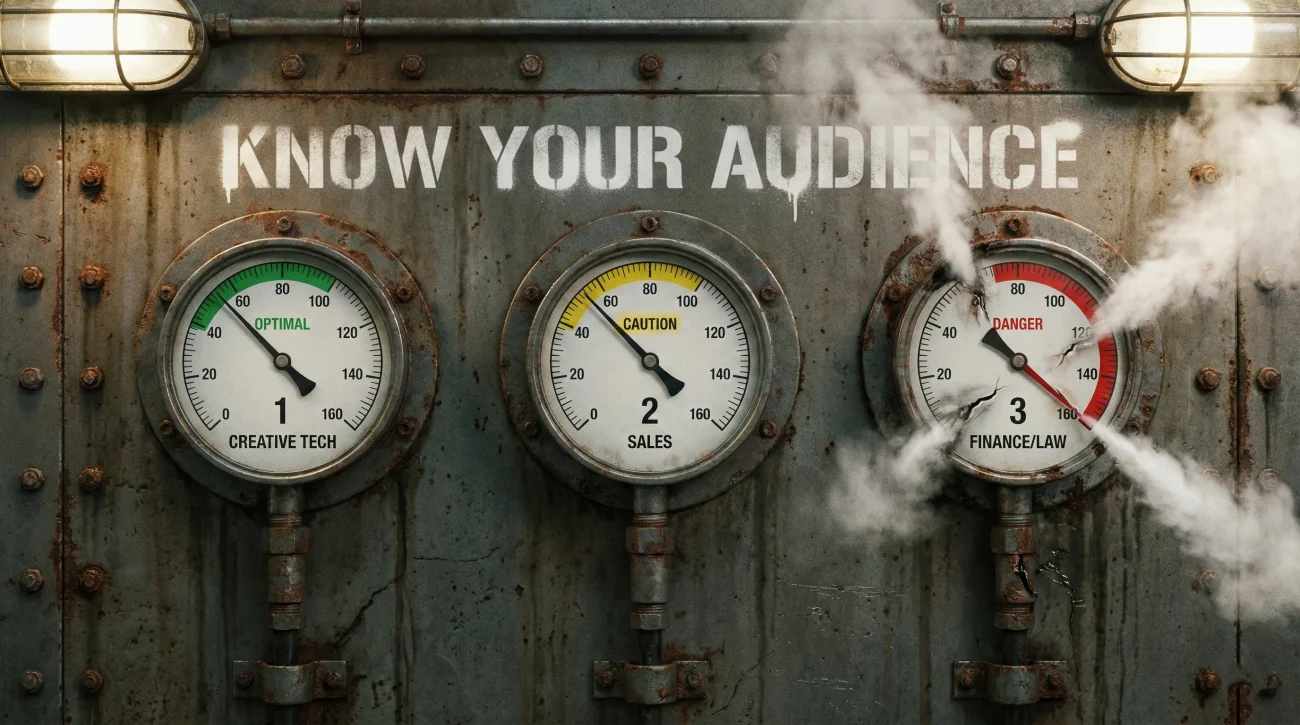
Context is the variable that determines the success of humor. What works in Silicon Valley often fails on Wall Street. You must tailor your tone to the “lowest common denominator” of your target industry’s conservatism.
Tier 1: High Tolerance (Creative, Tech Startups, Media)
In these sectors, personality is a currency. A dry profile can actually be a disadvantage, signaling a lack of cultural fit or “staleness.” Agencies and startups are hiring for vibe as much as skill.
Strategy: Be bold, but ensure your portfolio backs it up. Use humor to show lateral thinking and creativity. Your headline is your first creative deliverable.
- ✅ “Brand Strategist | I Make People Care About Boring Products”
- ✅ “Video Editor | Cutting Out The ‘Umms’ and ‘Ahhs’ of Corporate Life”
Tier 2: Moderate Tolerance (Sales, Marketing, HR)
These are “people-first” professions. Relationship building is the core competency. Light wit can help break the ice and build rapport, which is essential for the role. However, it must remain polite and polished.
Strategy: Use the “Trojan Horse” method. Keep the title serious, make the tagline witty. Ensure the humor is client-friendly.
- ✅ “Sales Director | I Sell Stuff People Actually Need | SaaS Enterprise”
- ✅ “Talent Acquisition | Matchmaker for Developers and Startups”
Tier 3: Zero Tolerance (Finance, Law, Healthcare, Gov)
These industries trade on trust, precision, and gravity. Their clients pay for stability, not entertainment. Humor here is perceived as instability or lack of focus.
Strategy: Do not use humor. Period. Your differentiation should come from prestige, certifications (CFA, JD, MD), and quantifiable achievements. Boring is good. Boring is safe. Boring pays the bills.
- ❌ “Lawyer | Arguing for a Living” (Reads as combative and unprofessional)
- ✅ “Corporate Counsel | M&A & Securities | Ex-Big Law” (Reads as competent and reliable)
Pros & Cons: The Humor Audit
Before editing your profile, review this comprehensive audit table to ensure you are making a calculated decision rather than an impulsive one. This helps you weigh the unseen costs.
| Pros (Strategic Advantages) | Cons (Strategic Risks) |
|---|---|
| ✅ Differentiation: In a stack of 500 identical resumes, a funny headline stops the scroll. It forces the recruiter to look twice and engages System 2 thinking (analytical focus). | ❌ Algorithm Invisibility: Every character used for a joke is a character not used for a high-ranking SEO keyword like “Python” or “Revenue Growth.” You disappear from search results. |
| ✅ Cultural Screening: It acts as a magnet for progressive, fun companies and a repellent for rigid, traditional firms. You attract the tribes you belong to, saving time on bad interviews. | ❌ Shelf Life: Pop culture references (e.g., “Game of Thrones” jokes) age poorly. What is funny today becomes “cringe” tomorrow, making your profile look outdated and out of touch. |
| ✅ Humanization: It breaks down the corporate façade, making you approachable and relatable before the first interview. It builds a parasocial connection. | ❌ Misinterpretation: Sarcasm is notoriously difficult to convey in text. A hiring manager might read your “confidence” as “arrogance” or your “wit” as “snark.” |
Integrating Humor Beyond the Headline
If you decide that the headline is too risky for humor (which, for 80% of professionals, it is), you can still inject personality into other parts of your LinkedIn profile. This is a safer strategy: keep the storefront (Headline) professional, but make the interior (About/Posts) welcoming.
The “About” Section: The Safe Haven
Your About section is where people go after they have validated your credentials. Here, you have 2,600 characters to tell a story. You can open with a professional summary and end with a “Fun Fact” or a witty observation.
Example:
“When I’m not optimizing supply chains, I’m usually arguing with my sourdough starter or trying to keep my houseplants alive.”
This “humanizes” you without costing you SEO points.
Content and Comments
The best place to show wit is in the comments section of other people’s posts. It is low stakes and high visibility. A clever, insightful comment can drive traffic to your profile. If that profile is optimized with a professional headline, you get the best of both worlds: high traffic from your personality, high conversion from your professionalism.
❓ FAQ
📉 Does humor hurt my LinkedIn SEO ranking?
🤡 Is “Ninja” or “Guru” still considered funny?
🧪 How can I test if my headline is too risky?
👔 Can executives use humor?
🐣 I am a student/entry-level, should I be funny to stand out?
Final Verdict: Humor is a Spice, Not the Main Course
The decision to use funny LinkedIn headline examples should be treated as a branding campaign. It requires targeting, testing, and an understanding of your market position. If you work in a creative field, have a strong personal brand, and are not actively desperate for a job, humor is a powerful tool to build tribe and engagement.
However, for the vast majority of professionals – especially those in “trust-based” industries or active job search modes – the “boring” headline is the profitable headline. Clarity beats cleverness. Your goal is to be hired, not to be entertained.
If you choose to be funny, ensure you are also indisputably good at what you do. Competence buys you the license to be witty. Without competence, wit is just noise. For more guidance on balancing personality with professionalism, explore our comprehensive guide to LinkedIn headlines or review industry-standard examples to benchmark your profile against the best.
For more examples and swipeable headline ideas, head over to the blog.