- Core idea: Your headline is processed in seconds, so cognitive ease beats creativity and vague branding.
- Recruiter reality: Decision fatigue turns reading into pattern matching, so standard titles and exact keywords win clicks.
- 3 shortcuts: Prototype match, familiarity anchors, and the first 3 to 5 words shape how everything else is judged.
- 4 signals: Trust via social proof, competence via specificity, status via scale, curiosity via a safe information gap.
- Execution and testing: Keep structure readable, avoid laundry lists and over-claims, then A/B test with proxy feedback and LinkedIn metrics.
The Cognitive Science of the Click: Why Some Headlines Win
In the split-second economy of LinkedIn, your headline is not read; it is processed. Understanding the psychology behind a good LinkedIn headline is the difference between being a “hidden gem” and a visible market leader. The disparity between a profile that attracts recruiters and one that gathers digital dust is rarely about skill – it is about cognitive signaling.
Most professionals approach their headline as a data entry task: fill in the job title, add the company, and hit save. This is a fundamental misunderstanding of the medium. When a stranger encounters your profile in a search result or comment section, their brain makes a subconscious assessment of your competence, status, and relevance in less than 3 seconds. This decision happens in the primitive, fast-thinking part of the brain (what Daniel Kahneman calls “System 1”) long before their analytical brain (“System 2”) engages.
To win this micro-moment, you cannot just be qualified; you must be cognitively fluent. This guide moves beyond basic optimization keywords to explore the neural triggers, biases, and heuristics that drive professional attraction. We will deconstruct how to engineer a headline that aligns with how the human brain naturally filters signal from noise.
The Recruiter’s Context: Decision Fatigue & Filtering
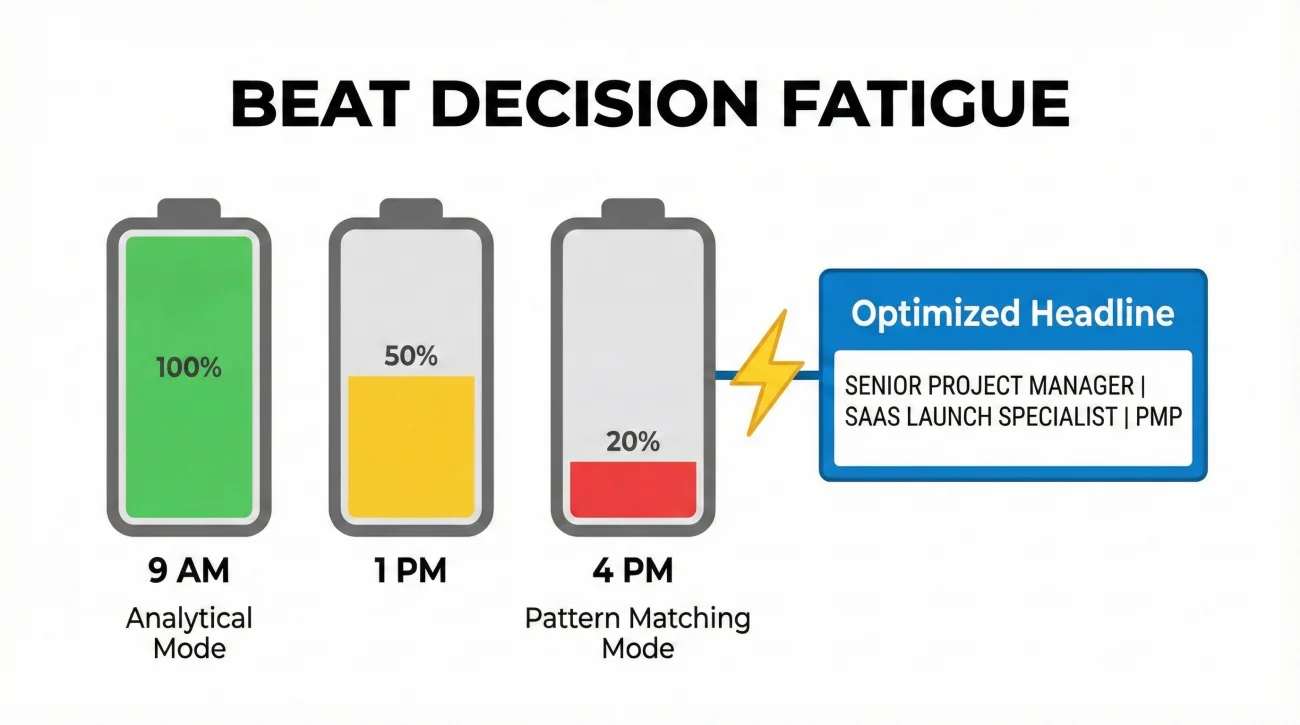
To create a headline that works, you must first empathize with the chaotic reality of your primary audience: the recruiter. A busy recruiter or sourcer typically reviews between 50 to 100 profiles every single day. This volume creates a psychological phenomenon known as Decision Fatigue.
As the day progresses, the brain’s ability to make nuanced trade-offs deteriorates. To conserve energy, the recruiter’s brain stops analyzing and starts “pattern matching.” They stop reading words and start scanning for shapes and recognized keywords. If your headline forces them to think, pause, or translate your jargon into their requirements, you lose. You have become “cognitive friction.”
Your goal is to be the path of least resistance. You want to trigger an immediate “Yes, this matches” response before their conscious brain even has time to look for reasons to say “No.”
The 3 Cognitive Shortcuts Driving Clicks
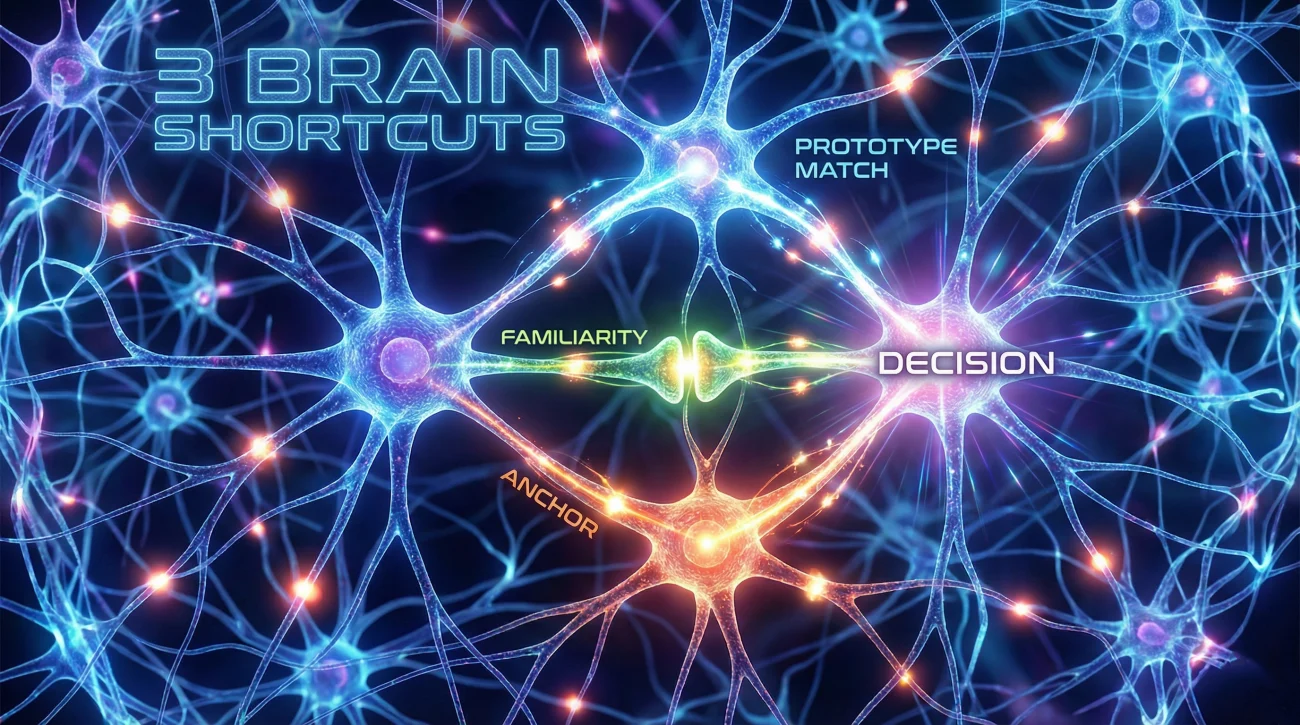
Since recruiters are operating under high cognitive load, they rely on “heuristics” – mental shortcuts that allow them to make rapid decisions. Understanding why recruiters click on some headlines requires mastering these three specific biases.
1. The Representativeness Heuristic
This is the brain’s reliance on stereotypes or “prototypes.” Recruiters have a mental image of what an “ideal candidate” looks like for a specific role. When they scan a headline, they are simply checking for a match against this mental prototype.
The Bias in Action: If a recruiter is looking for a “Senior Developer,” their mental prototype includes specific keywords like “Senior,” “Lead,” “Architect,” and specific tech stacks like “Python” or “AWS.”
If your headline is creative or abstract – for example, “Coding Wizard & Tech Enthusiast” – you violate the prototype. You force the recruiter to perform a mental translation (“Is a Wizard equivalent to a Senior Developer?”). This split-second of confusion is often enough to cause them to scroll past. Conversely, a headline like “Senior Software Engineer | Python & AWS Architect” overlays perfectly with their mental model, triggering a “click” reflex.
2. The Availability Heuristic
The Availability Heuristic describes our tendency to judge the importance or value of something based on how easily examples come to mind. In the context of LinkedIn, familiarity breeds trust.
Information that is “available” in the recruiter’s memory – such as famous company names (Google, Deloitte), prestigious universities (Stanford, MIT), or standard job titles – feels more “true” and “valuable” than unknown entities.
Strategic Application: If you have worked for a recognizable brand, it must be in your headline. It acts as a mental anchor. “Product Manager at TechCorp” (unknown) requires the recruiter to investigate the company’s size and quality. “Product Manager at Spotify” (known) allows the recruiter to instantly borrow Spotify’s reputation and apply it to you.
3. The Anchoring Effect
The Anchoring Effect dictates that the first piece of information a reader sees heavily biases how they interpret everything that follows. In a LinkedIn headline, the first 3-5 words are your anchor.
- The Weak Anchor: “Passionate about Tech | Software Engineer”
Analysis: The anchor here is an emotion (“Passionate”). In a professional context, “passion” is often a signal used by juniors or hobbyists who lack hard skills. By anchoring with this, you color the rest of the headline with a “junior” tint. - The Strong Anchor: “Senior Software Engineer | 10 Years Exp | Tech Enthusiast”
Analysis: The anchor is a definitive role (“Senior Software Engineer”). This establishes your professional identity and seniority immediately. When the reader gets to “Tech Enthusiast” at the end, it is now interpreted as a positive cultural add (“He loves his job”) rather than a lack of substance, because the competence anchor has already been set.
The 4 Pillars of Emotional Signaling
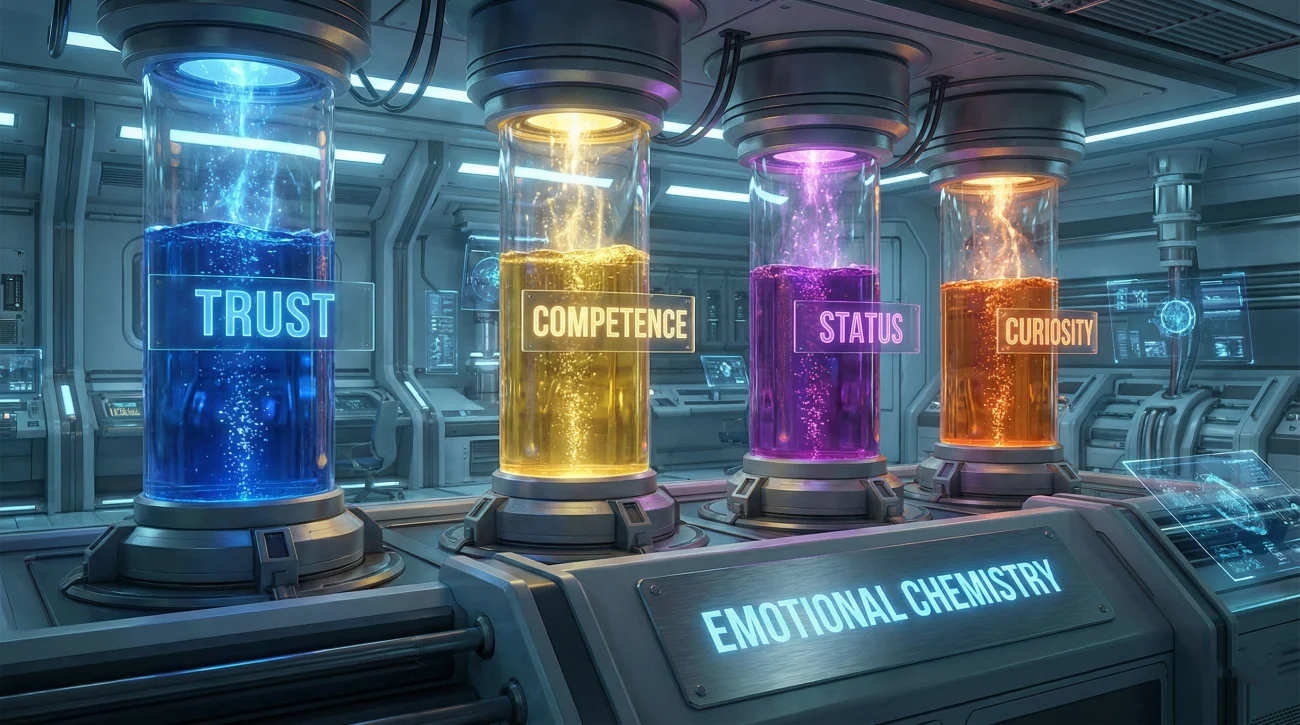
While logic validates a hiring decision, emotion drives the initial attention. An effective emotional impact headline does not mean being dramatic or clickbaity; it means triggering specific psychological states in the viewer that compel them to engage.
Pillar 1: Trust via Social Proof
The internet is a low-trust environment. Every profile claims to be an “expert.” To cut through this skepticism, you need third-party validation, known as Social Proof.
When you list a credential like “CPA,” “CFA,” or “PhD,” or a company like “Ex-Amazon,” you are signaling that a rigorous third party has already vetted you. You are essentially saying, “You don’t have to take my word for it; Amazon already bet on me.” This reduces the perceived risk for the recruiter. If they present you to a hiring manager, and you fail, they can point to your pedigree as a defense.
Pillar 2: Competence via Specificity
The “Specificity Heuristic” is a powerful cognitive bias where we perceive specific, detailed claims as being more truthful and likely than vague ones.
Consider two headlines:
- Headline A: “Helping companies grow revenue.”
- Headline B: “Scaling B2B SaaS Revenue from $1M to $10M.”
Headline A triggers skepticism because it is generic; anyone can claim it. Headline B triggers a competence response because the specific numbers and sector (“B2B SaaS,” “$1M to $10M”) imply deep, granular knowledge. The brain assumes that you couldn’t possibly know those specific details unless you had actually done the work.
Pillar 3: Status via Scarcity
Humans are evolutionarily wired to pay attention to high-status individuals. In a professional context, status is often signaled by scale and exclusivity.
You can trigger this by highlighting numbers that imply a level of responsibility most people never achieve. “Managing a 5-person team” is common. “Managing a 150-person organization” is scarce. “Managing a $50k budget” is common. “Managing a $100M P&L” is scarce. Scarcity breeds desire. If your headline signals that you operate at a rarefied level, recruiters feel a compulsion to connect before they “miss out.”
Pillar 4: Curiosity via Information Gaps
The “Information Gap Theory” (George Loewenstein) states that when we perceive a gap between what we know and what we could know, we feel a sensation of deprivation. We click to resolve that tension.
This is tricky to use on LinkedIn without sounding like clickbait, but it is powerful when done correctly. The key is to provide a “hook” of a result without revealing the “how.”
Example:
“The Marketer Behind the Viral ‘Ice Bucket’ Campaign.”
The gap here is obvious: “Wait, you did that? How? What was your role?” The reader is compelled to click the profile to verify the claim and satisfy their curiosity.
Maximizing Click-Through Rate (CTR) with Cognitive Fluency
Beyond the content itself, the structure of your headline determines its success. This is governed by a principle called Processing Fluency. Simply put: the easier it is for the brain to process information, the more likely the brain is to accept that information as true, valuable, and likable.
Avoiding Cognitive Strain
When text is hard to read – due to jargon, lack of punctuation, or run-on sentences – it causes “Cognitive Strain.” When the brain feels strain, it switches to System 2 (analytical mode). It becomes skeptical. It starts looking for errors.
The Strategy: You want to maintain Cognitive Ease. Use standard separators like the vertical bar ( | ) or bullet point ( • ). Avoid complex emojis that clutter the visual field. Use simple, standard job titles.
Visual Distinctiveness in Search Results
When a recruiter searches for a keyword, they see a list of 10-20 profiles. This is a visual competition. To win, you need elements that break the visual pattern of text.
1. Numbers as Visual Anchors:
In a sea of letters, numbers stand out. They act as “eye stops.” “Ten years experience” is just more text. “10 Years Experience” is a visual hook. Use digits for years, revenue, team size, and percentages to arrest the scanning eye.
2. Credential Acronyms:
Capitalized acronyms (CPA, MBA, PMP, PhD) create a “block” shape in the text that draws the eye. They also serve as immediate authority signals that require zero processing time to understand.
Optimal Information Density
The human brain generally can only hold 3 to 4 items in working memory at once. A common mistake is the “Laundry List Headline”:
Mistake:
“Marketing | Sales | SEO | Content | PPC | Email | Strategy | Leadership | Growth”
This causes cognitive overload. The brain cannot group these effectively, so it ignores them all. Instead, use “Chunking” to group related concepts:
Optimized:
“Growth Marketing Director | SEO & Content Strategy | Paid Acquisition (PPC)”
Here, we have three distinct “chunks” of information. The brain can easily parse, categorize, and store this profile as “Senior Marketer with Organic and Paid skills.”
Decoding the Decision Matrix: How Different Audiences Think
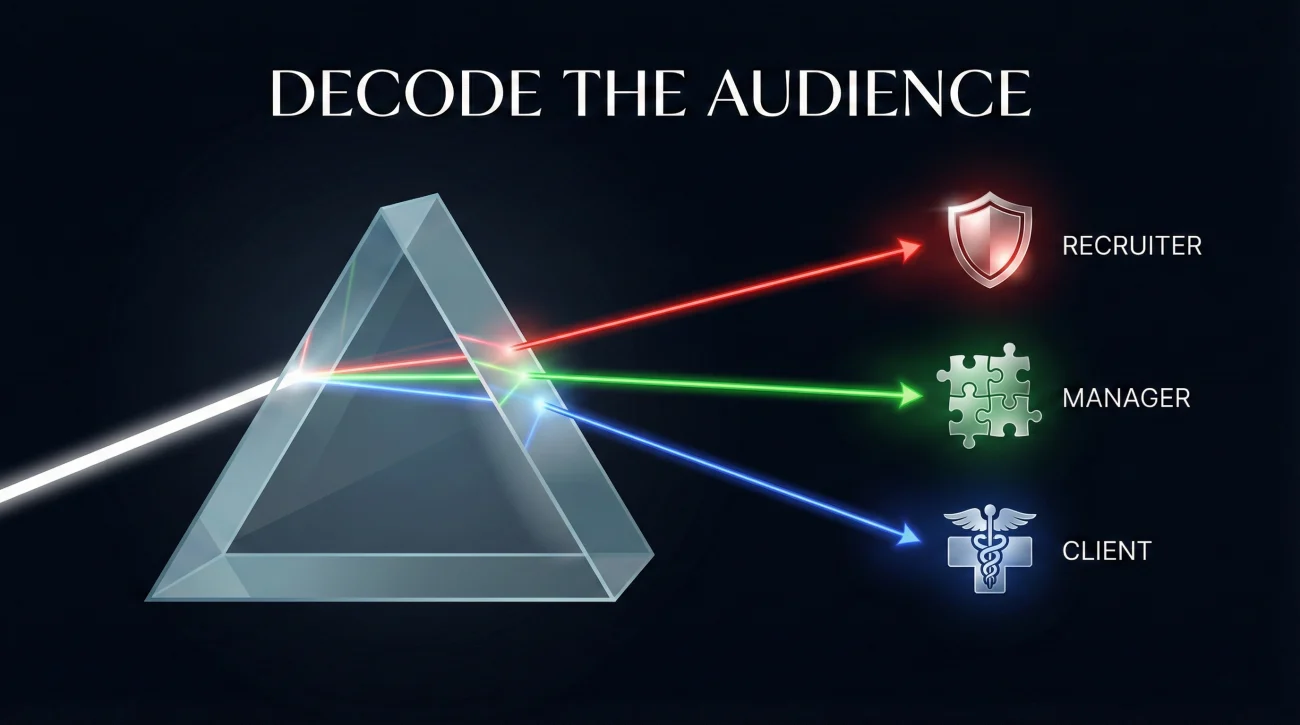
One of the most critical insights from the psychology behind a good LinkedIn headline is that different people scan for completely different things. You cannot optimize for everyone simultaneously. You must choose your primary target and align your signals with their specific anxieties and desires.
1. The Recruiter: Motivated by Risk Aversion
Psychological Driver: Recruiters are judged on “submission quality.” Their nightmare is sending a candidate to a hiring manager who is wildly unqualified. Therefore, they are risk-averse.
What They Scan For:
- ✓ Exact Keyword Matches: Does this person have the exact title and skills requested?
- ✓ Job Stability: Do they see steady progression?
- ✓ Years of Experience: Is the number “5+” clearly visible?
Optimization Strategy: Be literal. Use the industry-standard job title. List the hard skills exactly as they appear in job descriptions. Do not get creative here.
2. The Hiring Manager: Motivated by Utility & Fit
Psychological Driver: The hiring manager has a problem to solve and a team culture to protect. They are imagining what it is like to work with you.
What They Scan For:
- ✓ Complementary Skills: “I have a backend team; I need this person to handle the frontend.”
- ✓ Cultural Signaling: “Tech Enthusiast” or “Mentor” signals a personality fit.
- ✓ Problem-Solving Capacity: “Scaled to 1M users” tells them you can handle their upcoming growth phase.
Optimization Strategy: Balance the hard skills with an achievement or a “human” element that signals you are a good colleague, not just a coding machine.
3. The Potential Client: Motivated by Pain Relief
Psychological Driver: Clients are selfish (in a good way). They do not care about your career history; they care about their own pain. They are asking, “Can you fix this for me?”
What They Scan For:
- ✓ Problem Identification: Do you mention the specific issue they are facing?
- ✓ Outcome Statements: Do you promise a result?
- ✓ Relevance: Do you work with “people like them” (e.g., “Startups,” “Enterprise”)?
Optimization Strategy: Remove the job title. Replace it with a value proposition statement. “Helping [Target Audience] achieve [Result] via [Method].”
Testing Protocols: Applying Scientific Method to Psychology
You should not guess which psychological triggers work; you should test them. However, LinkedIn’s algorithm penalizes profiles that change too frequently. Here is a safe testing protocol.
The “Social Proxy” Test (Offline)
Before you change your live profile, draft three versions of your headline using different psychological levers (e.g., one focused on Status, one on Competence, one on Social Proof).
Send these three versions to 5-10 trusted colleagues or peers in your industry. Do not ask “Which one do you like?” – that invites subjective opinion. Instead, ask a behavior-based question:
“If you had a stack of 100 resumes and only 5 seconds to pick one person to interview for [Target Role], which of these headlines would make you stop and look?”
This forces them to simulate the recruiter’s heuristic scanning process. The winner of this test is usually the highest performer in the real world.
Tracking Live Metrics
Once you update your headline, monitor these proxy metrics for 2-4 weeks:
| Metric | What It Indicates |
|---|---|
| Search Appearances | SEO Success: Your keywords are correct. |
| Profile Views | Psychology Success: Your headline is compelling enough to generate a click. |
| Connection Acceptance Rate | Trust Signal: People feel safe connecting with you. |
| InMail Quality | Targeting Alignment: You are attracting the right kind of attention. |
Common Psychological Misfires
Even intelligent professionals often fall into cognitive traps that undermine their headlines.
The Dunning-Kruger Trap (Over-claiming)
Using superlatives like “World-Class,” “Best-in-Class,” “Guru,” or “Visionary” creates a psychological backlash. In psychology, true experts tend to be understated because they are painfully aware of how much they don’t know. Conversely, amateurs often overestimate their competence (the Dunning-Kruger effect).
When a recruiter sees “Marketing Guru,” they subconsciously associate it with the amateur side of the Dunning-Kruger curve. To signal true expertise, use data, not adjectives. “Managed $50M Budget” beats “Finance Guru” every time.
The Curse of Knowledge (Internal Jargon)
You know exactly what a “Level 4 Systems Archmage” does at your current company. It is a prestigious title internally. But to the outside world, it is noise. This is the “Curse of Knowledge” – assuming others share your background context.
If a recruiter does not understand your title instantly, they will not Google it; they will ignore it. Always translate your internal status into the external market standard. “Senior Systems Architect” is the currency of the market; spend that instead.
❓ FAQ: Mastering Headline Psychology
🚫 Is the “Open to Work” banner psychologically damaging?
🧠 How do I handle “Unemployment” in a headline?
🎨 Can I be “funny” or “creative” in my headline?
⚡ Why do numbers increase click-through rates so much?
Final Thoughts: Engineering the Perfect Click
Mastering the psychology behind a good LinkedIn headline is not about manipulation; it is about communication efficiency. In a noisy, low-trust, high-velocity digital world, you are doing your audience a massive favor by making your value easy to perceive, easy to process, and easy to trust.
Remember the core psychological mandate: You must lower the Cognitive Load for the recruiter. Every word in your headline should serve to reduce friction, build trust through social proof, or signal competence through specificity. If you force the reader to guess, you have already lost.
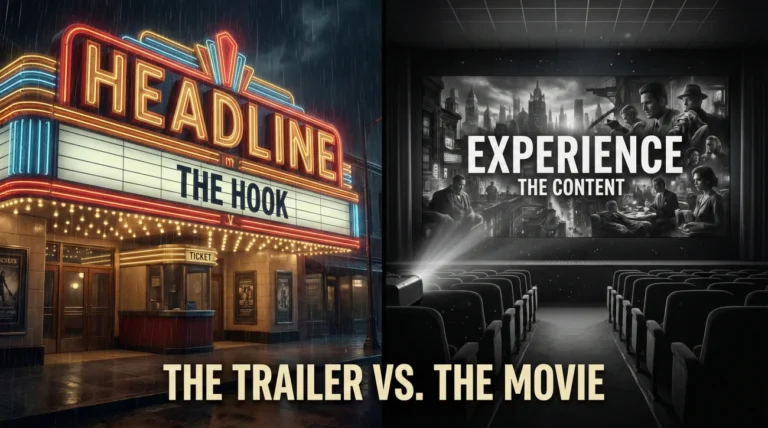
Your headline is more than a label; it is the 220-character trailer for the movie of your career. Make sure it hooks the audience in the first 3 seconds. To see these principles in action across different job functions, explore our library of industry-specific headline examples, or deepen your strategy with our comprehensive LinkedIn Headline Guide.
For more examples and swipeable headline ideas, head over to the blog.