
- Headline definition: A 220-character marketing asset that appears everywhere on LinkedIn, not a backward-looking job title.
- Algorithm reality: Headline keywords carry the highest search weight, so put your target role and hard skills up front.
- Front-loading rule: Only the first 40–60 characters show in many mobile views, so lead with the must-see words.
- Strategic frameworks: Choose an archetype that fits your goal, keyword-first for search, value-driver for ROI, authority for prestige, or hybrid for balance.
- Default trap to avoid: “Title at Company” wastes space, so add industry, specialty, and proof to stop the 3-second scan and win clicks.
The 220-Character Asset: Understanding LinkedIn’s Most Valuable Real Estate
In the digital recruitment ecosystem, your professional value proposition must be compressed into exactly 220 characters. This is the precise technical constraint of the LinkedIn professional headline. To the uninitiated, it is merely a text box. To the strategic professional, it is an exercise in high-stakes conversion copywriting. This singular text block appears in more distinct locations across the platform than any other element – from search results and comment threads to Google snippets, mobile push notifications, and “People Also Viewed” sidebars.
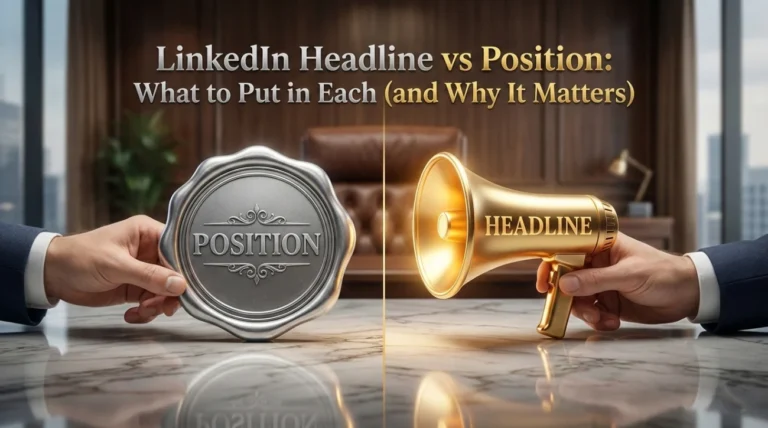
Understanding what is a professional headline on LinkedIn requires a shift in mindset. Most users confuse the Headline with a “Job Title.” This misconception is costly. A Job Title is a retrospective historical record (e.g., “Manager at Company X”). It looks backward. A Headline is a prospective marketing asset (e.g., “SaaS Growth Strategist Scaling $10M+ ARR | Demand Generation”). It looks forward. The former tells people what you did; the latter tells them what you can do for them.
This comprehensive guide deconstructs the definition of LinkedIn professional headline mechanics, explores the algorithmic weight it carries in search rankings, and provides a strategic framework for transforming this field from a passive label into an active lead-generation engine.
The Strategic Definition: Beyond the Text Field
To master the headline, we must define it through three distinct lenses: Technical, Functional, and Strategic. A failure in any one of these dimensions results in a profile that is invisible or ignored.

1. The Technical Definition (The Algorithm’s View)
Technically, the LinkedIn headline is a plain-text string associated with your user UID (User ID) in the platform’s database.
- • Character Limit: 220 Characters (spaces included). Before 2020, this limit was 120 characters. The expansion allows for significantly more keyword density.
- • Indexing Priority: High. LinkedIn’s search engine (built on Lucene technology) weights text in the Headline field heavier than text in the “About,” “Experience,” or “Skills” sections. A keyword placed here is worth 5x-10x more than a keyword buried in your bio.
- • Truncation Logic: While you have 220 characters, only the first ~40-60 characters are visible in mobile comment threads, and the first ~100 in desktop search results. This necessitates a “Front-Loading” strategy.
- • Default State: If left blank, LinkedIn’s script pulls your current “Job Title” + “Company Name.” This is the “default trap” that renders you invisible to non-branded searches.
2. The Functional Definition (The Recruiter’s View)
Functionally, the headline acts as your “meta-tag” for the human eye. In a search result list of 50 candidates, the headline is the differentiator.
The “3-Second Scan” Rule: A recruiter or hiring manager scans the Name, Photo, and Headline. This is known as “Thin-Slicing” in psychology. If the headline does not contain the specific keywords of the role they are hiring for (e.g., “Python,” “Project Management,” “Sales”), the eye skips to the next candidate. The headline’s function is to stop the scroll.
3. The Strategic Definition (The Buyer’s View)
Strategically, this is your Unique Value Proposition (UVP). It answers the implicit question: “Why should I click on this profile instead of the one above it?” It bridges the gap between your identity (Who you are) and the market’s need (What problem you solve). It is your elevator pitch, billboard, and business card rolled into one.
Comparative Analysis: Headline vs. Job Title vs. About Section
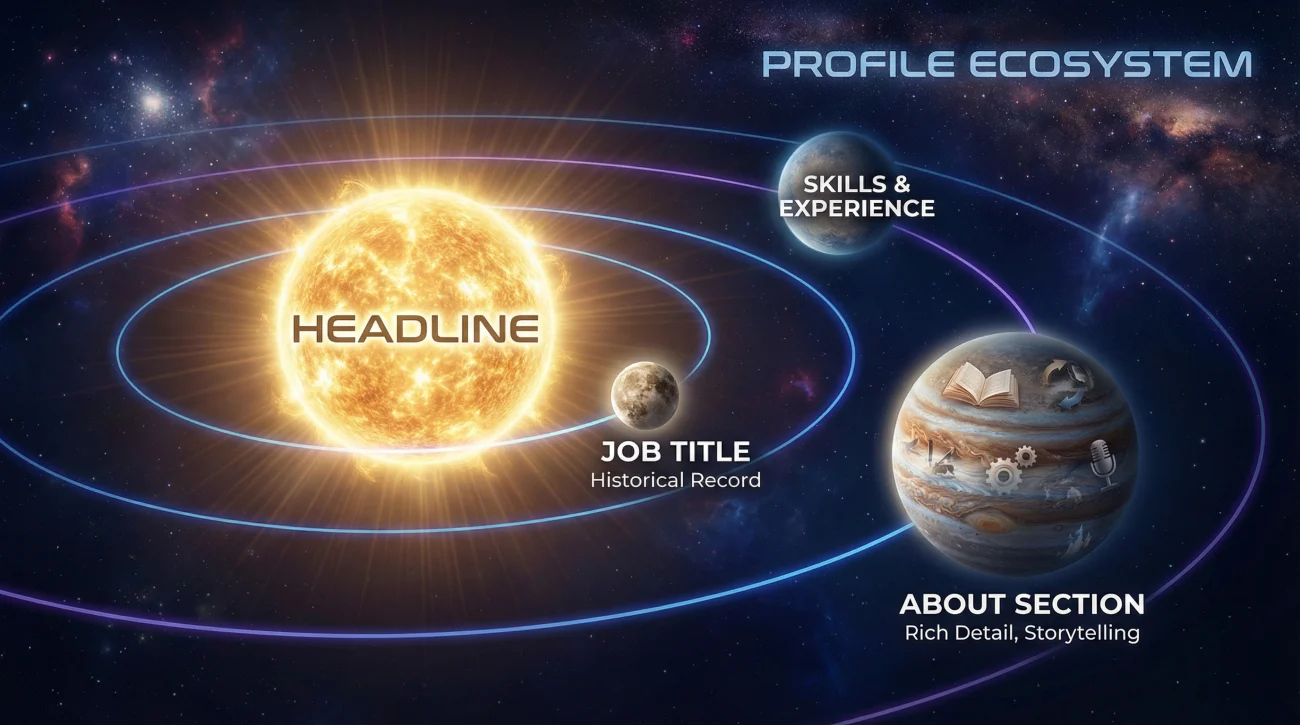
Confusion between these three elements is the primary reason for poor profile performance. They serve interconnected but distinct roles in the conversion funnel of your profile.
| Feature | Headline (The “Hook”) | Job Title (The “Evidence”) | About Section (The “Story”) |
|---|---|---|---|
| Primary Goal | SEO & Click-Through Rate (CTR): Getting found and getting clicked. | Verification & History: Proving you actually held the role. | Persuasion & Narrative: Connecting the dots and building trust. |
| Search Weight | ⭐⭐⭐⭐⭐ (Highest Priority) | ⭐⭐⭐ (Medium Priority) | ⭐⭐ (Lower Priority) |
| Visibility | Everywhere (Search, Comments, Messages, Home Feed, Google) | Profile Page Only (Experience Section) | Profile Page Only (Below the fold) |
| Flexibility | 100% Customizable. Can be aspirational. | Restricted. Should match payroll/contract title for background checks. | Free-form text. Can include emojis, lists, and stories. |
| Ideal Content | Hard Skills, Outcomes, Metrics, Job Target. | Official Corporate Title (e.g., “Level 4 Manager”). | Career trajectory, philosophy, and soft skills. |
Decoding the LinkedIn Headline Meaning: The 4 Archetypes
When we analyze high-performing profiles across 50+ industries, the LinkedIn headline meaning shifts based on the user’s career strategy. There is no “one right way,” but there are four dominant strategic archetypes.
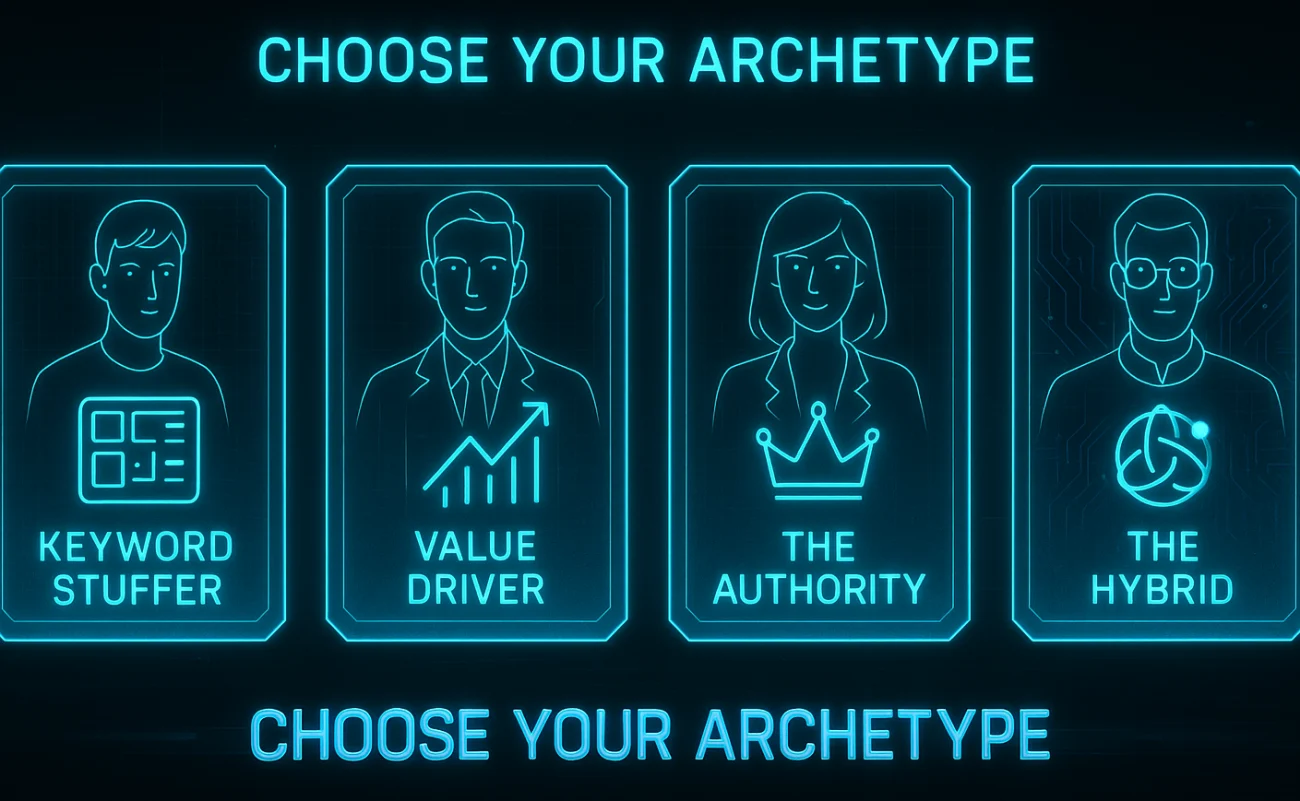
1️⃣ Archetype 1: The Keyword Stuffer (The SEO Play)
1. The Keyword Stuffer (The SEO Play)
Structure:
Role | Hard Skill 1 | Hard Skill 2 | Hard Skill 3 | Industry
Example:
“Senior Software Engineer | Java | Microservices | AWS Certified | FinTech | API Design”
💡 Why it works: It is purely functional. It feeds the Applicant Tracking Systems (ATS) and LinkedIn Recruiter algorithms exactly what they want. It creates multiple “hooks” for search queries. It is not “sexy” or creative, but it is highly effective for active job seekers in technical fields where skills are quantifiable.
2️⃣ Archetype 2: The Value Driver (The ROI Play)
2. The Value Driver (The ROI Play)
Structure:
Role | Helping [Target Audience] achieve [Result] | [Secret Sauce]
Example:
“Marketing Director | Helping B2B SaaS Startups Scale to $50M via Account-Based Marketing (ABM)”
💡 Why it works: It speaks the language of the hiring manager (Revenue, Growth, Efficiency). It frames the candidate as an investment, not a cost. This is the gold standard for Sales, Marketing, and Executive roles.
3️⃣ Archetype 3: The Authority (The Brand Play)
3. The Authority (The Brand Play)
Structure:
Title at [Prestige Company] | Ex-[Prestige Company] | Speaker | Author | Award
Example:
“VP of Product at Netflix | Ex-Google | Keynote Speaker | Forbes 30u30”
💡 Why it works: It leverages “Social Proof” and “Halo Effect.” If you have high-status brands in your history, front-loading them establishes immediate credibility. It signals pre-vetting by top-tier organizations.
4️⃣ Archetype 4: The Hybrid (The Balanced Play)
4. The Hybrid (The Balanced Play)
Structure:
Role | Keyword | Value Proposition
Example:
“Customer Success Manager | SaaS Retention Specialist | Reducing Churn by 20% for Enterprise Clients”
💡 Why it works: This is the recommended approach for most professionals. It balances searchability (Keywords) with persuasion (Results), satisfying both the robot (algorithm) and the human (recruiter).
The Psychology of the Click: Cognitive Load and Pattern Recognition
To write a headline that works, you must understand the brain of the person reading it. Recruiters operate under high Cognitive Load. They are scanning, not reading.
Pattern Recognition
Recruiters are looking for a pattern match.
🧑💻 Mental Query: “I need a Project Manager with PMP in Healthcare.”
🤖 Visual Scan: They scan headlines for “Project Manager,” “PMP,” and “Healthcare.”
💯 Result: If your headline says “Making Healthcare Teams Efficient,” you might get skipped because the brain didn’t see the specific hard keywords “Project Manager” or “PMP.”
🔆 Lesson: Clarity beats cleverness. Use the standard industry terms first, then add flavor.
The Curiosity Gap
For consultants and sales pros, the goal is to create a “Curiosity Gap” – a piece of information that makes the reader want to know more.
Boring:
“Sales Consultant.”
Curiosity:
“Sales Consultant | I help 6-figure coaches become 7-figure CEOs.”
🔆 Lesson: Specificity creates intrigue. Vague claims create boredom.
The “Default” Trap: A Strategic Risk Assessment

LinkedIn’s algorithm encourages you to use their default headline setting (Current Job + Current Company) to reduce friction during onboarding. For 90% of users, accepting this default is a strategic error.
| Pros of Default Headline | Cons of Default Headline |
|---|---|
| ✅ Zero Effort: Automatically updates when you add a new experience. | ❌ Keyword Poverty: “Account Manager at XYZ Corp” tells the search engine almost nothing about your specific skills (e.g., Salesforce, Enterprise Sales, Negotiation). |
| ✅ Brand Leverage: Effective ONLY if you work for a globally recognized brand (e.g., “Engineer at NASA” or “Investor at Sequoia”). | ❌ Zero Differentiation: You look identical to every other employee at your company with that title. You become a commodity rather than a unique asset. |
| ✅ Humility: Can signal that you are secure in your role and not “trying too hard.” | ❌ Passive Signal: It subconsciously signals to recruiters that you are not actively managing your career or personal brand. It implies you are “Legacy” rather than “Modern.” |
| ❌ Missed Context: If your company name is obscure (e.g., “Analyst at A2Z Solutions”), the recruiter has no idea what industry you are in. |
The Visibility Ecosystem: Where Does it Live?
To fully grasp the importance of this field, you must visualize where it travels. Your headline is your digital ambassador that enters rooms before you do.
- 1. The Inbox (The “Open Rate” Factor): When you send a connection request or an InMail, the recipient sees only your Name, Photo, and Headline. A compelling headline provides immediate context (“Oh, he’s in Fintech too”) and increases acceptance rates.
- 2. The Feed (The “Click-Through” Factor): When you comment on a viral post, your headline appears above your comment. A witty or authoritative headline can drive thousands of profile views from a single insightful comment. This is the primary growth engine for creators.
- 3. Google SERP (The “SEO” Factor): Google indexes LinkedIn profiles. The “Title Tag” of your profile page usually mimics your Name + Headline. A well-optimized headline helps you rank for your own name and profession on Google, pushing down irrelevant results.
- 4. “People Also Viewed” (The “Competitor” Factor): On your competitors’ profiles, there is a sidebar suggesting other profiles. Your headline is the only tool you have to steal traffic from that sidebar. If yours looks more valuable than the profile they are currently viewing, they will click.
- 5. Mobile Notifications: When you view someone’s profile, they get a notification. “Jane Doe (SaaS Copywriter) viewed your profile.” If the headline is intriguing, they view you back. If it’s “Student at University,” they likely ignore it.
❓ FAQ
🚧 Can I use emojis in my headline?
📉 What happens if I change my headline too often?
🚫 Should I put “Open to Work” in my headline?
📱 Does the headline look different on mobile?
🔗 Can I put a link in my headline?
Final Thoughts: The 80/20 Rule of Profiles
In the grand scheme of LinkedIn optimization, the Headline represents the Pareto Principle (80/20 Rule). It is 20% of the work that drives 80% of the visibility. You can have a Pulitzer-prize-winning “About” section and a decade of impressive “Experience,” but if your headline fails to hook the search algorithm and the human eye, those sections will remain unread.
Your headline is not static. Treat it as a living document. As you gain new skills, complete new certifications, or shift your career focus, your headline should evolve. It is not a tattoo; it is a billboard. Update it to reflect the future you are building, not just the past you have lived. The professionals who win on LinkedIn are not the ones with the best jobs, but the ones with the best positioning.
For a step-by-step tactical approach to writing this content, refer to our specific guide to crafting effective LinkedIn headlines, or explore real-world examples to see these archetypes in action.
If this was helpful, you’ll probably enjoy the rest of the articles on our blog.