- Why It Matters: Your LinkedIn headline is high-visibility metadata, so better prompts help you rank in searches and look human to recruiters.
- Prompt Anatomy: Use four parts every time: Persona, Context, Constraints, Output format.
- Core Library: Start with ready-made prompts for: Deep context rebuild, Career pivot, Executive authority, Graduate positioning, Freelancer outcome selling.
- Optimize Fast: Calibrate with “recruiter keywords”, Inject one metric, Generate A/B variants, Differentiate from competitors, Run a brutal audit.
- Final Polish: Remove buzzword salad, Avoid skill stuffing, Verify character count, Then choose the headline that gets more search appearances and clicks.
The Strategic Advantage of Using ChatGPT Prompts for LinkedIn Headline Optimization
In the current digital recruitment landscape, your LinkedIn headline acts as your personal billboard. It is the single most critical metadata field that algorithms scan and recruiters see before they even click on your profile. However, crafting a headline that balances algorithmic searchability (SEO) with human appeal is a complex challenge. This is where mastering ChatGPT prompts for LinkedIn headline optimization becomes a game-changer for professionals aiming to elevate their personal brand.
Most professionals mistakenly treat AI tools as simple text generators, inputting basic commands like “write a headline for me.” This approach inevitably yields generic, robotic outputs that fail to differentiate you in a saturated market. To unlock the true potential of AI like ChatGPT, Claude, or Gemini, you must shift your mindset from “asking” to “engineering.” By providing structured context, constraints, and specific formulas, you can transform AI into a high-level career consultant.
This comprehensive guide dives deep into the art of prompt engineering for personal branding. We will not just provide templates; we will deconstruct the logic behind them, allowing you to generate headlines that rank higher in recruiter searches and compel connections. Whether you are a C-suite executive, a specialized freelancer, or a recent graduate, the following strategies will ensure your digital first impression is nothing short of exceptional.
The Anatomy of a Perfect Headline Prompt
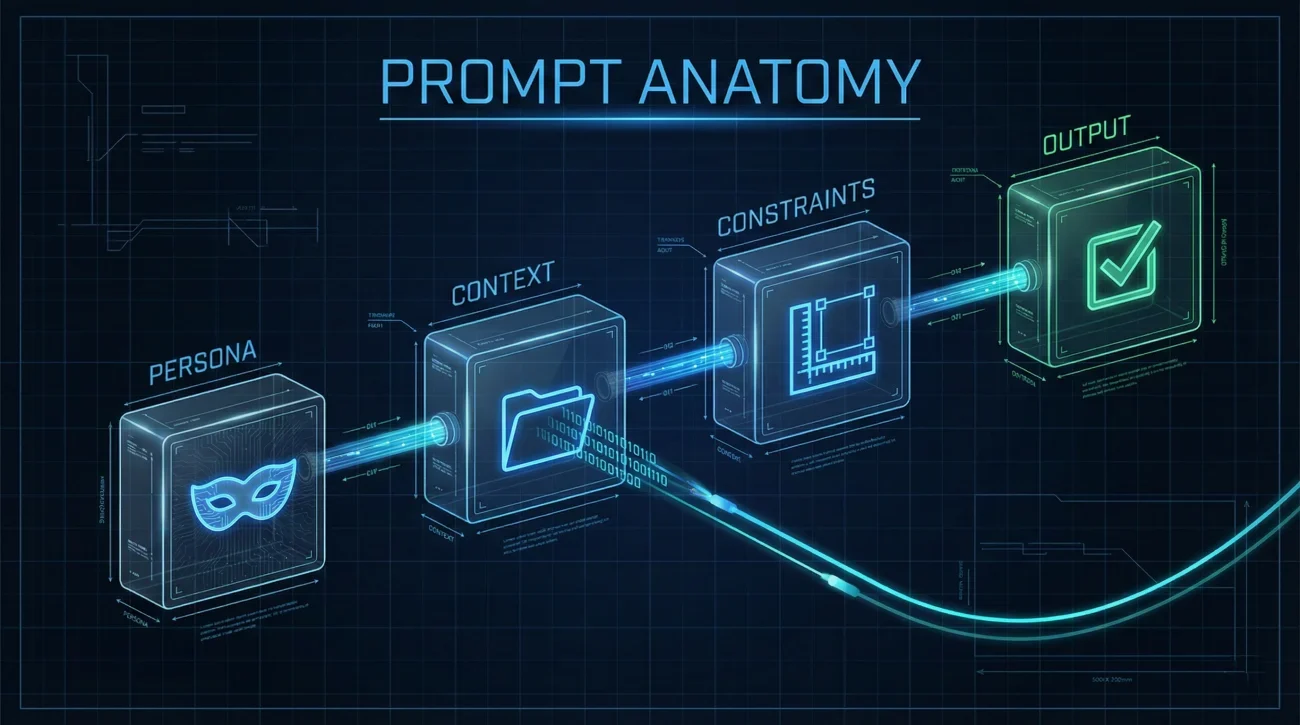
Before copying and pasting the templates below, it is crucial to understand why specific prompts yield superior results. A high-quality AI prompt for professional branding typically consists of four non-negotiable components:
- 1. The Persona (Role): Telling the AI who it is acting as (e.g., “Act as a Senior Technical Recruiter” or “Act as a Personal Branding Expert”).
- 2. The Context (Data): The raw material you provide (your resume, specific skills, target audience).
- 3. The Constraints (Rules): The boundaries that prevent bad output (e.g., “Under 220 characters,” “No buzzwords,” “Use | separators”).
- 4. The Output Format (Structure): How you want the answer presented (e.g., “A list of 5 options,” “A table comparing keywords”).
When you master this structure, you gain control over the output, ensuring that the best AI prompts for professional headline creation serve your specific strategic goals rather than producing generic fluff.
Core Prompt Library: Establishing Your Foundation
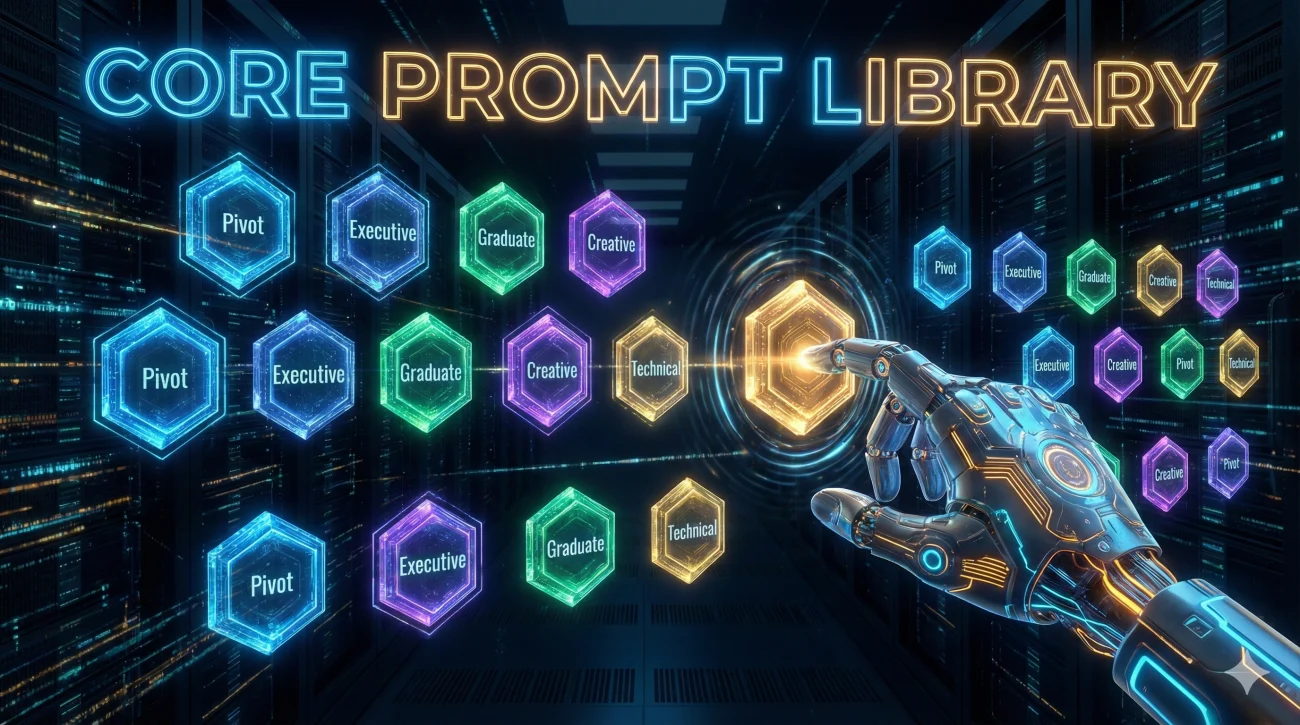
These essential prompts are designed to cover the most common professional scenarios. We have engineered them to maximize context extraction and minimize hallucinatory or irrelevant adjectives.
Prompt #1: The Comprehensive “Deep Context” Prompt
This is your “master prompt.” By feeding the AI a full dataset of your career identity, you enable it to connect dots that you might miss. This prompt is best used when you want a complete overhaul of your current branding.
The Strategy: This prompt forces the AI to prioritize “Hard Skills” over “Soft Skills,” ensuring your headline is SEO-friendly for Recruiter Lite searches.
Act as an expert Career Coach and SEO Specialist. I need to craft a high-impact LinkedIn headline. Here is my complete professional profile:

INPUT DATA:
- Current Role: [Insert Job Title]
- Industry: [Insert Industry, e.g., Fintech, SaaS, Healthcare]
- Hard Skills (Keywords): [List top 5 technical skills, e.g., Python, Revenue Operations, GAAP]
- Years of Experience: [Number]
- Unique Value Proposition: [What makes you different? e.g., "I bridge the gap between engineering and sales"]
- Target Audience: [Who do you want to impress? e.g., CTOs, Recruiters at FAANG companies]

INSTRUCTIONS:
Please generate 5 distinct LinkedIn headline options.

Constraints:
1. Strict length limit: Under 220 characters (including spaces).
2. Structure: Role | Key Skills | Specialized Value | Achievement (Optional).
3. Tone: Professional, authoritative, yet approachable.
4. Negative Constraint: Do NOT use overused buzzwords like "passionate," "guru," "ninja," or "visionary."
5. Formatting: Use the vertical bar symbol (|) to separate concepts.
Prompt #2: The Strategic Pivot (Career Transition)
Transitioning careers is perilous because your past experience often dominates your current profile. This prompt is engineered to shift the “weight” of your headline toward your future potential and transferable skills, rather than your past job titles.
Context: I am transitioning from [Current Role] to [Target Role].

The Challenge: My resume screams "[Old Industry]," but I need to appeal to recruiters in "[New Industry]."

My Transferable Assets:
- [Skill A, e.g., Project Management]
- [Skill B, e.g., Data Analysis]
- [Skill C, e.g., Stakeholder Communication]

Task: Write 5 LinkedIn headlines that bridge this gap.

Requirements:
- Highlight the transferable skills relevant to [Target Role].
- Position me as a qualified candidate for [Target Role] without lying about my lack of direct tenure.
- Use keywords that [New Industry] recruiters search for.
- Format: Target Role (or Aspiring X) | Transferable Skill 1 | Transferable Skill 2 | Unique Background.
Prompt #3: The Executive Authority Prompt
For C-Level executives, VPs, and Directors, the goal is not just “searchability” – it is “authority.” The headline must convey scale, impact, and strategic vision. Keywords are still important, but the metrics of success (Revenue, Team Size, Growth) take precedence.
Role: Executive Resume Writer for Fortune 500 leaders.

Profile:
- Title: [e.g., VP of Sales]
- Scope: [e.g., Managing 100+ headcount, $50M P&L]
- Key Achievement: [e.g., Scaled revenue 300% in 2 years]
- Industry: [e.g., Enterprise Software]

Task: Create 3 executive-grade headlines.

Guidelines:
- Focus on "Strategic Leadership," "Scale," and "Results."
- Avoid listing tactical skills (like "Microsoft Office" or "CRM"). Focus on high-level competencies (like "GTM Strategy," "Organizational Design").
- Tone: Sophisticated, concise, impactful.
Prompt #4: The “High-Potential” Graduate Prompt
Recent graduates face the “Cold Start Problem” – no experience means no keywords. This prompt helps you leverage academic projects and foundational knowledge to look like a junior professional, not a student.
I am a recent graduate looking for entry-level roles in [Target Field].

My Assets:
- Degree: [Major/Minor]
- Relevant Coursework: [List top 2 relevant classes]
- Capstone Project: [Briefly describe a major project]
- Tools: [Software/Languages you know]

Task: Create 5 headlines that position me as "Work-Ready."

Constraints:
- Avoid: "Seeking opportunities," "Student," or "New Grad" as the main focus.
- Focus on: The value I can bring immediately (e.g., research, coding, writing).
- Structure: Target Role Title | Top Technical Skills | Education/Certification.
Prompt #5: The Client-Magnet Prompt (Freelancers)
Freelancers and consultants sell outcomes, not hours. Your headline is your sales pitch. This prompt flips the script from “Who I am” to “What I solve for you.”
I am a Freelance [Role, e.g., Copywriter] targeting [Client Persona, e.g., SaaS Founders].

My Offer: I help clients [Specific Outcome, e.g., double their email open rates].
Proof: [e.g., Generated $100k in sales for clients].

Task: Write 4 conversion-focused headlines.

Formula: Helping [Target Audience] achieve [Desired Outcome] via [My Service] | [Authority Proof].

Goal: The headline must make a potential client feel understood immediately.
Advanced Optimization Strategies
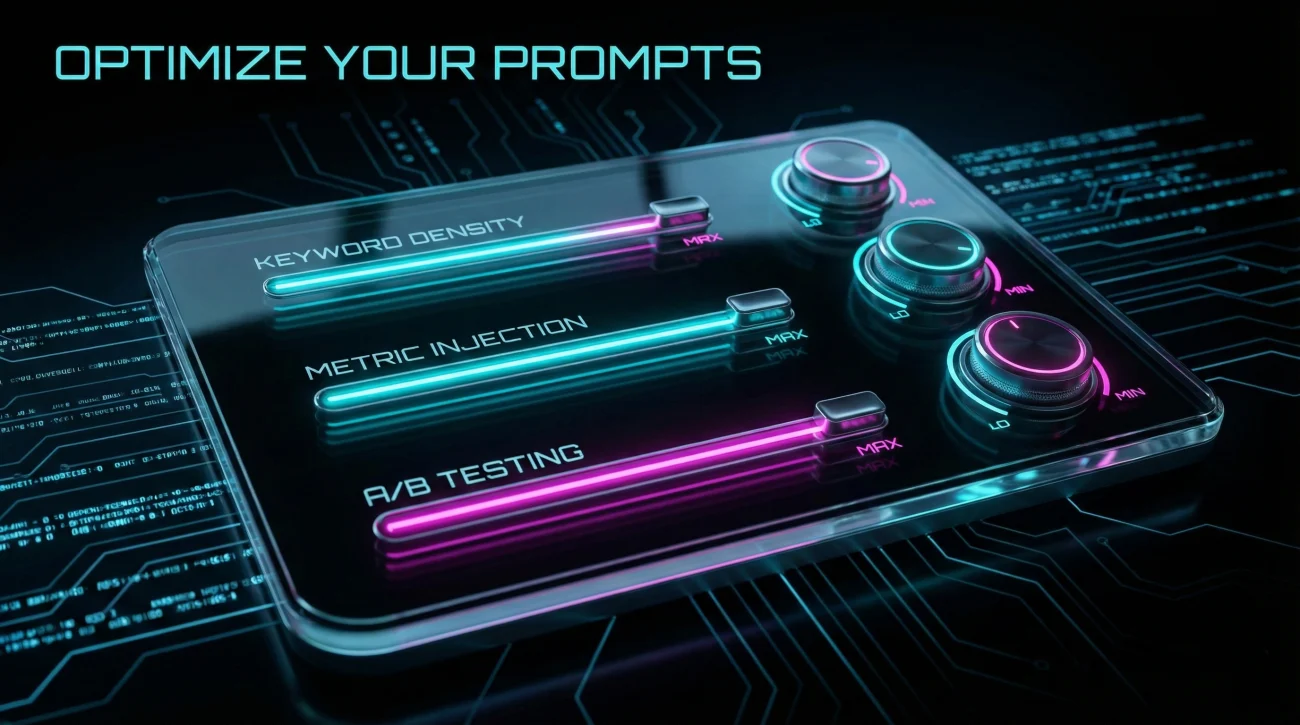
Once you have a baseline headline, it is time to refine. The following prompts are for optimization, ensuring you squeeze every ounce of value out of the 220-character limit.
Prompt #6: The “Recruiter’s Eye” Calibration
This prompt leverages the AI’s vast knowledge base of industry patterns to ensure you are speaking the same language as the people hiring you.
Analyze the current job market trends for [Your Role] in the [Your Industry] sector.

1. List the top 10 most searched keywords by recruiters for this role right now.

2. Review my current headline: "[Insert Current Headline]"

3. Rewrite my headline to incorporate the top 3 highest-value keywords from your list, ensuring it remains readable and human.
Prompt #7: The Metric Injection
Numbers break up the visual monotony of text. Use this prompt to find the best way to weave your impressive stats into a tight character limit.
I want to include a specific achievement in my headline to build credibility.

Achievement: [e.g., Managed a $5M annual budget; Reduced churn by 15%]

Current Headline: [Insert Headline]

Task: Seamlessly integrate this metric into my headline without making it look cluttered. Provide 3 variations: one subtle, one bold, and one focused purely on ROI.
Prompt #8: The A/B Testing Generator
Marketing professionals A/B test their ads; you should A/B test your profile. This prompt generates distinct “flavors” of headlines so you can rotate them and see which attracts more views.
Create 2 distinct headline strategies for me:

Option A (The SEO Specialist): Keyword-heavy, optimized purely for search algorithms and discoverability.

Option B (The Brand Storyteller): Focus on unique value proposition, personality, and "hooking" the human reader.

Keep both under 220 characters. Explain the pros and cons of using each strategy for my specific profile.
Prompt #9: The “Blue Ocean” Differentiation
Use this prompt if you feel your current headline looks exactly like everyone else’s in your feed.
Scenario: Most [Your Job Title] profiles use generic phrases like "Helping companies grow" or "Experienced Manager."

Task: Write 3 "Pattern Interrupt" headlines. These should use unexpected language, unique formatting, or a bold statement that stands out in a list of search results, while still clearly communicating what I do.
Prompt #10: The Brutal Audit
Sometimes you need a critic, not a cheerleader. This prompt asks the AI to identify weaknesses.
Act as a skeptical Recruiter. Critique my current headline: "[Insert Headline]"

Tell me:

1. What is boring or cliché?

2. What is confusing?

3. What keywords are missing?

4. Rate it from 1-10 on likelihood to click.

Then, provide a revised version that fixes these specific flaws.
Gemini vs. ChatGPT vs. Claude: Choosing Your Weapon

While the prompts above work across most Large Language Models (LLMs), understanding how to use Gemini for LinkedIn headline creation versus ChatGPT or Claude can give you a tactical edge. Each AI has a distinct “personality” and capability set.
| Feature | ChatGPT (OpenAI) | Gemini (Google) | Claude (Anthropic) |
|---|---|---|---|
| Creativity & Flair | ⭐⭐⭐⭐⭐ | ⭐⭐⭐ | ⭐⭐⭐⭐ |
| Keyword Accuracy | ⭐⭐⭐⭐ | ⭐⭐⭐⭐⭐ | ⭐⭐⭐ |
| Following Formatting | ⭐⭐⭐⭐ | ⭐⭐⭐⭐ | ⭐⭐⭐⭐⭐ |
| Live Data Access | (Paid Version Only) | ⭐⭐⭐⭐⭐ (Native) | (No Live Web Access) |
| Best Use Case | Generating creative hooks and “human” sounding variations. | Researching current keyword trends and data-backed keywords. | Strict adherence to tone guidelines and refining nuances. |
The Unique Advantage of Google Gemini
Because Gemini is connected to Google’s live index, it is exceptionally powerful for keyword research. You can ask Gemini: “What are the trending job titles for Project Managers in 2024?” and get real-time insights that ChatGPT (Free) might miss due to knowledge cutoffs. Use Gemini to find the keywords, then use ChatGPT or Claude to weave them into a compelling narrative.
Critical Human Refinement: The Final Polish
AI is an accelerator, not a replacement for your judgment. Even the best prompts can produce “hallucinations” or awkward phrasing. Here is your checklist for the final review before hitting “Save” on LinkedIn.
Common AI Pitfalls to Scrub
1. The “Buzzword Salad”
AI loves words like “unleashing,” “unlocking,” “navigating,” and “tapestry.” If your headline sounds like a marketing brochure from 2010, rewrite it. Be direct. Instead of “Unlocking potential for SaaS companies,” say “Scaling SaaS revenue by 20% YoY.”
2. The “Skill Stuffer”
AI might try to cram 10 skills into one line. This looks desperate. Stick to your “Power Trio” – the three skills that define your value proposition. Less is more when it comes to visual hierarchy.
3. The Character Count Lie
LLMs process text in “tokens,” not characters. They frequently claim a headline is under 220 characters when it is actually 240. Always copy your final choice into a Word document or a character counter tool to verify.
For more examples of polished, human-verified headlines, you can review our curated collection of industry-specific headline examples.
❓ FAQ
🤖 Will using AI for my headline get my profile flagged?
📉 Does changing my headline frequently hurt my SEO?
📏 What is the absolute best length for a headline?
💼 Should I include emojis in my professional headline?
🔍 How do I know if my keywords are actually working?
Final Thoughts: Moving Beyond the Algorithm
Mastering ChatGPT prompts for LinkedIn headline optimization is about more than just tricking an algorithm. It is about forcing yourself to clarify your professional value proposition. The process of engineering a prompt requires you to define exactly who you are, what you do, and who you serve.
By using the templates provided – from the comprehensive background prompt to the precise A/B testing structure – you are equipping yourself with a digital toolkit that can adapt as your career evolves. Remember, the AI is the architect, but you are the builder. Always retain the final edit to ensure your personality shines through the optimization.
If you are ready to take the next step and ensure every section of your profile is working as hard as your headline, explore our pillar guide to LinkedIn headline mastery for a holistic approach to personal branding.
If you like practical, no-fluff advice like this, you’ll find more of it on the ProfileHeadline blog.